
The "split leather" trap and other signs of good quality leather bag
"split leather" might be the most misleading phrase in fashion. It sounds premium, but it's actually the lowest grade of split leather — essentially scraps glued together with polyurethane. If you're shopping for a bag that will last decades, not months, you need to know what genuine quality looks like.
After looking at hundreds of leather bags across every price point, the signs of good quality leather bag come down to five key areas: the leather grade itself, the tanning process, craftsmanship details, hardware choices, and how all the materials work together. Most people focus only on the leather hide and miss the bigger picture.
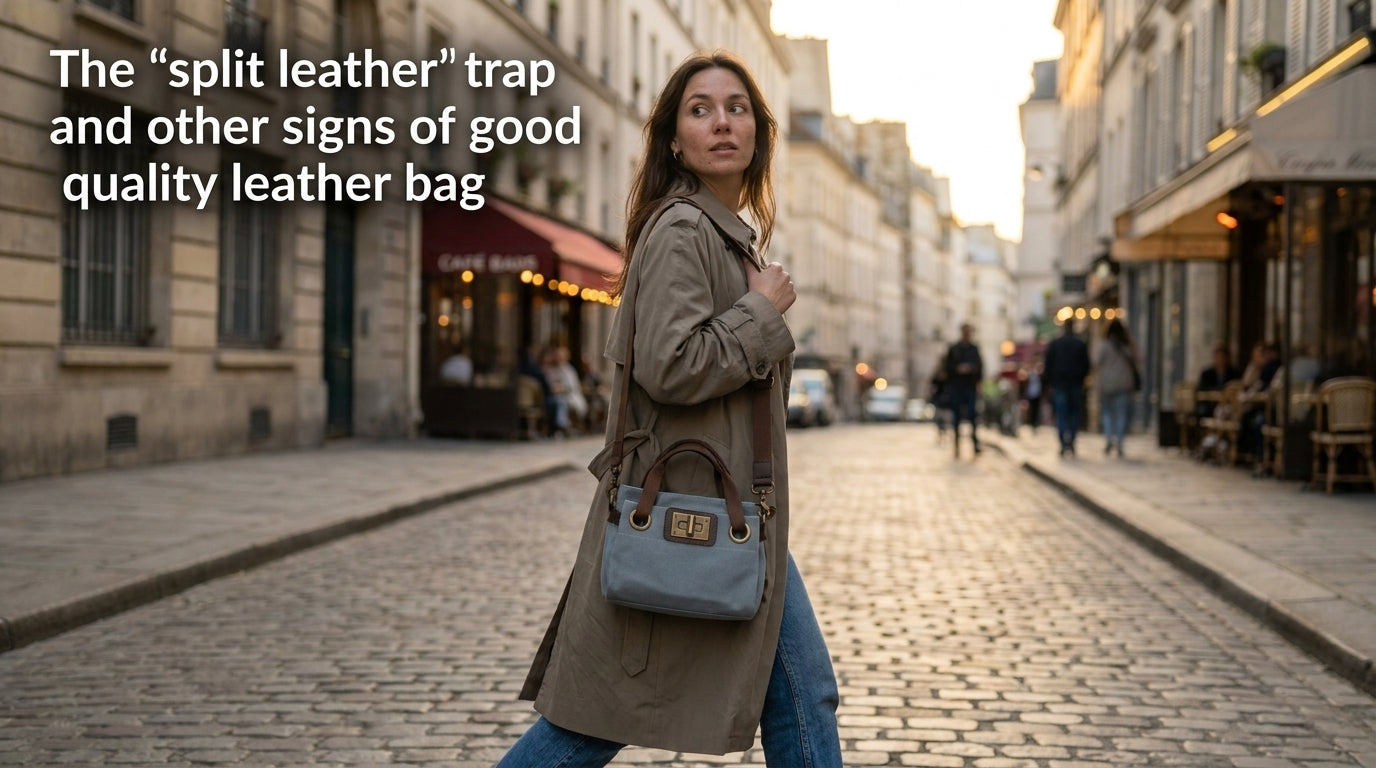
Shop the look: PONT-DES-ARTS - XS / Bleu Gris

Why "split leather" is actually a red flag
The leather grading system works backwards from what most people expect. Top-grain and split leather are the premium options — they keep the natural grain pattern and develop beautiful patina over time. Split leather, used in quality bags like the PONT-DES-ARTS, comes from the lower layers of the hide but still maintains durability when properly treated.
"split leather," despite the name, sits at the bottom of the quality ladder. It's made from leftover scraps that are ground up, mixed with adhesives, and pressed into sheets. The surface gets an artificial grain stamped on top. It looks okay initially but cracks and peels within a year or two.
For a broader overview, see The handbag buying guide that actually helps you choose.
When brands use terms like "split leather" or "luxury leather" without specifying the grade, they're usually hiding something. Quality manufacturers will tell you exactly what type of leather they use.
The tanning process tells the real story
Vegetable-tanned leather ages beautifully — it darkens and develops character marks that make each bag unique. Chrome-tanned leather stays more consistent in color but can feel plasticky if done cheaply. The best way to tell the difference is the smell test.
Quality leather smells rich and slightly sweet, never chemical or fishy. If a bag has a sharp, artificial odor, the tanning process likely used harsh chemicals that will break down over time. This is especially important when shopping online — customer reviews often mention smell issues with poor-quality bags.
The edges of well-tanned leather should be smooth and finished, not rough or showing different colored layers underneath. Cheap chrome-tanned leather often has blue-green edges from the tanning chemicals.
Canvas and leather combinations change the game
Pure leather bags can feel too formal for everyday use. The combination of canvas and leather, like what ZEDE uses in their bags, gives you versatility that pure leather can't match. You can carry it to casual events, nice dinners, work meetings, weekend trips — it fits every occasion without looking out of place.
The canvas should feel substantial, not flimsy. Water-repellent washed cotton canvas develops character over time without showing every mark. When paired with quality split leather for structure and handles, you get durability with a more relaxed aesthetic than traditional leather bags.

Stitching reveals everything about craftsmanship
The most telling signs of good quality leather bag craftsmanship show up in the details most people overlook. Stitching should be perfectly straight with consistent tension — no loose threads, skipped stitches, or puckering around corners.
Quality bags use reinforced stitching at stress points like handle attachments and bottom corners. The thread should match or complement the leather color, never look like an afterthought. Cheap bags often use thin cotton thread that breaks easily instead of proper polyester or nylon thread.
Look at the inside corners and seams. Quality construction means clean, finished edges even in areas you rarely see. If the interior looks sloppy, the exterior won't hold up long-term.
Hardware quality separates lasting bags from temporary ones
Zippers are the most common failure point on bags. YKK zippers from Japan set the standard — they glide smoothly and rarely break. Cheap zippers catch, stick, or have teeth that don't align properly.
Metal hardware should feel substantial, not hollow. Solid brass or stainless steel develops patina gracefully, while plated hardware chips and tarnishes quickly. The hardware should be attached securely — wiggle test any rings, buckles, or clasps.
Magnetic closures should snap firmly without being difficult to open. Toggle closures and button clasps should align perfectly and feel smooth to operate. These details might seem minor, but they're what you interact with daily.
Interior design shows whether brands understand daily use
The lining material matters more than most people realize. Cotton lining breathes and ages well, while cheap synthetic linings can crack or develop odors. Quality bags include thoughtful interior organization — pockets sized for actual items you carry, not just decorative compartments.
The PONT-DES-ARTS includes five interior pockets, including two with zippers, plus a large rear pocket with magnetic closure and a front pocket with toggle closure. This level of organization comes from understanding what people actually need to carry, not just making the exterior look pretty.
Interior stitching should be as clean as exterior work. Exposed seams should be finished, and pocket corners should be reinforced. Cheap bags often have pockets that tear away from the lining after a few months of use.
How to spot quality when shopping online
Physical tests work great in stores, but online shopping requires different strategies. Look for detailed material descriptions — brands confident in their quality will specify leather grades, canvas weights, and hardware types.
Zoom in on product photos to examine stitching quality and edge finishing. Quality brands show close-up detail shots because they're proud of their craftsmanship. Be suspicious of bags photographed only from flattering angles.
Read customer reviews carefully, especially negative ones. Common complaints about "split leather" bags include cracking, peeling, color transfer, and chemical smells. Quality bags might have minor complaints about color variations or sizing, but rarely about fundamental material failures.
Check the brand's material transparency. Companies using quality materials will explain their choices — why they chose split leather over premium, how their canvas is treated, where their hardware comes from. Vague descriptions like "premium materials" usually hide corner-cutting.

The price-to-quality sweet spot
The most expensive bag isn't always the highest quality, and cheap bags are rarely good value. The sweet spot often falls in the €100-300 range for well-made bags that will last years with proper care.
Bags under €50 almost always use "split leather" or synthetic materials with poor construction. Bags over €500 often carry brand premium that doesn't translate to proportionally better quality. Focus on construction details and material transparency rather than brand prestige.
Consider cost per wear over several years. A €150 bag that lasts five years costs €30 per year, while a €40 bag that needs replacing annually costs more long-term and creates waste.
What to expect as your bag ages
Quality leather and canvas develop character over time rather than just showing wear. The canvas softens and develops subtle color variations, while the leather darkens and gains patina. This aging process should enhance the bag's appearance, not detract from it.
Poor quality materials show their limitations quickly. Synthetic leather cracks along stress lines, cheap canvas fades unevenly or develops holes, and plated hardware chips to reveal different colored metal underneath.
A well-made bag should look better after six months of use than it did brand new. The materials settle into their natural shape, and the patina adds character that can't be manufactured.