
How long leather bags actually last (and why canvas changes the game)
A quality leather bag can last 10-20 years with proper care, but here's what most people don't realize: pure leather bags often age less gracefully than you'd expect. The leather cracks, scratches show immediately, and that "investment piece" starts looking worn faster than you planned.
After looking at hundreds of leather bags over the years, I've noticed something interesting. The bags that age best aren't always the most expensive pure leather ones. They're the smart combinations — canvas with leather accents — that give you durability without the high-maintenance drama.
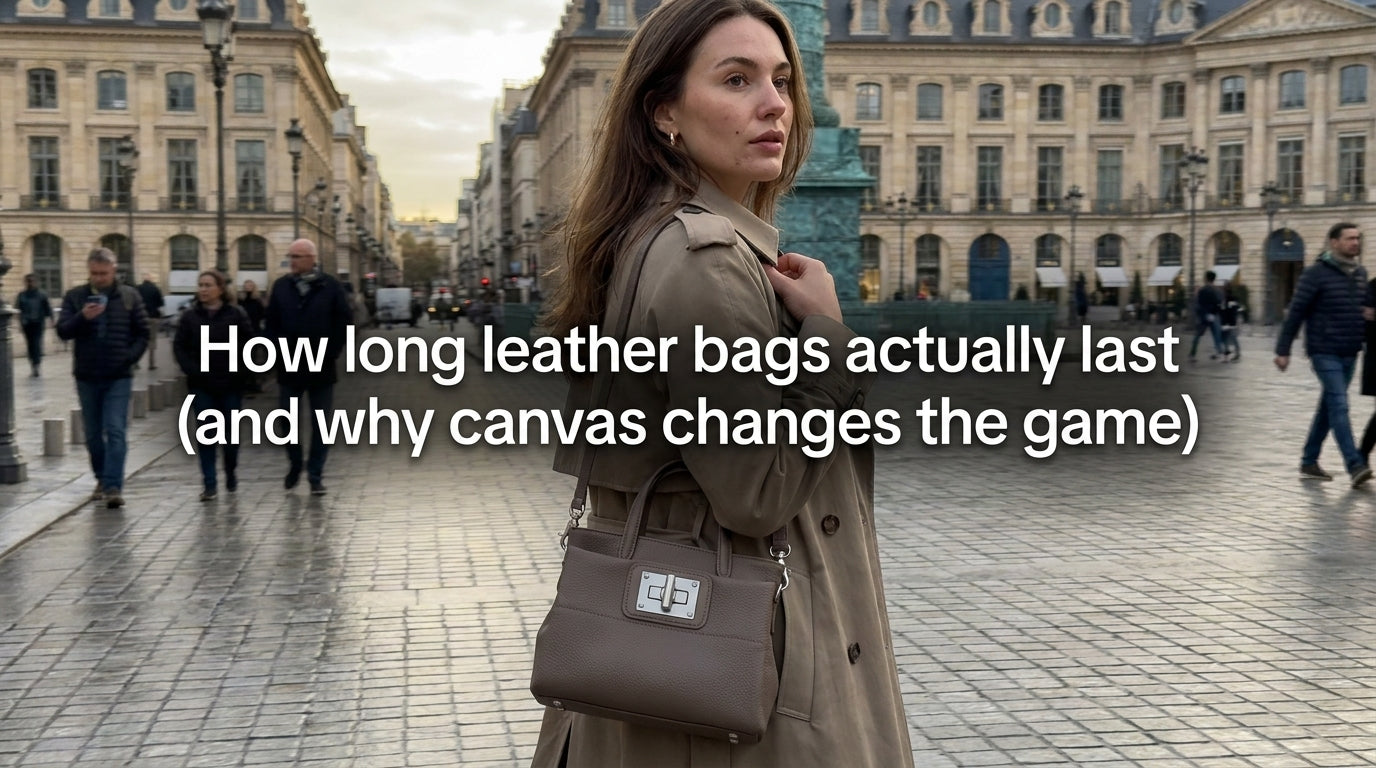
Shop the look: PONT-DES-ARTS - Vegan Leather - XS / Taupe

What actually determines how long leather bags last
The lifespan of a leather bag depends on three factors: the leather quality, how it's constructed, and how you use it. But here's where it gets interesting — the type of leather matters more than the price tag.
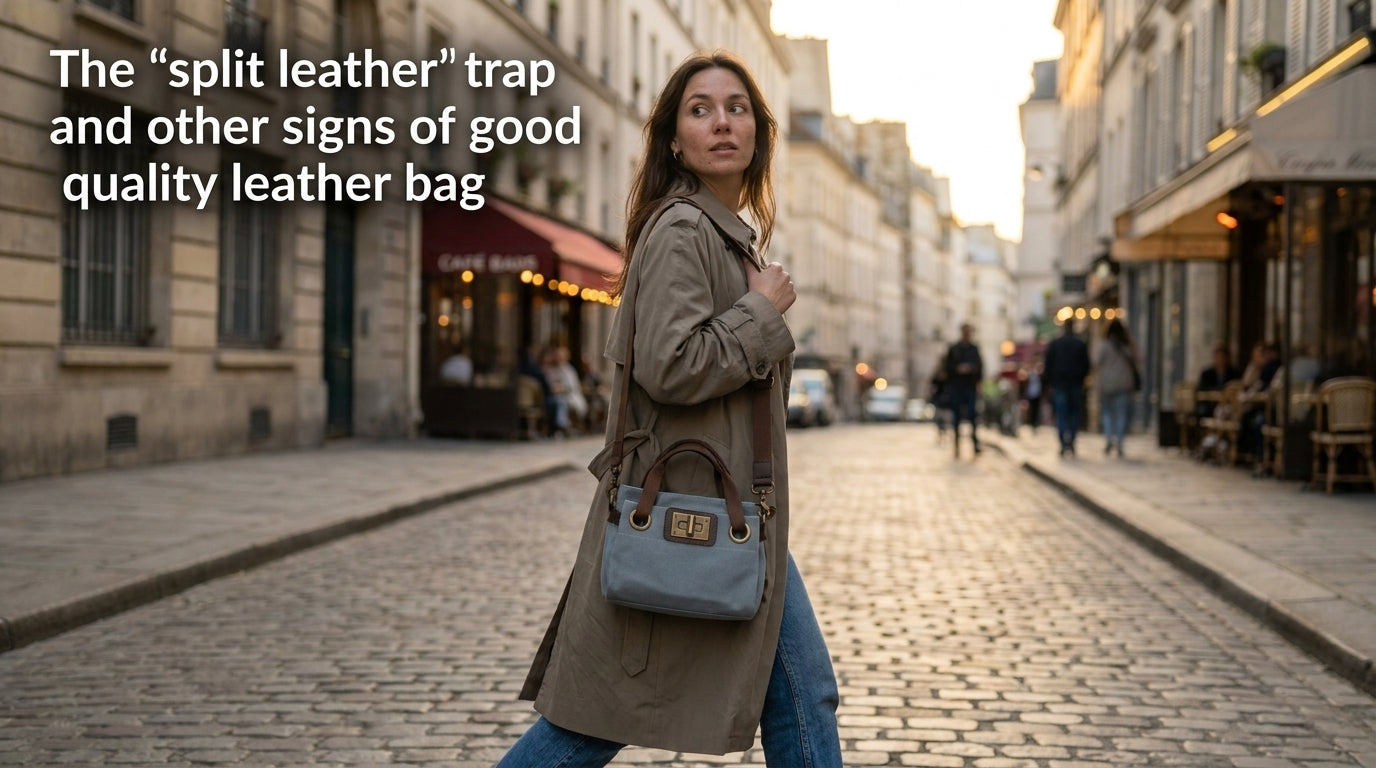
Split leather, when properly treated, can outlast expensive split leather in daily use. It's more flexible, less prone to cracking, and ages more evenly. The downside? It doesn't develop that coveted patina that leather enthusiasts love. The upside? It looks good longer without babying it.
For a broader overview, see The handbag buying guide that actually helps you choose.
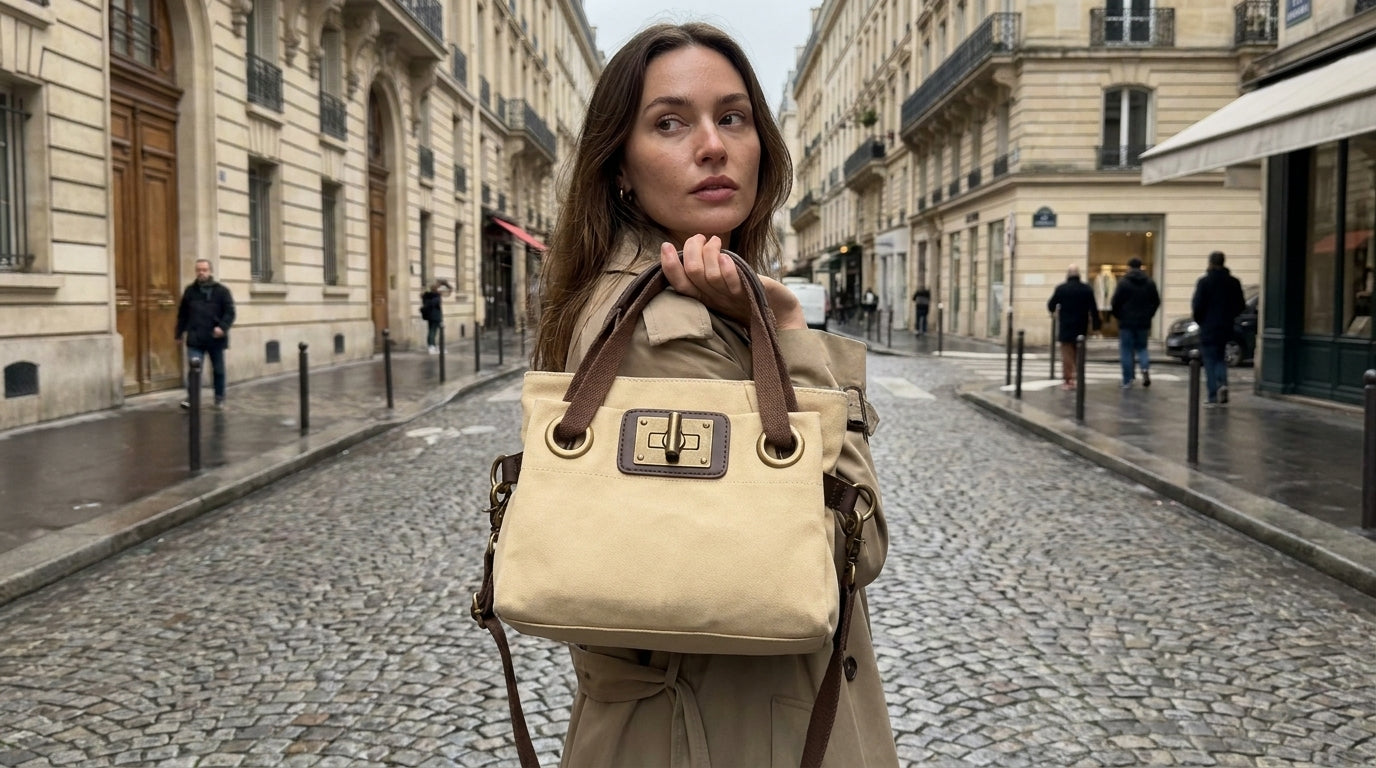
Canvas changes the equation entirely. A canvas and leather combination bag can easily last 15-25 years because the canvas handles daily wear while the leather provides structure where needed. The canvas gets better with age — softer, more lived-in — while the leather accents stay protected.
Construction matters just as much as materials. Hand-stitched seams, reinforced stress points, and quality hardware determine whether your bag falls apart in year three or year twenty. Most bag failures happen at connection points — where straps meet the body, where zippers attach, where handles connect.
Key benefits of choosing durability over pure leather luxury
Pure leather bags demand constant attention. You condition them, worry about water spots, stress about scratches. Canvas and leather combinations give you the best of both worlds without the anxiety.
The canvas handles daily abuse. Coffee spills, rain, being tossed in car trunks — canvas bounces back. The leather provides structure and elegance where you need it most. This combination explains why many French women choose canvas-leather bags over pure leather for daily carry.
Maintenance becomes simple. Canvas wipes clean with a damp cloth. The leather trim needs occasional care, but since it's protected by the canvas structure, it ages slowly and evenly. You're not constantly conditioning and protecting the entire bag.
Versatility increases dramatically. Pure leather bags often feel too formal for casual settings. Canvas-leather works everywhere — weekend farmers markets, business meetings, evening dinners. The combination reads as intentionally relaxed rather than accidentally underdressed.

How to choose a bag that will actually last decades
Look at the construction first, materials second. Turn the bag inside out. Check the stitching — it should be straight, tight, and reinforced at stress points. Examine where straps attach to the body. Cheap bags use glue or single stitching. Quality bags use multiple attachment methods.
Test the hardware. Zippers should glide smoothly without catching. Magnetic closures should snap firmly. Turn-lock mechanisms should click decisively. Hardware failure kills more bags than material failure.
Consider your actual lifestyle. If you're gentle with bags and love the ritual of leather care, pure leather works. If you need something that performs daily without fuss, canvas-leather combinations make more sense.
Size matters for longevity. Oversized bags strain at connection points under weight. Tiny bags get overstuffed and lose shape. The sweet spot is a medium size that holds your essentials without stretching the structure.
The PONT-DES-ARTS Vegan Leather represents this philosophy perfectly. Premium ultrafiber with a pebbled grain finish that won't crack or need conditioning, seven organized compartments to prevent overstuffing, and three carrying options to distribute wear evenly.
Common mistakes that shorten bag lifespan
The biggest mistake is buying pure leather bags you're not prepared to maintain. Leather needs regular conditioning, proper storage, and protection from elements. Skip this care, and your expensive bag looks shabby within two years.
Overstuffing kills bags faster than time. That bulging silhouette strains seams, warps structure, and breaks hardware. If your bag doesn't close easily when full, it's too full.
Wrong storage destroys more bags than daily use. Plastic bags trap moisture and cause mold. Hanging by straps stretches handles. Stuffing bags inside other bags creates permanent creases. Bags need to breathe and hold their shape when stored.
Ignoring early damage costs you years of life. A loose stitch becomes a torn seam. A sticky zipper becomes a broken zipper. Address small issues immediately, and your bag lasts decades. Ignore them, and replacement comes quickly.
Choosing style over substance is the classic trap. That trendy shape or delicate detail might look perfect now, but will it work in five years? Timeless designs with practical features outlast fashion moments every time.

Why canvas-leather combinations outlast pure leather
The secret is material distribution. Canvas handles the stress, leather provides the style. This isn't compromise — it's smart engineering.
Canvas improves with age. It softens, develops character, and becomes more comfortable to carry. Pure leather can crack, scratch, or develop uneven patina that looks worn rather than distinguished.
Weather resistance is dramatically better. Canvas shrugs off rain that would stain leather. UV exposure that fades leather barely affects quality canvas. Temperature changes that make leather brittle leave canvas unaffected.
Repair options multiply. Canvas can be patched, cleaned aggressively, even dyed if needed. Leather repairs are expensive and often visible. This flexibility extends usable life significantly.
The combination of canvas and leather creates something unique — sports chic that works everywhere. You can carry it to casual places without feeling overdressed, to nice dinners without feeling underdressed. That versatility means you'll actually use the bag instead of saving it for special occasions.
Investment vs. daily reality: making the smart choice
Pure leather bags are often positioned as investments, but investments should perform well over time. A bag that requires constant care, shows every mark, and limits your lifestyle isn't performing — it's demanding.
The best investment is a bag you'll use daily for decades. That means prioritizing function, durability, and versatility over luxury materials that need babying.
Consider cost per wear. A €200 bag used daily for 15 years costs about 4 cents per use. A €800 bag used occasionally for 10 years costs 22 cents per use. The math favors practical choices.
Modern vegan leather options challenge traditional assumptions about durability. Premium ultrafiber doesn't crack, doesn't need conditioning, and maintains its appearance longer than many split leathers. For daily use, it often outperforms traditional materials.
The smartest approach is choosing based on your actual needs rather than perceived prestige. If you want something that looks great, works hard, and ages gracefully without fuss, canvas-leather or quality vegan leather makes more sense than pure leather you'll stress about maintaining.