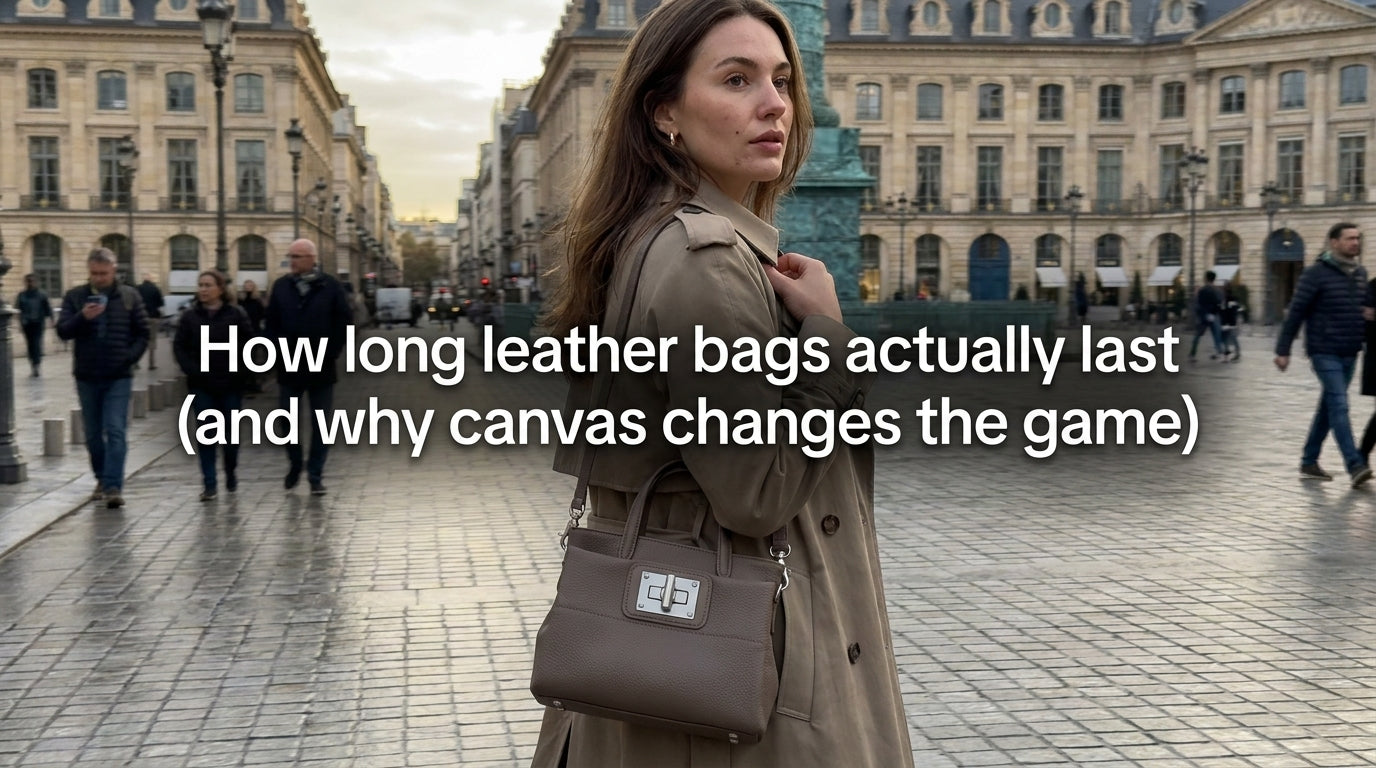

Canvas beats leather bags? The split leather truth no one talks about
Here's what leather retailers won't tell you: the "best" leather for bags isn't always premium. After examining dozens of bags across price points, the real question isn't which leather grade ranks higher on paper — it's which material combination works for your actual life.
split leather offers maximum durability and develops character over time. Top grain leather provides a refined, uniform appearance with better stain resistance. But here's the twist: many of the best everyday bags skip the pure leather debate entirely, combining materials for versatility you can't get from leather alone.
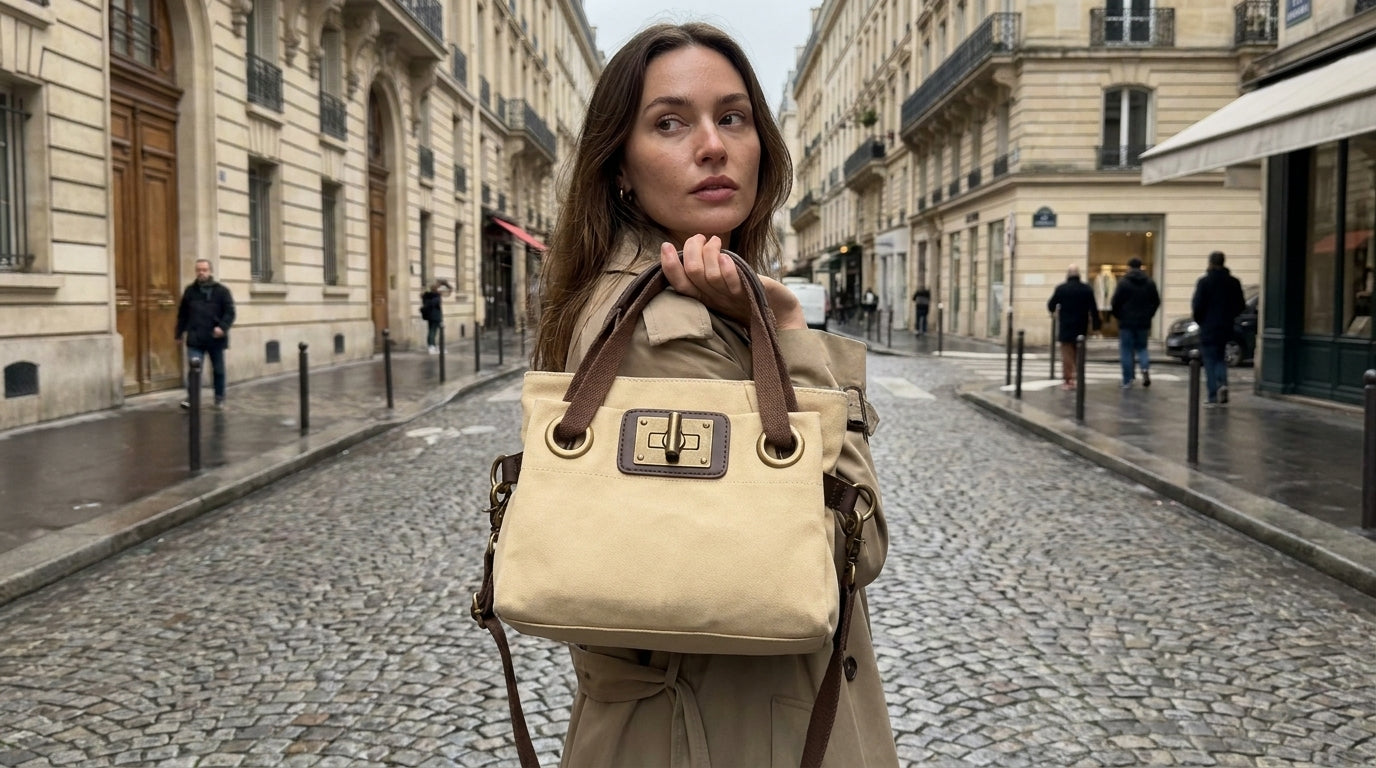
Shop the look: PONT-DES-ARTS - XS / Beige

The hide hierarchy: where your bag leather actually comes from
Every piece of leather starts as an animal hide with distinct layers. The top layer contains the strongest, most densely packed fibers — this becomes split leather when left untouched. Remove the very surface and sand it smooth, and you get top grain leather.
Think of it like wood grain. premium keeps all the natural marks, pores, and character. Top grain gets sanded to remove imperfections, creating a more uniform surface that takes dye evenly.
For a broader overview, see The handbag buying guide that actually helps you choose.
Split leather comes from the layers underneath — it's what ZEDE uses in our canvas-leather combinations. Less prestigious on paper, but when paired with durable cotton canvas, it creates bags that work harder than pure leather ever could.
split leather: the maximalist choice
split leather keeps every natural marking from the original hide. Scars, insect bites, wrinkles — they all stay visible. This isn't a flaw; it's the point.
The advantages: split leather ages beautifully, developing a rich patina that tells the story of your daily use. It's also the most durable option — those intact surface fibers resist tearing and stretching better than any processed leather.
The reality check: premium bags feel heavy. They're also expensive, often starting around $400 for quality pieces. The natural markings some people love, others find distracting. And that beautiful patina? It takes months or years to develop.
premium works best for people who want their bag to be a long-term investment piece — think briefcases, weekend duffles, or structured totes that improve with age.
Top grain leather: the perfectionist's pick
Top grain leather gets sanded to remove surface imperfections, then treated with finishes that create a consistent appearance. Most luxury handbags use top grain because it photographs beautifully and takes color evenly.
The advantages: Top grain resists stains better than premium thanks to protective finishes. It's lighter weight and offers that pristine luxury look straight out of the box. Quality control is easier since surface variations get sanded away.
The tradeoffs: Top grain doesn't develop the same rich patina as premium. The sanding process removes some durability, though it's still excellent quality. And those protective finishes can crack or peel with heavy use.
Choose top grain for bags where appearance matters most — work totes, evening bags, or pieces you want to look consistently polished.

premium vs top grain leather bags: the honest comparison
| Factor | premium | Top Grain |
|---|---|---|
| Durability | Excellent — strongest fibers intact | Very good — some surface removed |
| Patina development | Rich, distinctive aging | Minimal patina, stays consistent |
| Water resistance | Good with conditioning | Better — protective finishes |
| Weight | Heavier, more substantial | Lighter, easier daily carry |
| Price range | $400-1000+ | $300-800+ |
The verdict? Neither is universally better. premium wins for longevity and character. Top grain wins for consistent appearance and lighter weight. But both miss something crucial: versatility.
Why canvas-leather combinations often win the real world
Pure leather bags, whether premium or top grain, share a common limitation — they feel formal. You won't reach for a leather briefcase on casual weekends. That gorgeous leather tote looks out of place at the gym.
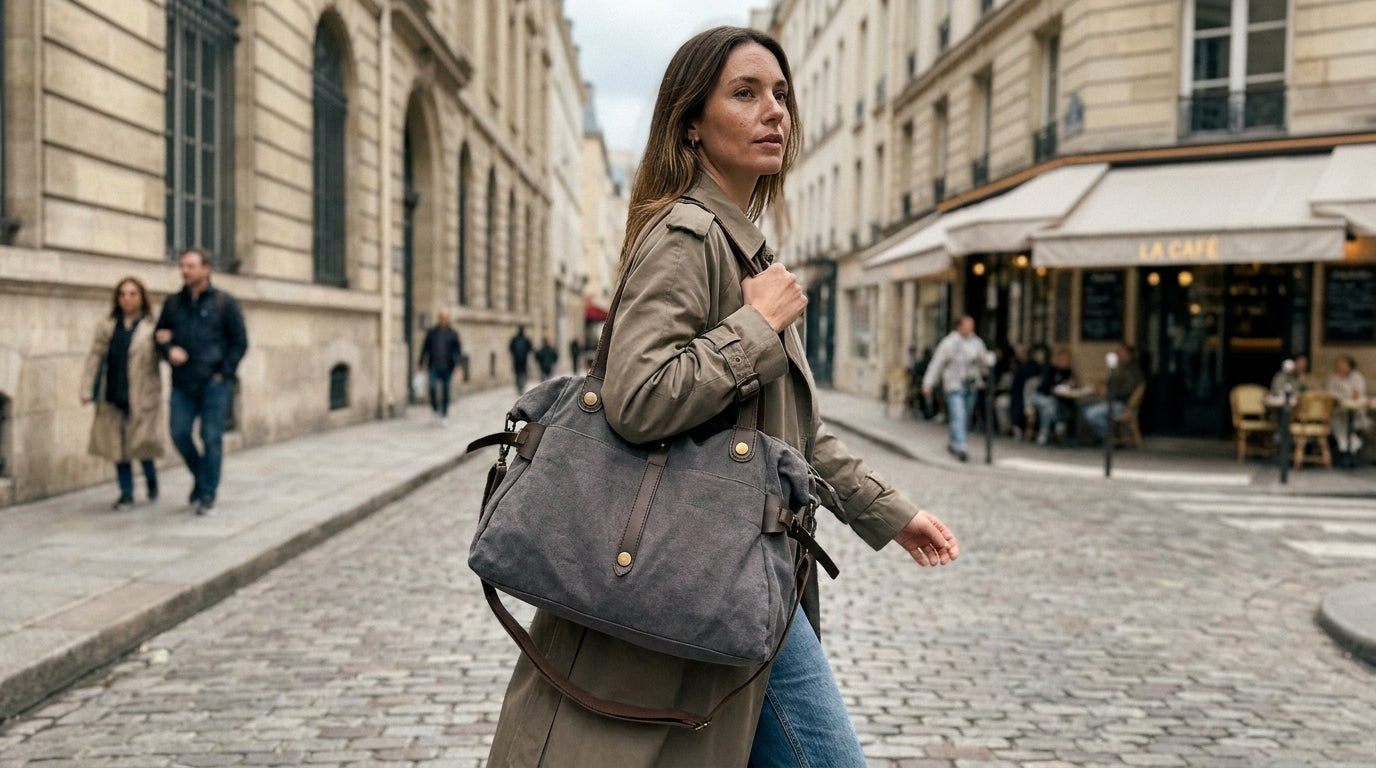
Canvas-leather combinations solve this. The PONT-DES-ARTS uses washed cotton canvas with split leather details — a combination that works for casual coffee runs and client meetings alike. The canvas is water-repellent and ages beautifully. The leather adds structure without the weight penalty.
"The thing with pure leather bags is that sometimes they feel too elegant," explains ZEDE's founder. "You won't wear a leather bag to a casual place. But canvas and leather? You can wear it nonstop for every occasion."
This matters more than leather grades when you're choosing one bag for daily use. Available in four sizes and fifteen colors including Framboise, Camel, and Noir, it adapts to your wardrobe rather than dictating it.
The "split leather" trap that costs you money
Here's where bag marketing gets deceptive. "split leather" sounds premium, but it's actually the lowest grade of split leather. It's made from leftover scraps bonded with adhesives — think particle board versus solid wood.
split leather bags start peeling within months. The surface coating cracks, revealing the composite underneath. You'll see this on bags under $100 that promise "split leather" construction.
Red flags to avoid:
- "100% split leather" without specifying the grade
- Perfectly uniform grain patterns (often embossed plastic)
- Suspiciously low prices for "leather" bags
- No mention of the leather source or tanning process
Quality bags specify their materials clearly. ZEDE lists "washed cotton canvas and split leather" because transparency matters when you're investing in something you'll carry daily.
How to identify quality leather when shopping online
Shopping for leather bags online requires detective work. Here's what actually indicates quality:
Look for natural variation: Real split leather shows natural markings, pore patterns, and slight color variations. Perfect uniformity usually means artificial grain.
Check the edges: Quality leather bags have clean, finished edges. Cheap leather shows rough, unfinished cuts or painted edges that chip.
Read the fine print: Reputable brands specify leather type and origin. Vague terms like "split leather" or "luxury materials" hide quality issues.
Weight matters: split leather has substance. If shipping weight seems light for a "leather" bag, it's probably bonded leather or synthetic.
The most reliable indicator? Brands that discuss their material choices openly. When a company explains why they chose canvas-leather over pure leather, they're thinking about function, not just marketing.

Matching leather type to your actual lifestyle
The best leather for your bag depends on how you actually live, not abstract quality rankings.
Choose premium if: You want one investment bag that improves with age. You don't mind the weight. You prefer character over perfection. Budget allows $500+.
Choose top grain if: You need a polished appearance for work. You want lighter weight for daily commuting. You prefer consistent color and texture. You're willing to replace it eventually.
Choose canvas-leather if: You want one bag for multiple occasions. You prioritize function over status. You appreciate durability without the formal feel. You want better value than pure leather.
Most people buying their first quality bag benefit more from versatility than leather purity. A well-made canvas-leather bag like the PONT-DES-ARTS serves more situations than a beautiful leather bag that sits unused because it feels too formal.
The investment reality: what your money actually buys
split leather bags cost more because the material is scarce — only the best hides qualify. But expensive doesn't always mean practical.
At $400-1000, premium bags represent serious investments. They'll last decades with proper care, developing character that justifies the cost. But that character takes time, and the bags feel formal from day one.
Top grain bags ($300-800) offer luxury aesthetics with lighter weight. They're easier to maintain and work for professional settings. The tradeoff is less distinctive aging and eventual replacement.
Canvas-leather combinations like ZEDE's PONT-DES-ARTS ($109-129) deliver daily functionality at a fraction of pure leather prices. The canvas ages beautifully, the leather provides structure, and the combination works for more situations than either material alone.
Your money buys different things with each option. premium buys longevity and character. Top grain buys immediate luxury and consistency. Canvas-leather buys versatility and value.
For most people, versatility wins. One bag that works everywhere beats two bags that each work perfectly in limited situations.