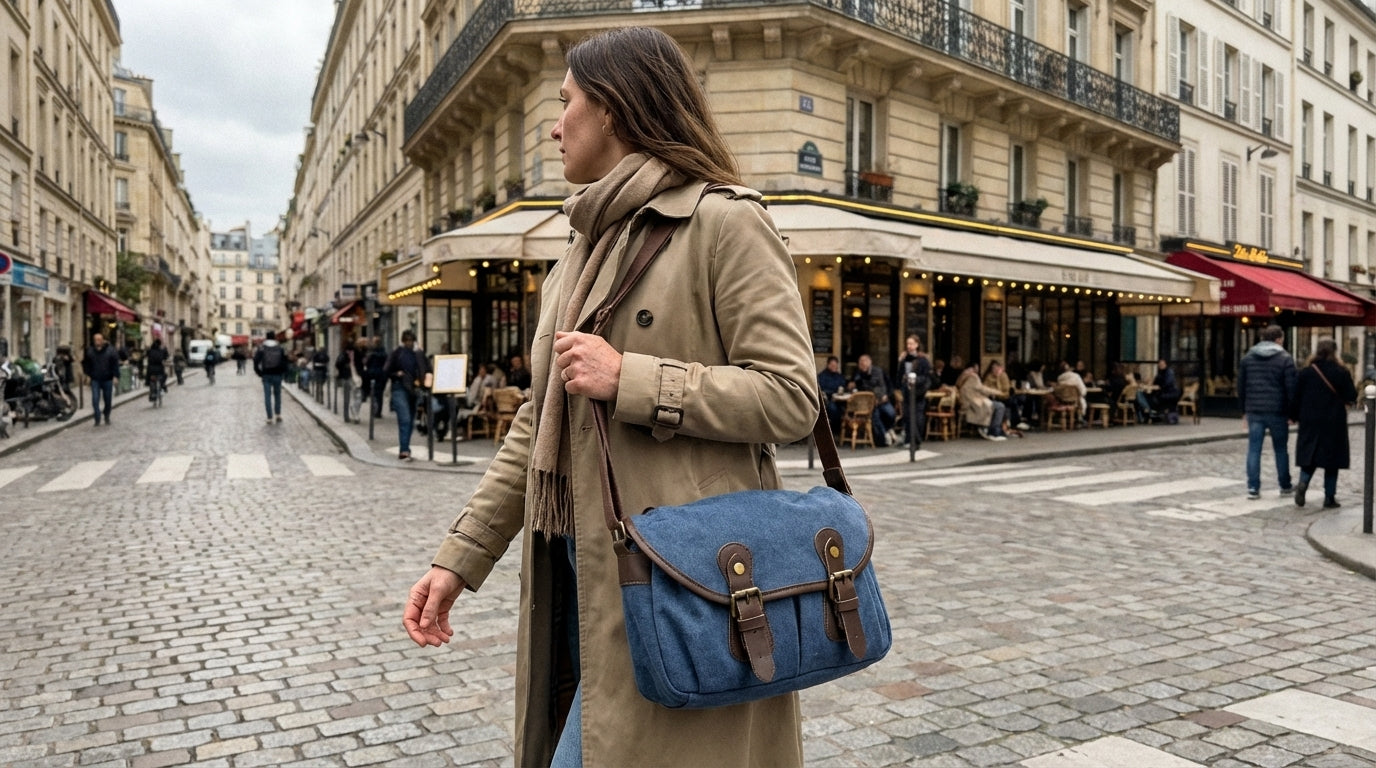

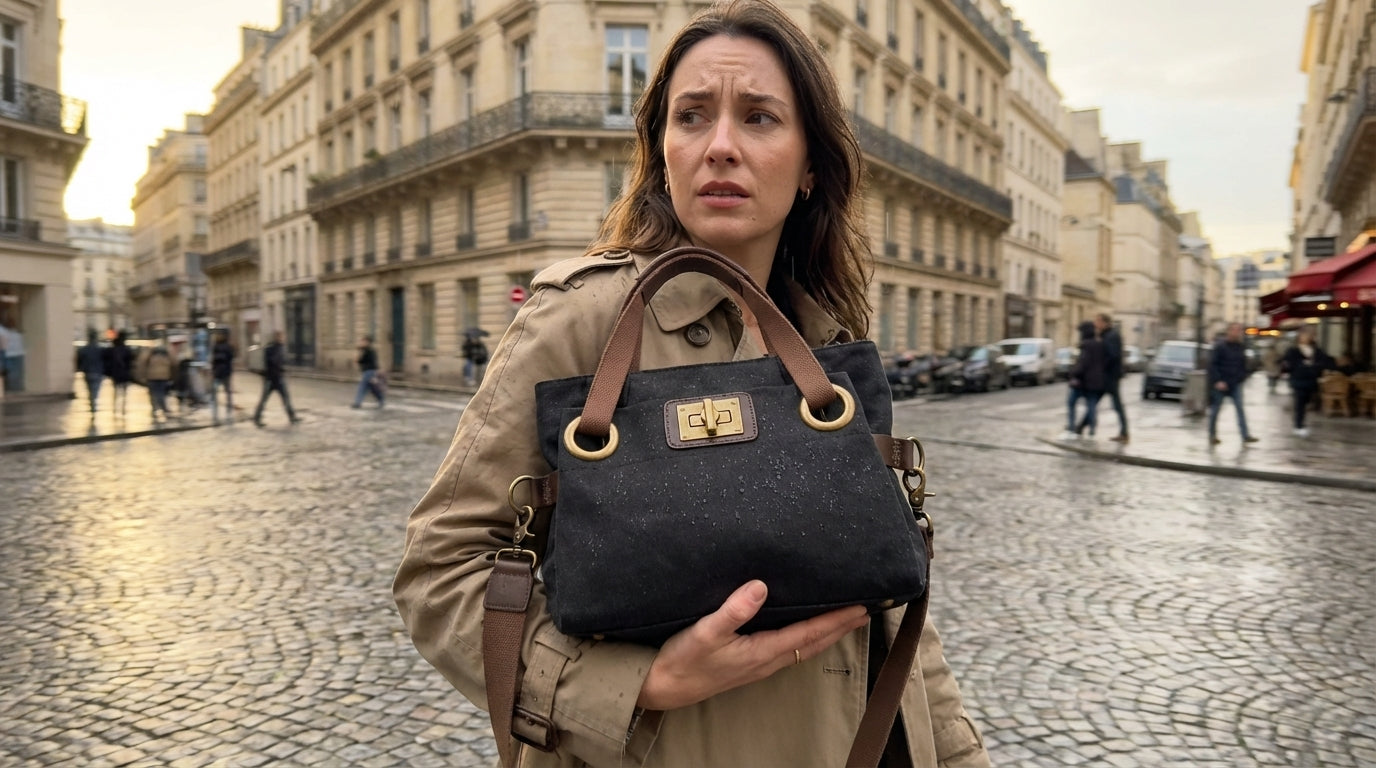
Rain hits your bag and you freeze. Here's what actually protects leather from water damage
Rain hits and your first instinct is to shield your bag with your jacket. Smart move, but not always practical when you're juggling keys, phone, and an umbrella that decided to break five minutes ago.
The truth about protecting leather from rain isn't complicated, but most people get it wrong. They either over-treat their bags with heavy waxes that change the texture, or they do nothing and hope for the best. Both approaches fail.
Shop the look: PONT-DES-ARTS - Mini / Noir

What actually happens when leather gets wet
Water doesn't just sit on leather surface like it does on plastic. It penetrates the fibers, and when it dries, it can leave the leather stiff, cracked, or discolored. Split leather, which many quality bags use, is particularly vulnerable because the surface has been processed to create that smooth finish.
But here's what most guides won't tell you: not all bag materials react the same way. The PONT-DES-ARTS combines washed cotton canvas with split leather trim. The canvas is naturally water-repellent, which means rain hits the main body and beads off. Only the leather handles and trim need active protection.
For a broader overview, see The handbag buying guide that actually helps you choose.
This combination changes everything about rain protection. Instead of treating an entire leather surface, you're working with maybe 10% leather content. The canvas does most of the weather resistance work for you.
Prevention methods that actually work
Start with a leather protector spray, but choose carefully. Avoid anything that promises to make leather "waterproof" — leather needs to breathe. Look for products that say "water-repellent" or "protective" instead.
Apply protector to clean, dry leather only. Spray from 6 inches away, let it absorb for 15 minutes, then buff with a soft cloth. Do this every 3-4 months, not after every rain shower. Over-treating leather makes it stiff and changes the color.
For daily protection, positioning matters more than products. Carry your bag on the side away from the wind-driven rain. If you're walking with an umbrella, keep the bag under your arm on the covered side. When you sit down, place it on your lap or between your feet, never on wet surfaces.

Emergency care when your bag gets soaked
Rain happens. When your bag gets wet, resist the urge to heat-dry it. No hair dryers, no radiators, no direct sunlight. Heat makes wet leather crack as it contracts.
Instead, empty the bag completely. Blot — don't rub — excess water with a clean towel. Stuff the bag loosely with newspaper or paper towels to help it keep its shape while drying. Change the stuffing every few hours if it gets saturated.
Let it air-dry at room temperature. This takes patience — sometimes 24-48 hours for a thoroughly soaked bag. Once completely dry, apply a leather conditioner to restore flexibility. The leather should feel supple, not stiff.
Canvas-leather combinations like the PONT-DES-ARTS dry faster because most of the water hits the canvas, which releases moisture more readily than pure leather. You're mainly waiting for the leather trim to dry properly.
Common mistakes that make rain damage worse
The biggest mistake is panic-treating wet leather. People grab whatever conditioner they have and slather it on wet leather. This traps moisture inside and can cause mold or permanent staining.
Another error: using household items as emergency waterproofing. Petroleum jelly, cooking oil, even hand lotion — none of these work, and they can permanently stain leather. Stick to products designed for leather care.
Storage mistakes compound rain damage. Putting a damp bag in a closed closet or plastic bag creates the perfect environment for mold. Always let bags dry completely in open air before storing.
Many people also over-condition leather after rain exposure. Once every few months is enough for most bags. Over-conditioning makes leather soft to the point of losing its structure.
Why material choice changes everything
Pure leather bags require constant vigilance in wet weather. Every surface needs protection, and water damage affects the entire bag. But canvas-leather combinations shift the equation.
After looking at dozens of high-end bags, the canvas-leather approach makes the most practical sense for daily use. You get the structured look of leather with the weather resistance of treated canvas. The leather trim adds elegance without creating a maintenance nightmare.
This is why the PONT-DES-ARTS works for people who actually carry bags in real weather. The washed cotton canvas handles light rain naturally. The split leather trim needs occasional treatment, but you're protecting a small surface area, not an entire bag.
Available in Corail, Noir, Camel, and twelve other colors, it adapts to different styles while maintaining that weather-resistant canvas base. The Mini size works perfectly for essentials when you need to move quickly in bad weather.

Long-term protection strategy
Think seasonal, not daily. Before autumn arrives, treat leather components with protector spray. Check the weather forecast and choose bags accordingly — save pure leather for clear days, use canvas-leather combinations when rain is possible.
Develop a rotation system. Having two quality bags means you can let one dry completely while using the other. This prevents the wear that comes from using damp leather repeatedly.
Store bags properly between uses. Cedar shoe trees or acid-free tissue paper help maintain shape. Keep them in dust bags or breathable fabric covers, never plastic. Good air circulation prevents the musty smell that develops in humid conditions.
The most important lesson: how to protect leather bag from rain starts with choosing the right materials for your lifestyle. If you walk to work, take public transport, or live somewhere with unpredictable weather, canvas-leather combinations make more sense than pure leather bags that require constant care.
FAQ
Can I use regular fabric protector spray on leather bags?
No, fabric protectors can damage leather by blocking its natural ability to breathe. Use products specifically designed for leather that say "water-repellent" rather than "waterproof."
How long should I wait to use my bag after it gets wet?
Wait until the bag is completely dry to the touch, usually 24-48 hours depending on how wet it got. Using a damp bag can cause permanent shape distortion and mold growth.
Is it better to carry a leather bag inside a plastic rain cover?
Plastic covers trap condensation and can cause more moisture damage than light rain. Instead, choose bags with water-resistant materials or position your bag strategically under umbrellas.
What's the difference between waterproof and water-repellent for bags?
Waterproof means no water penetrates at all, which prevents leather from breathing and can cause cracking. Water-repellent allows some air flow while causing water to bead and roll off the surface.
Should I condition leather immediately after rain exposure?
Never condition wet or damp leather. Let it dry completely first, then assess if conditioning is needed. Over-conditioning makes leather too soft and can cause permanent damage.