
The storage mistakes that ruin expensive leather bags (and the fixes that work)
Most leather bags die in storage, not from daily use. The cracked handles, moldy interiors, and collapsed shapes you see at consignment shops? That's what happens when a €400 bag gets stuffed in a plastic bin for six months.
After looking at dozens of damaged bags that could have been saved, the pattern is clear: people either over-protect (plastic bags that trap moisture) or under-protect (tossing bags loose in closets). The solution sits in the middle — specific materials, controlled environment, proper prep.
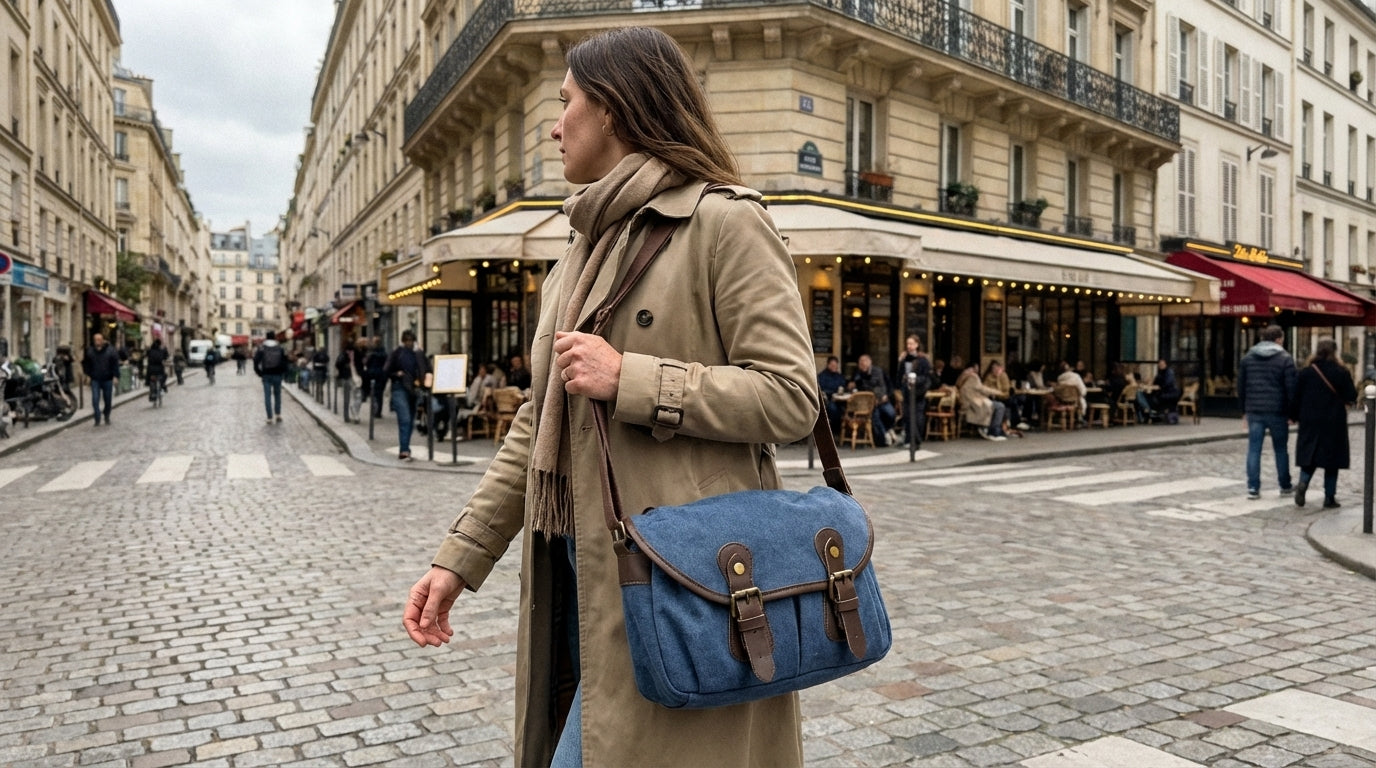
Shop the look: VAVIN - Bleu Jean

Why proper leather bag storage matters more than you think
Leather is skin. It needs to breathe, maintain moisture balance, and keep its structure. Store it wrong and you get irreversible damage within months.
The most common casualties: cracked leather from dry environments, mold from trapped moisture, permanent creases from poor stuffing, and hardware indentations that never disappear. A bag that cost hundreds becomes worthless because of storage mistakes that take five minutes to avoid.
For a broader overview, see The handbag buying guide that actually helps you choose.
Canvas and leather combinations like the VAVIN actually store better than pure leather bags. The washed cotton canvas is more forgiving — it won't crack or develop the same moisture issues. But the leather trim still needs proper care.
Step 1: Prep your bag (empty, clean, and condition)
Empty everything. Check every pocket, including the tiny ones you forget about. Crumbs and receipts attract pests. Pens leak. Loose change creates pressure points.
Clean the interior with a barely damp cloth. Let it air dry completely — any trapped moisture becomes mold in storage. For the exterior, wipe down leather areas with a clean, dry cloth. Skip harsh cleaners unless there's visible dirt.
Conditioning before storage is controversial. Fresh conditioner can attract dust and insects during long-term storage. For bags going away for months, clean thoroughly but skip conditioning until you bring them back out.
Step 2: Stuff your bag to maintain its shape
This step separates amateur storage from professional preservation. The wrong stuffing material ruins bags faster than no stuffing at all.
Use acid-free tissue paper or clean cotton cloth. Never use newspaper (ink transfers), colored tissue (dye bleeds), or plastic bubble wrap (doesn't breathe). The goal is gentle support, not tight packing.
For structured bags, stuff lightly to maintain the silhouette without stretching. For slouchy styles, stuff just enough to prevent deep creasing. The bag should look relaxed, not inflated.
Pay attention to corners and curved areas — these collapse first and are hardest to restore. A small wad of tissue in each corner prevents permanent dents.

Step 3: Choose the right cover (dust bags vs. plastic)
Dust bags are ideal — they protect from light and dust while allowing airflow. Cotton or linen work best. Avoid synthetic dust bags that don't breathe properly.
Never use plastic bags or airtight containers. Leather needs air circulation. Plastic traps moisture and creates the perfect environment for mold and mildew. Even "breathable" plastic isn't breathable enough for leather storage.
If you don't have dust bags, a clean cotton pillowcase works. Tie it loosely at the opening. The key is protection without suffocation.
Step 4: Find the ideal environment (humidity and light)
Temperature stability matters more than the actual temperature. A consistent 65-70°F works well, but avoid areas with big swings — like attics or garages.
Humidity should stay between 45-55%. Too dry and leather cracks. Too humid and you get mold. Most home closets hit this range naturally, but basements and bathrooms don't.
Keep bags away from direct sunlight and heat sources. UV light fades leather permanently. Radiators and heating vents create hot spots that crack leather over time.
Store bags upright when possible, like books on a shelf. This prevents pressure creases and maintains natural shape. If you must stack, put the heaviest bags on bottom and lightest on top.
Short-term vs. long-term storage strategies
Daily rotation bags need minimal prep. Empty them, stuff lightly if they're soft, and place them on a shelf or in a dust bag. No deep conditioning needed.
For seasonal storage (3+ months), follow the full prep routine. Clean thoroughly, stuff properly, use dust bags, and check on them monthly for the first few months to catch any issues early.
The most common mistake: treating weekend storage like deep storage. If you're rotating bags weekly, you don't need the full ritual every time. Save the intensive prep for true long-term storage.
Special care: structured bags, slouchy bags, and mixed materials
Structured bags must stay upright. Their shape depends on internal framework that can bend permanently if stored flat under weight. Give them dedicated shelf space.
Slouchy bags are more forgiving but still need gentle stuffing to prevent deep creases. They can be stored flat if necessary, but upright is always better.
Canvas and leather combinations like ZEDE bags store easier than pure leather. The canvas won't crack or develop moisture problems, but treat the leather elements with the same care. Focus your attention on leather handles, trim, and hardware areas.

How to protect hardware and chains during storage
Metal hardware can leave permanent impressions on soft leather. Wrap chain straps in tissue paper or tuck them inside the bag before storage.
For bags with external metal details, place a thin layer of tissue between the hardware and leather. This prevents metal oxidation from staining the leather over time.
Zippers should be closed but not under tension. If the bag is stuffed tightly enough to strain the zipper, remove some stuffing. Stressed zippers break, and leather zipper repairs are expensive.
Common leather storage mistakes to avoid
The biggest mistake is plastic storage containers. They seem protective but create moisture traps that destroy leather faster than leaving bags exposed.
Over-stuffing ranks second. Bags stretched beyond their natural shape develop permanent stress marks and loose seams. Gentle support beats tight packing every time.
Hanging bags by thin straps causes handle stretching and attachment point stress. Only hang bags designed for it, and only by sturdy handles.
Cedar blocks seem logical but can be too aggressive for leather. The oils can stain, and strong cedar scent can be absorbed permanently. If you use cedar, keep it away from direct contact with bags.
Storing dirty bags multiplies problems. Food residue attracts pests. Stains set permanently. Salt and dirt become abrasive. Always clean before storage, even if the bag looks fine.
The combination of canvas and leather in bags like the VAVIN actually makes storage simpler. Canvas is more resilient than pure leather, so you're mainly protecting the leather trim and hardware. Less fussy than caring for full-leather luxury bags, but the same principles apply.