

Your leather bag got stained and you're panicking. Here's what actually works
You set your bag down for two seconds and now there's a mystery stain glaring back at you. Before you spiral into worst-case scenarios about ruining your favorite bag, take a breath. Most stains are fixable if you know what you're dealing with and act smart.
The key is identifying your leather type first, then matching the right technique to your specific stain. Skip this step and you might turn a small problem into permanent damage.
Shop the look: THE TOTE BAG - Olive

Identify your leather: the crucial first step
Not all leather responds the same way to cleaning. Get this wrong and you'll create bigger problems than the original stain.
Smooth leather feels slick to the touch and has a slight shine. This includes most structured handbags, crossbody bags, and totes. It can handle gentle moisture and mild cleaners.
For a broader overview, see The handbag buying guide that actually helps you choose.
Suede and nubuck feel fuzzy or velvety. Water is their enemy — it creates permanent dark spots and ruins the texture. These need completely different treatment.
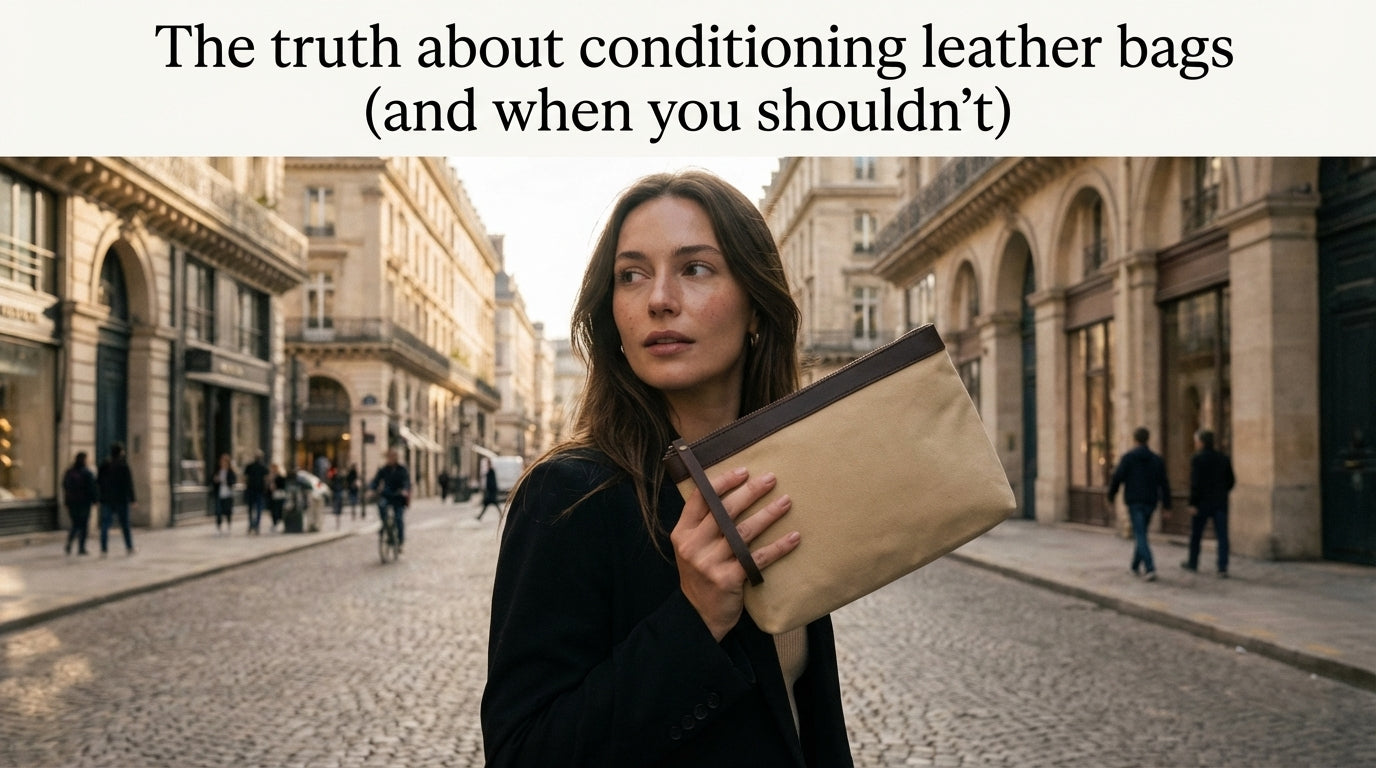
Canvas and leather combinations like ZEDE's tote bags require a hybrid approach. The canvas can handle more aggressive cleaning, but you need to protect the leather trim during the process.
Do the touch test in an inconspicuous spot first. If it feels smooth and slightly cool, proceed with smooth leather techniques. If it's soft and fuzzy, jump to the suede-specific methods below.
Essential tools and safe cleaners to have on hand
Having the right supplies prevents panic cleaning with whatever's under your kitchen sink. Here's what actually works:
For immediate response:
- Clean microfiber cloths (never paper towels — they scratch)
- Cornstarch or baby powder for oil absorption
- Distilled water (tap water minerals can leave residue)
- Cotton swabs for precision work
For deeper cleaning:
- Mild dish soap (Dawn works well, no harsh detergents)
- Leather conditioner (not saddle soap — too harsh for most bags)
- Micellar water for interior fabric cleaning
- Suede brush for napped leathers
After testing dozens of leather bags over the years, I've learned that gentle, targeted cleaning beats aggressive scrubbing every time. The goal is lifting the stain, not grinding it deeper into the material.
How to remove specific stains from the leather exterior
Each stain type needs its own approach. Here's what works for the most common culprits:
Oil and grease stains
Act immediately. Blot — don't rub — with a clean cloth to absorb surface oil. Sprinkle cornstarch or baby powder over the entire stain and let it sit for at least 4 hours, preferably overnight. The powder draws oil out of the leather.
Brush off the powder gently. If the stain persists, repeat the process. For old, set-in grease stains, this might take 2-3 cycles.
Never use heat or hair dryers. Heat sets oil stains permanently.
Water spots and rain damage
Counterintuitively, the fix for water spots is more water — but applied correctly. Dampen a cloth with distilled water and gently wipe the entire panel of leather, not just the spotted area. This prevents ring marks from forming.
Let it air dry completely away from direct heat. Once dry, apply a thin layer of leather conditioner to restore flexibility.
Ink and pen marks
This is where most people make expensive mistakes. Do not use rubbing alcohol, nail polish remover, or lemon juice. These strip leather dye and create permanent light patches.
For fresh ink, blot immediately with a clean cloth. For set stains, your best bet is a professional leather cleaner or taking it to a leather specialist. Some inks are simply impossible to remove without damaging the surrounding leather.
Makeup and lipstick
Scrape off any excess with a plastic card edge. Mix a tiny amount of mild dish soap with distilled water to create light suds. Dab — don't rub — with a barely damp cloth. Work from the outside of the stain inward to prevent spreading.
Rinse with a clean, slightly damp cloth and let air dry completely.

Don't forget the inside: how to clean the purse lining
The interior of your bag probably needs more attention than the outside. Exploded pens, leaked makeup, and mystery crumbs accumulate in ways that would horrify you if you really looked.
Turn your bag inside out if possible. For fabric linings, micellar water is your secret weapon — it's designed to lift makeup and oils without harsh scrubbing.
Dampen a cotton pad with micellar water and gently dab stained areas. For stubborn spots, mix a drop of mild dish soap with water and work it in with your fingertips. Rinse with a barely damp cloth and let the bag air dry completely before using.
For leather-lined interiors, use the same gentle approach as the exterior, but work in smaller sections.
Canvas bags like ZEDE's water-repellent tote are more forgiving here — the sturdy canvas can handle slightly more aggressive cleaning without losing its structure.
What NOT to do: common mistakes that ruin leather
These are the horror stories I see repeatedly. Learn from other people's expensive mistakes:
Never use vinegar or lemon juice. The acid strips leather dye and creates permanent light patches. I've seen $500 bags ruined this way.
Don't soak suede or nubuck. Water creates permanent dark spots and ruins the texture. If your suede bag gets wet, let it dry completely, then brush gently with a suede brush to restore the nap.
Avoid heat sources. Hair dryers, radiators, and direct sunlight crack leather and set stains permanently. Always air dry at room temperature.
Don't scrub aggressively. This pushes stains deeper and can damage the leather surface. Gentle dabbing and patience work better than elbow grease.
Skip the saddle soap on designer bags. It's too harsh for most modern leather treatments and can strip protective coatings.
Post-cleaning care: conditioning, polishing, and storage
Cleaning strips some of the leather's natural oils. Conditioning restores flexibility and prevents cracking.
Wait 24 hours after cleaning before conditioning — the leather needs to be completely dry. Apply a thin, even layer of quality leather conditioner with a soft cloth. Work it in gently and let it absorb for the time specified on the product.
Buff with a clean cloth to restore shine. For matte leathers, skip the buffing step.
Storage matters too. Keep leather bags in breathable dust bags, never plastic. Stuff them lightly with tissue paper to maintain shape. Store in a cool, dry place away from direct sunlight.

When to give up and consult a leather professional
Some stains and damage are beyond DIY repair. Here's when to call in the experts:
Deep cuts or tears need professional patching. Attempting DIY repairs usually makes them more visible.
Color transfer from jeans or other clothing often requires color matching and professional treatment.
Mold or mildew can spread and cause permanent damage. Professional cleaning prevents it from returning.
Expensive bags with sentimental value are worth the professional investment. A $100 cleaning bill beats replacing a $1,000 bag.
When we see customers who've tried every DIY solution before coming to us, the damage is usually worse than the original stain. Sometimes the smart move is admitting you're in over your head.
The combination of canvas and leather, like in ZEDE's designs, actually makes maintenance easier. The canvas handles daily wear better than pure leather, and when stains do happen, you have more cleaning options without worrying about damaging an all-leather surface.