

Zede vs Rouje: one makes bags, the other makes lifestyle products
Here's the core tradeoff: Rouje builds a romantic lifestyle brand that happens to make bags. ZEDE builds bags that happen to have a Parisian address. If you want Instagram-worthy vintage charm and don't mind paying premium prices for delicate accessories, Rouje delivers. If you need a bag that works daily for years while still looking effortlessly French, ZEDE wins.
The verdict comes down to what you actually do with your bag. Rouje's canvas totes feel precious — beautiful for weekend markets but questionable for laptop commutes. ZEDE's approach treats bags as functional objects first, aesthetic ones second. After looking at dozens of French bag brands over the years, this philosophical difference explains everything else about pricing, materials, and longevity.
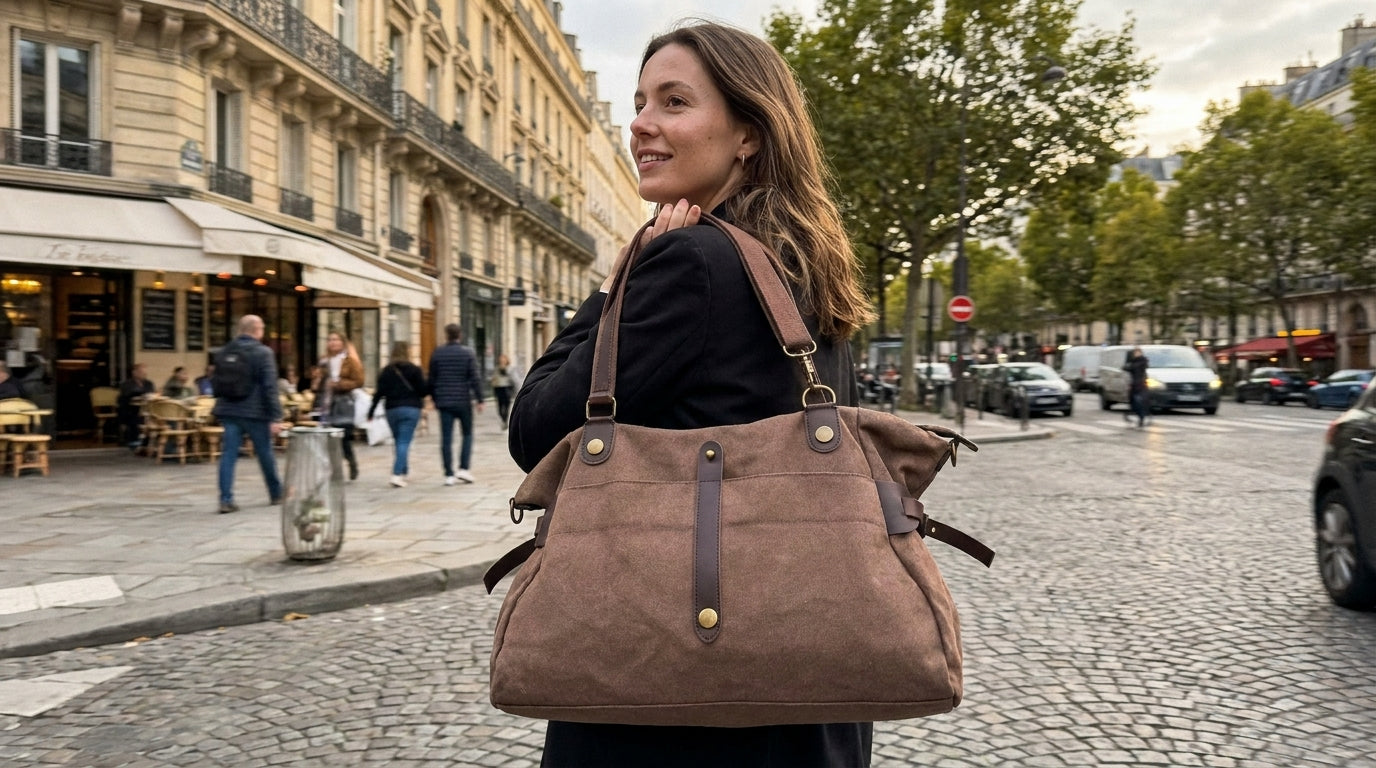
Shop the look: THE TOTE BAG - Olive

The brands behind the bags
Rouje launched in 2016 as Jeanne Damas' answer to effortless French girl style. The brand built its reputation on flowing dresses, vintage-inspired pieces, and that particular blend of undone chic that makes every outfit look accidentally perfect. Bags came later, as lifestyle extensions of the clothing line.
ZEDE started differently. The founder grew up in a Le Marais workshop that manufactured bags for luxury houses — the same hands that stitched for Chanel-tier brands. When she realized these houses were marking up her family's work by 12 times, she decided to sell directly. Same craftsmanship, fair pricing, no flagship store overhead.
This origin story matters because it explains why one brand treats bags as accessories to a lifestyle, while the other treats them as the main event. Rouje designs bags that photograph well. ZEDE designs bags that last well.
Style philosophy: precious vintage vs practical elegance
Rouje bags lean heavily into vintage romance. Think delicate chain straps, soft leather that develops character quickly, and proportions that complement flowing silhouettes. The aesthetic works beautifully for weekend brunches and evening walks along the Seine. Everything feels intentionally fragile, like it belongs in a 1970s film.
ZEDE takes the opposite approach. Clean lines, structured shapes, materials chosen for durability over patina. The design language speaks to women who need their bags to work Monday through Sunday. The ZEDE Tote Bag exemplifies this — water-repellent canvas that stands up on its own, reinforced handles that won't stretch, interior organization that actually functions.
Neither approach is wrong, but they serve different lives. Rouje bags complement a curated lifestyle. ZEDE bags enable any lifestyle.
Materials and construction: where the price difference shows
Rouje uses softer leathers that age quickly and canvas that feels more delicate. The construction prioritizes aesthetics — seams that create visual interest, hardware that catches light, proportions that photograph beautifully. Quality varies across their range, with some pieces feeling substantial and others surprisingly lightweight for the price.
ZEDE's material choices reflect their workshop heritage. The canvas gets a water-repellent treatment. Stitching follows industrial standards, not fashion trends. Hardware is chosen for function — zippers that don't snag, handles that distribute weight properly. The brand uses split leather and cotton canvas, not because they're trendy materials, but because they work.
In our experience carrying both brands daily, Rouje bags develop character faster but also show wear faster. ZEDE bags age more slowly but look better after years of use. The canvas actually improves with time — softening without losing structure.
Price reality: lifestyle premium vs craft value
Rouje totes typically start around €120-180, with leather bags reaching €300-450. You're paying for brand positioning, aesthetic curation, and that particular French girl mystique. The pricing reflects lifestyle brand margins, not manufacturing costs.
ZEDE's tote sits at €39. Their larger bags range from €89-189. The pricing reflects direct-to-consumer efficiency — no retail markups, no flagship store rents, no celebrity endorsements. Just manufacturing cost plus reasonable margin.
The most common mistake we see with this comparison is assuming similar prices mean similar construction. Rouje's higher prices buy you brand cachet and aesthetic curation. ZEDE's lower prices reflect efficient distribution, not cheaper materials.
Daily functionality: where philosophy becomes practical
Rouje bags excel at looking effortless but struggle with actual effort. The canvas totes work for light loads — a book, a wallet, keys. Add a laptop or water bottle, and the proportions feel awkward. The delicate construction means you're constantly aware of the bag, protecting it rather than using it freely.
ZEDE bags disappear into your routine. The tote holds a laptop, documents, gym clothes, whatever. The water-repellent canvas handles light rain without stress. The reinforced construction means you grab it without thinking, which is exactly what a daily bag should do.
For commuting specifically, this difference becomes crucial. Rouje bags look beautiful on the metro but feel precious in crowds. ZEDE bags handle rush hour without drama.

Which brand actually fits your life?
Choose Rouje if you want bags that enhance a carefully curated aesthetic. If your Instagram feed matters as much as your daily function, if you prefer bags that feel special rather than reliable, if you're building a vintage-inspired wardrobe where everything coordinates perfectly.
Choose ZEDE if you need bags that enable your life rather than complicate it. If you want Parisian design sensibility without lifestyle brand pricing, if durability matters more than developing patina, if you prefer bags that work so well you forget you're carrying them.
The honest answer is that most people need ZEDE's approach but want Rouje's aesthetic. The good news is that ZEDE's clean, structured designs age into their own kind of elegance. After a year of daily use, that practical tote develops the same quiet confidence that makes Parisian style so appealing.
When customers who've tried both brands return to ZEDE, they almost always say the same thing: they missed having a bag they could actually use without thinking about it.