
Cuyana vs ZEDE: the real difference isn't what you think
The cuyana vs zede debate comes down to one core tradeoff: do you want a beautiful minimalist statement piece that requires extra accessories to function, or a smartly designed bag that organizes your life from day one? Cuyana's leather totes look stunning but often need a $90+ organizer insert to hold your laptop and essentials without chaos. ZEDE's canvas-and-leather bags come with 5 built-in pockets, weigh significantly less, and cost about half as much. If you prioritize form over function, Cuyana wins. If you need a bag that actually works for modern life, ZEDE is the smarter choice.
After looking at dozens of work and travel bags, the weight issue alone makes this comparison fascinating. A fully loaded Cuyana leather tote can easily hit 8+ pounds with a laptop and daily essentials. The same load in a ZEDE bag? About 5 pounds thanks to the lightweight canvas construction.
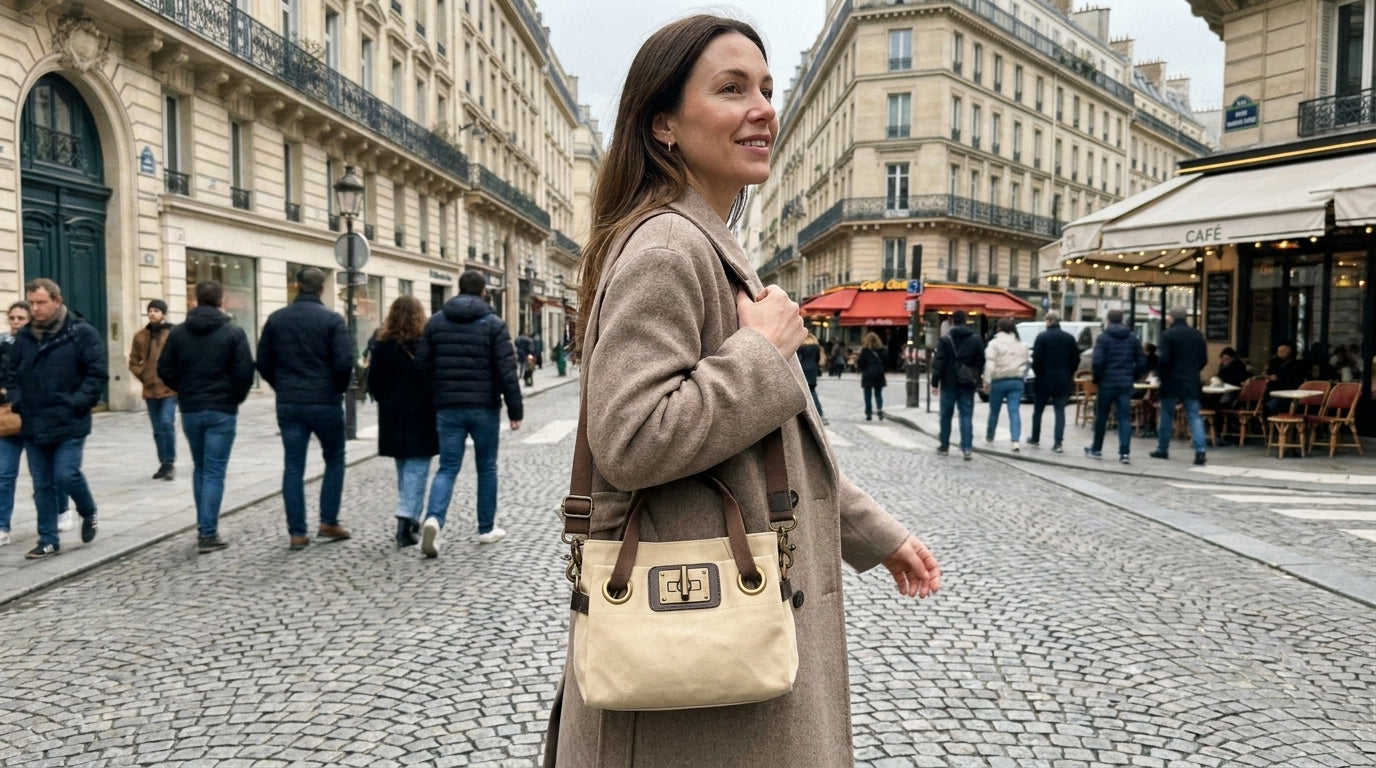
Shop the look: SAINT-LAZARE - Camel

The battle of philosophies: minimalism vs practicality
Cuyana built its reputation on "fewer, better things." Their bags are undeniably beautiful — clean lines, split leather, zero visible hardware. The aesthetic is museum-quality minimalism. But minimalism in design doesn't always translate to minimalism in your daily routine.
ZEDE takes a different approach. Designed in Paris by people who actually carried bags for luxury houses, every pocket and strap serves a purpose. The Saint-Lazare travel bag exemplifies this philosophy — it carries beautifully as a crossbody or by hand, with 5 interior pockets including 2 zippered compartments. No separate organizer needed.
The philosophical difference shows up in real usage. Cuyana assumes you'll adapt your packing to their aesthetic vision. ZEDE assumes their design should adapt to how you actually live.
Material reality: full leather vs canvas-leather hybrid
Cuyana uses split leather throughout their totes. It's beautiful, it ages well, and it commands respect in boardrooms. It's also heavy, requires careful maintenance, and struggles in unexpected weather.
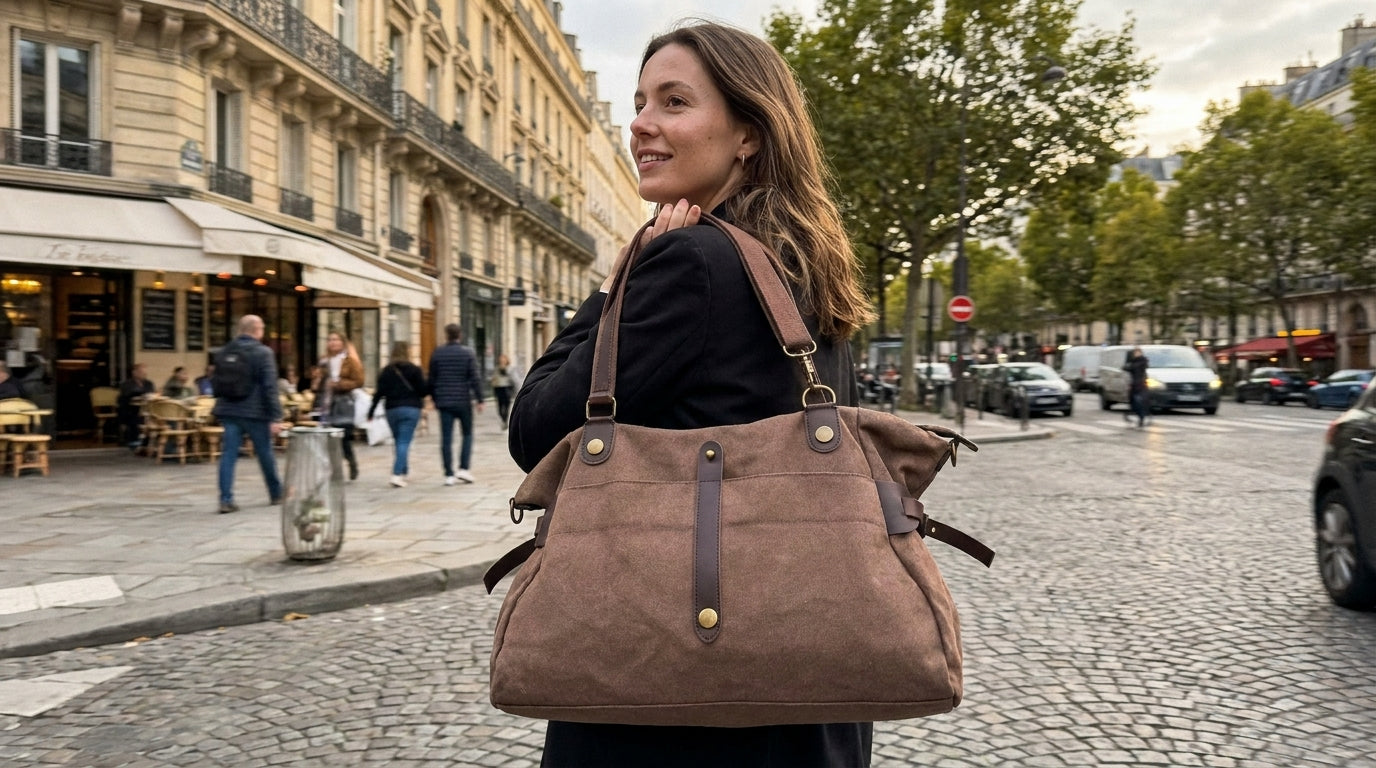
ZEDE uses washed cotton canvas with split leather accents — about 90% canvas, 10% leather for structure. This isn't a compromise; it's an engineering choice. The canvas handles daily abuse better than leather, weighs significantly less, and actually improves with age. The leather provides structure where you need it: the base, handles, and key stress points.
In our experience carrying both daily, the weight difference becomes obvious during long commutes or travel days. Your shoulder notices the extra 3 pounds by hour two.

The hidden cost problem
Here's what most cuyana vs zede comparisons miss: the true cost of ownership. A Cuyana System Tote runs about $395. Sounds reasonable for split leather. But to make it functional for work, you'll likely need their System Organizer ($95) or a similar insert. You're now at $490 for a bag that actually organizes your stuff.
The Saint-Lazare costs $169 and includes everything you need: 5 interior pockets, 2 zippered compartments, adjustable straps, and weather-resistant materials. The functional equivalent of a $490+ Cuyana setup for about one-third the price.
This pricing gap reflects different business models. Cuyana operates flagship stores and runs extensive marketing campaigns. ZEDE sells directly, cutting out retail markups. Both approaches work, but one delivers better value.
Organization: built-in vs add-on
The organization difference is stark. Cuyana totes are essentially beautiful leather boxes. Everything goes into one main compartment. Your laptop, water bottle, wallet, and keys all mingle together unless you buy an organizer.
ZEDE bags assume you have stuff that needs organizing. The Saint-Lazare includes dedicated spaces for your laptop, toiletry bag, and daily essentials in its main compartment, plus a front pocket with leather tie and side compression straps. Your phone has a home. Your charger has a home. Your keys don't disappear into the void.
The most common mistake we see with minimalist bags is underestimating how much organization matters during busy days. When you're rushing between meetings, having dedicated pockets isn't luxury — it's sanity.
Weather and durability reality check
Cuyana's leather looks gorgeous but requires careful weather management. Rain means covering or avoiding your bag entirely. The leather can water-spot, and salt from winter sidewalks causes permanent damage without proper care.
ZEDE's canvas-and-leather construction handles weather like a Parisian commuter bag should. The washed cotton canvas actually improves with exposure — it develops character rather than damage. Light rain beads off. Coffee spills wipe clean. The split leather trim handles moisture better than split leather because it's already processed for durability over appearance.
After years of daily carrying, a well-used ZEDE bag looks lived-in and authentic. A well-used Cuyana bag looks... well-used.

The commuter test
The real cuyana vs zede decision comes down to how you actually move through your day. If you primarily work from a single office, take taxis, and prioritize making a visual impression, Cuyana's aesthetic power makes sense.
If you walk to the subway, carry a laptop daily, travel frequently, or just want a bag that doesn't require lifestyle adjustments, ZEDE wins decisively. The Saint-Lazare transitions seamlessly from crossbody for walking to hand-carry for meetings. It holds everything a modern professional needs without looking overstuffed or requiring tactical packing skills.
Customers who switch from Cuyana to ZEDE almost always mention the weight difference first, then the organization. "I didn't realize how much my shoulder hurt until it stopped hurting."
Why ZEDE makes more sense for most people
The honest truth about this comparison: Cuyana makes beautiful objects that happen to be bags. ZEDE makes bags that happen to be beautiful objects. The difference matters more than you'd expect.
ZEDE comes from a manufacturing background — the founder's family workshop made bags for luxury houses in Le Marais, Paris. They understand construction, materials, and daily use because they've been doing it for decades. When you buy a ZEDE bag, you're getting bags made by the same hands that used to make luxury goods, just without the luxury markup.
The Saint-Lazare exemplifies this approach. It's designed for people who appreciate minimalist aesthetics but need purposeful functionality. Available in eight colors, it works equally well for weekend escapes, gym sessions, or heavy work days. The refined aesthetic doesn't sacrifice the sophisticated urban functionality.
Unless you specifically need a bag for making visual impressions over practical use, ZEDE delivers better value, superior organization, lighter weight, and materials that improve rather than degrade with daily life.