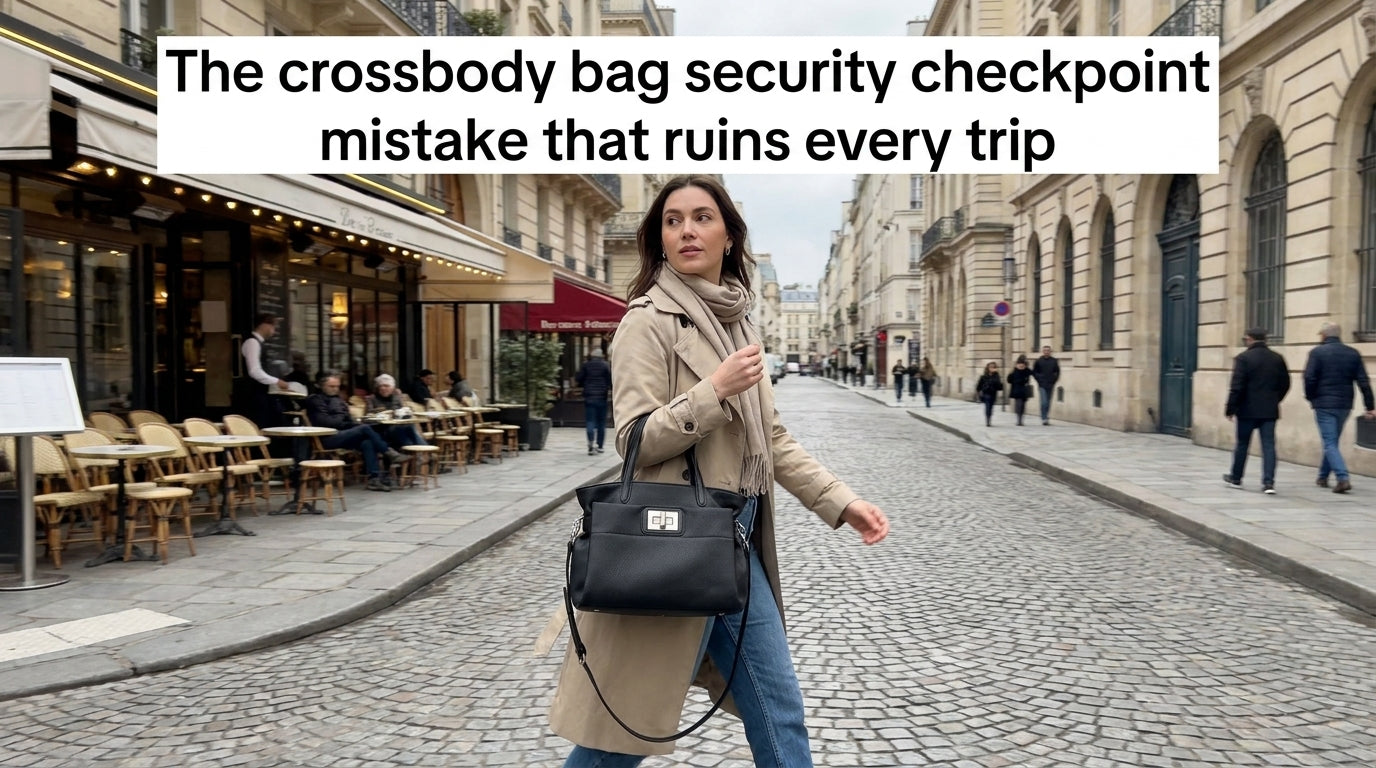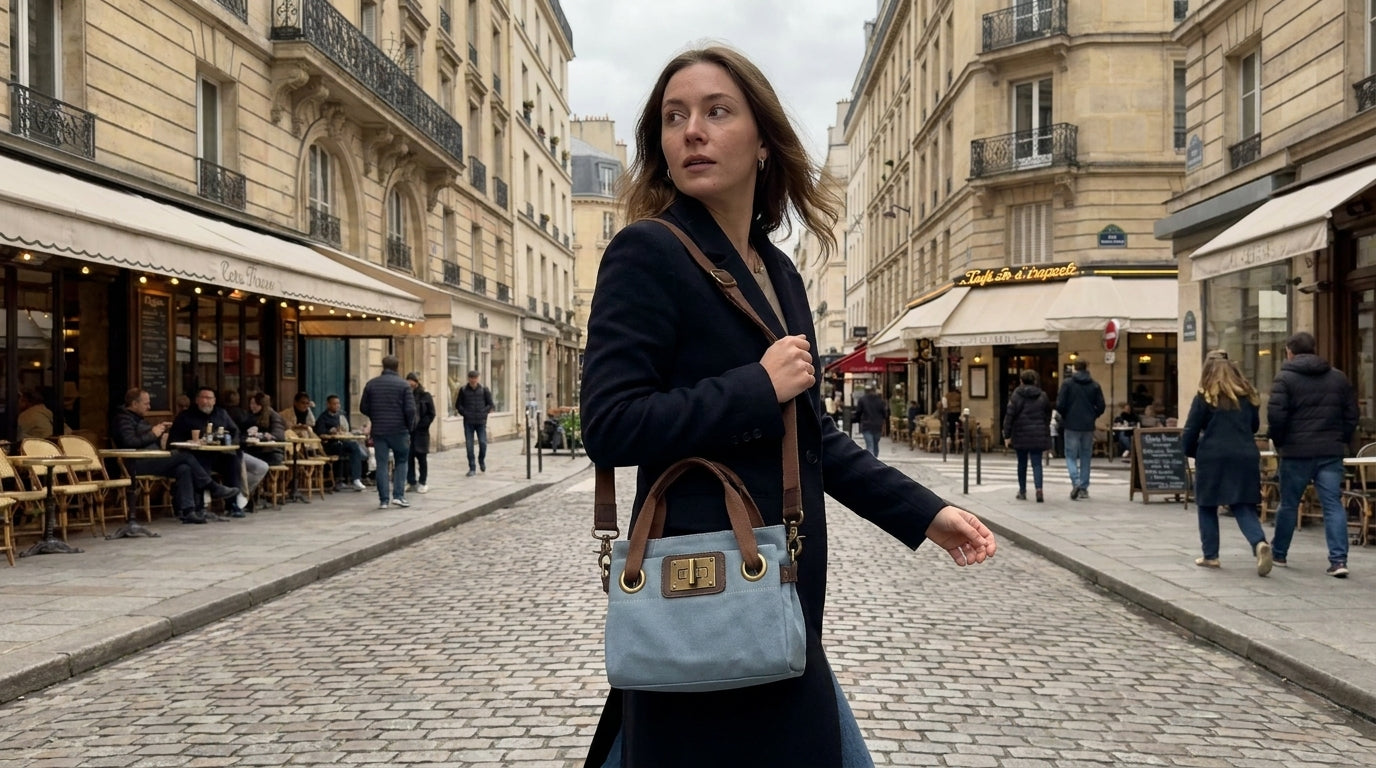

Most travel bags look organized but fall apart the moment you actually pack them
The biggest lie in travel accessories? That any bag can become a "travel bag" with the right packing cubes. Walk through any airport and you'll see the reality: beautifully designed bags with zippers straining, straps cutting into shoulders, and women digging through black holes trying to find their boarding pass.
After looking at dozens of so-called travel bags, the problem isn't what you put inside — it's whether the bag was actually designed for movement, weight, and the chaos of real travel. Most bags that photograph well crumble under the pressure of a long day carrying everything you need.
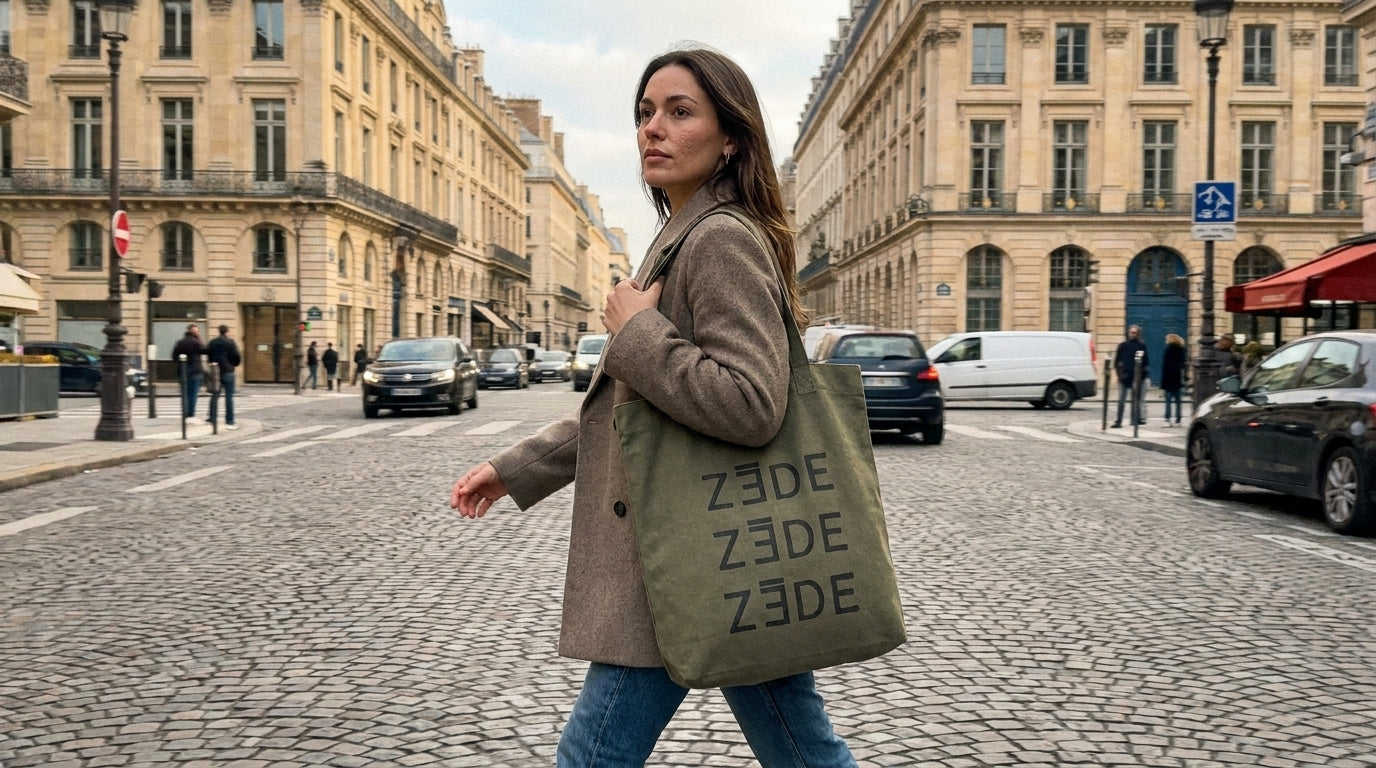
Shop the look: THE TOTE BAG - Olive

What travel handbag organization actually means
Real travel handbag organization tips start with understanding that organization isn't about having more compartments — it's about having the right compartments in the right places. The difference between a bag that works and one that doesn't often comes down to three things: structure, accessibility, and weight distribution.
Structure means the bag holds its shape when you set it down. No collapsing into a sad puddle on the airport floor while you search for your phone. Accessibility means you can reach what you need without unpacking everything else. Weight distribution means the bag carries comfortably even when fully loaded.
For a broader overview, see Senreve alternative: why I switched to this Parisian brand instead.
The ZEDE Tote Bag gets this balance right with water-repellent canvas that stands up on its own, an interior zippered pocket positioned where you can actually reach it, and reinforced handles that don't dig into your shoulder after an hour of carrying.
Why most travel organization advice fails
The internet is full of travel handbag organization tips that assume you have unlimited time and patience. Roll your chargers in tissue paper. Use tiny mesh bags for everything. Color-code your cables. This advice comes from people who pack once for a photo shoot, not from anyone who travels regularly.
In our experience, the best travel organization system is the one you'll actually use when you're rushing to catch a flight. That means fewer steps, not more. It means pockets you can find by feel, not by sight. It means a bag that works even when you stuff things in quickly.
The most common mistake we see? Buying a bag based on how it looks empty, not how it performs full. A beautiful unstructured leather bag might photograph perfectly on Instagram, but try carrying a laptop, water bottle, and travel documents in it for eight hours. The leather stretches, the shape disappears, and everything slides to the bottom.
The organization system that actually works
Start with the bag itself. If it doesn't have built-in structure, no amount of organization will save you. The bag needs to maintain its shape and stand upright when you set it down. This isn't about luxury — it's about physics. A structured bag keeps your organized items organized.
Next, think in zones, not compartments. You need three zones: immediate access (phone, boarding pass, lip balm), secure storage (passport, cards, cash), and everything else (laptop, chargers, snacks). The immediate access zone should be the easiest pocket to reach while wearing the bag.
The secure storage needs to zip closed and sit against your body when carrying crossbody style. Everything else can go in the main compartment, but only if that compartment has enough structure to keep items from becoming a jumbled mess.
Skip the elaborate packing cube systems. One zippered pouch for cables and chargers, one for medications and small items. That's it. The goal is to find things quickly, not to achieve perfect Instagram organization that takes twenty minutes to recreate every time you pack.

Materials that matter for travel
Canvas beats leather for travel organization. Leather looks beautiful but stretches under weight, making your carefully organized compartments less defined over time. Canvas holds its shape, resists water (crucial for travel), and weighs less than comparable leather options.
The water-repellent canvas on bags like the ZEDE Tote isn't just about rain protection — it's about spills, condensation from water bottles, and the general moisture that comes with travel. A bag that can handle these small disasters without staining or losing shape is a bag you'll actually want to use repeatedly.
Reinforced handles matter more than you think. Beautiful thin straps might look elegant, but they become painful when carrying travel weight. Look for handles that distribute weight across a wider surface area. Your shoulders will thank you by hour three of travel.
Common travel bag organization mistakes
Buying too many organizational accessories. Those sets of matching packing cubes look appealing, but they add weight and bulk. Most people end up using one or two pieces from expensive organization sets. Start with the basics and add only what you actually use.
Choosing bags with too many small compartments. This sounds counterintuitive, but tiny pockets often create more chaos than they solve. You forget what goes where, items get lost in rarely-used compartments, and you spend more time managing the organization system than benefiting from it.
Ignoring weight when empty. A bag that weighs three pounds before you put anything in it becomes a burden quickly. The ZEDE Tote achieves structure while staying lightweight — you get the organization benefits without the weight penalty.
Prioritizing looks over function. The most beautiful bag is useless if it doesn't work for your travel style. Consider how you actually travel: rushing through airports, walking long distances, setting bags down frequently. Your bag needs to handle these realities, not just look good in travel photos.
Testing your travel organization system
Before committing to any travel handbag organization approach, test it during a busy local day. Pack the bag as you would for travel and carry it for several hours while running errands. Can you find your keys quickly? Does the weight distribution feel comfortable? Do items stay where you put them?
Pay attention to how the bag performs when you set it down and pick it up repeatedly. Does everything shift around? Do you need to reorganize after each stop? A good travel bag maintains organization even with frequent handling.
The olive colorway on the ZEDE Tote works particularly well for travel because it hides the inevitable scuffs and marks that come with real use. While black shows every bit of wear and light colors require constant maintenance, olive maintains its sophisticated appearance even after heavy travel use.
Building habits that stick
The best travel handbag organization tips become automatic habits, not conscious decisions. Always put your phone in the same pocket. Always zip the secure compartment after use. Always place the bag the same way when you set it down so you know which side the main opening faces.
Simplicity wins over complexity every time. A system you can execute when tired, stressed, or rushing is more valuable than a perfect system you abandon under pressure. Start with basic organization and refine based on what actually works in practice.
Consider the bag an investment in reducing travel stress. When you can find what you need quickly and carry comfortably, travel becomes less exhausting. The right bag with thoughtful organization pays for itself in reduced frustration and improved travel experiences.
FAQ
What's the most important feature for travel bag organization?
Structure that maintains shape when full. Without this foundation, no organization system works effectively. The bag needs to stand upright and keep compartments defined even under weight.
How many compartments should a travel handbag have?
Three functional zones work better than many small compartments: immediate access, secure storage, and main compartment. Too many small pockets often create confusion rather than organization.
Should I buy packing cubes for handbag organization?
Start with one zippered pouch for cables and small items. Most elaborate packing cube systems add weight and complexity without proportional benefits for handbag-sized spaces.
What material works best for travel handbag organization?
Water-repellent canvas provides better structure and durability than leather while weighing less. Canvas maintains shape under load and resists travel-related spills and moisture.
How do I test if my travel bag organization actually works?
Carry the fully packed bag during a busy local day with multiple stops. If you can find items quickly and the weight feels comfortable after several hours, the system works for real travel conditions.