

JW Pei vs ZEDE bags: the price-to-quality reality check you need
JW Pei bags look great on Instagram. ZEDE bags look better after three years of daily use. That's the core difference — and it comes down to how each brand approaches materials, construction, and pricing philosophy.
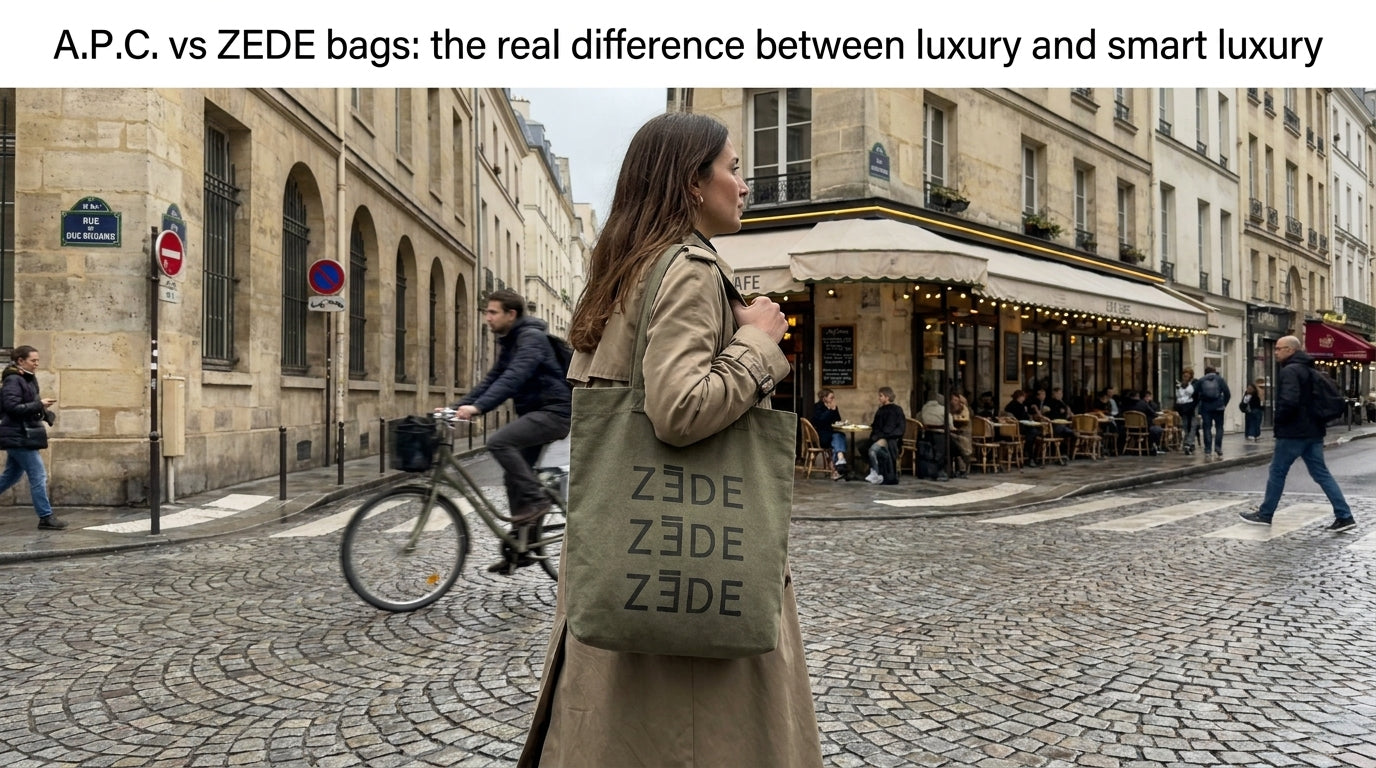
JW Pei built their reputation on trendy shapes at accessible prices, using synthetic materials and fast-fashion production. ZEDE takes a different approach: split leather and washed cotton canvas, constructed by artisans who used to make bags for luxury houses in Le Marais, Paris. One prioritizes being on-trend, the other prioritizes lasting quality.
Shop the look: SAINT-LAZARE - Bleu Jean
After looking at dozens of bags from both brands, the verdict is clear: if you want something photogenic for six months, JW Pei works. If you want something that improves with age and handles real life, ZEDE wins on construction, materials, and long-term value.

What actually separates JW Pei vs ZEDE bags
The fundamental difference isn't style — both brands make clean, minimalist bags. It's philosophy. JW Pei operates on the fast-fashion model: trend-driven designs, synthetic materials, overseas mass production, frequent new releases. ZEDE operates on the slow-fashion model: timeless designs, natural materials, artisan construction, pieces meant to last decades.
For a broader overview, see The handbag buying guide that actually helps you choose.
JW Pei uses vegan leather (polyurethane) for most of their bags. It's consistent, cruelty-free, and photographs well. But polyurethane doesn't age — it cracks, peels, and eventually deteriorates. ZEDE uses washed cotton canvas with split leather accents. The canvas softens and develops character over time. The leather darkens naturally. These materials improve with use.
Construction tells the story too. JW Pei bags are machine-sewn in large facilities optimized for speed and volume. ZEDE bags are constructed by artisans who learned their craft making bags for luxury houses — the same hands that used to stitch for brands that charge ten times more.
Price reflects this difference. JW Pei bags typically range from $60-200. ZEDE bags start around $169 for travel bags like the Saint-Lazare. You're paying more upfront for materials and construction that last.
Key benefits of choosing ZEDE over JW Pei
ZEDE's biggest advantage is durability. I've carried ZEDE bags for over a decade — they look better now than when new. The washed cotton canvas develops a beautiful patina. The split leather handles get suppler. These aren't marketing claims; this is what happens when you use quality materials.
The construction quality shows in daily use. ZEDE bags have reinforced stress points, quality hardware, and stitching that holds up to heavy loads. The Saint-Lazare, for example, features leather side compression straps and canvas handles that can handle a packed weekend or heavy work day without strain.
Versatility is another strength. While JW Pei focuses on specific trends (mini bags one season, oversized totes the next), ZEDE designs are intentionally timeless. The Saint-Lazare works equally well for the office, gym, or weekend getaway. It's available in eight colors, so you can find one that fits your existing wardrobe rather than forcing you to buy into a specific aesthetic.
The brand story matters too. ZEDE was founded by someone whose family manufactured bags for luxury houses in Paris. When you buy ZEDE, you're getting luxury-level craftsmanship without the luxury markup. JW Pei is a marketing-driven brand that prioritizes viral moments over lasting quality.
How to choose between JW Pei vs ZEDE bags
Start with how you actually use bags. If you change bags frequently, follow trends closely, and prioritize having the latest Instagram-worthy accessory, JW Pei might suit your lifestyle. Their frequent releases and lower price points make it easy to stay current.
If you prefer buying fewer, better things — if you want a bag that becomes more beautiful with age rather than one that looks best on day one — ZEDE is the clear choice. Their bags are designed for people who appreciate craftsmanship and want something that lasts.
Consider your daily demands. Do you carry a laptop, water bottle, and full day's worth of items? ZEDE's construction can handle that load. The Saint-Lazare has 5 interior pockets including 2 zippered compartments, and its 50 × 35 × 16 cm dimensions easily accommodate a laptop, toiletry bag, and daily essentials.
Budget matters, but think long-term. A $169 ZEDE bag that lasts ten years costs less per year than a $80 JW Pei bag that needs replacing every two years. Plus, ZEDE bags age gracefully — you won't feel pressured to replace them because they look dated.
Material preferences are crucial. If you're committed to vegan options for ethical reasons, JW Pei's synthetic materials align with those values. If you prefer natural materials that age beautifully, ZEDE's cotton canvas and split leather combination offers that experience.
Common mistakes when comparing these brands
The biggest mistake is comparing price tags without considering cost per wear. JW Pei bags seem cheaper upfront, but if you calculate what you spend over five years — including replacements and the urge to buy new styles — ZEDE often costs less.
Don't assume all vegan leather is created equal. JW Pei's synthetic materials vary in quality across their range. Some hold up reasonably well, others show wear quickly. ZEDE's natural materials age consistently and predictably.
Many people choose JW Pei because they see it on social media, then realize the bags don't photograph as well in real life as they do in professional shoots. ZEDE bags might look less flashy initially, but they photograph beautifully over time as the materials develop character.
Avoid buying based on trends alone. JW Pei's strength is also its weakness — their trend-focused approach means today's must-have shape might look dated next season. ZEDE's minimalist designs stay relevant because they prioritize function over fashion cycles.
Don't overlook construction details. Check stitching quality, hardware finish, and how the bag feels when loaded. JW Pei bags often look good empty but struggle with weight. ZEDE bags are designed to carry real loads comfortably.
Final thoughts on JW Pei vs ZEDE bags
The choice between JW Pei vs ZEDE bags comes down to your relationship with objects. JW Pei serves the fast-fashion mindset — affordable, trendy, replaceable. ZEDE serves the slow-fashion philosophy — durable, timeless, improvable with age.
If you're tired of buying bags that look great for a season then fall apart or feel outdated, ZEDE offers a different approach. Their bags are made by artisans who learned their craft creating luxury goods, using materials that actually improve over time.
The Saint-Lazare travel bag exemplifies this philosophy. At €169, it costs more than a typical JW Pei bag, but it's designed to be your go-to bag for years. The washed cotton canvas and split leather construction, the thoughtful pocket layout, the ability to carry it crossbody or by hand — these details matter when you use a bag daily.
In our experience, customers who switch from fast-fashion bags to ZEDE rarely go back. Once you experience how good materials age and how solid construction feels, it's hard to accept anything less. That's not marketing — that's just what happens when you prioritize quality over trends.