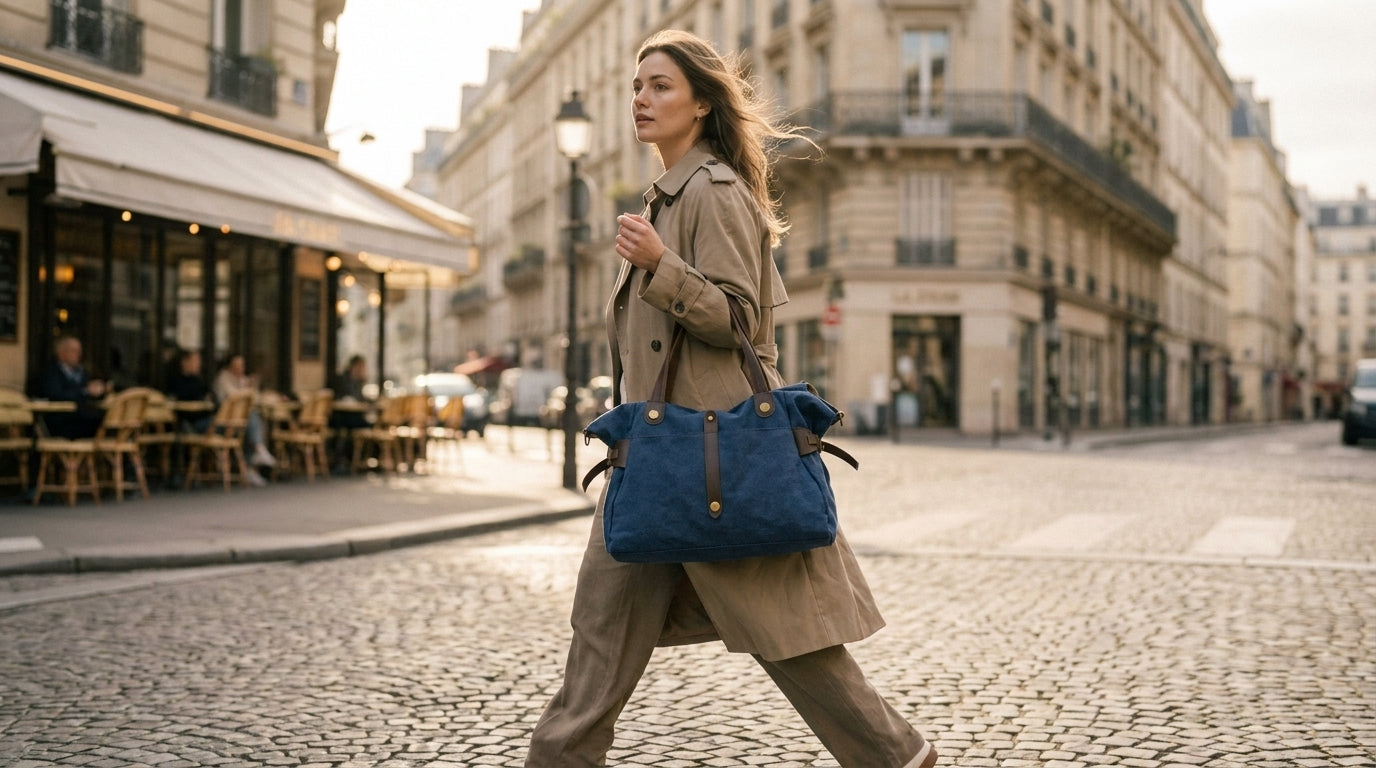


Why most shoulder bag styling advice gets it backwards (and what actually works)
Here's what every styling guide gets wrong about shoulder bags: they focus on how a bag looks in photos, not how it works in your actual life. You'll read about "proportion rules" and "color matching" while carrying a beautiful bag with zero pockets that dumps your phone into the void every time you reach for your keys.
After looking at dozens of shoulder bags and testing them in real-world scenarios, the best shoulder bag for bag styling tips comes down to one thing: function drives style, not the other way around. A bag that works becomes your go-to. A bag you reach for every day naturally looks better on you than something that sits in your closet because it's impractical.
Shop the look: PONT-DES-ARTS - Normal / Olive

What makes a shoulder bag actually styleable
Most styling advice treats bags like static accessories. But shoulder bags move with you. They shift when you walk, slide when you bend over, and need to work at different heights depending on what you're wearing.
The foundation of good shoulder bag styling is an adjustable strap that hits the right spot consistently. Too short and it pulls at your shoulder. Too long and it swings awkwardly. The sweet spot? The bag should rest at your hip when the strap is fully extended, and at your ribcage when shortened.
For a broader overview, see The handbag buying guide that actually helps you choose.
The PONT-DES-ARTS gets this right with its adjustable canvas strap that actually stays put. The washed cotton canvas and split leather construction keeps the bag's shape consistent, so it looks intentional whether you're wearing it crossbody under a coat or over the shoulder with a fitted top.
Organization matters more than most people realize for styling. A bag that bulges awkwardly because everything's loose inside never looks polished. Five interior pockets mean your essentials stay where you put them, keeping the bag's silhouette clean.
The styling rules that actually matter
Skip the "match your metals" advice. Focus on these instead:
Strap placement changes everything. Crossbody works best with structured jackets and coats — it creates a clean line. Over-the-shoulder works better with flowy tops and dresses where you want the bag to move with the fabric.
Size relative to your frame, not your outfit. The XS size works for petite frames and minimal carry needs. Medium handles more stuff without overwhelming smaller builds. Most people default to Medium when they'd be happier with Mini — less weight, cleaner lines, forces you to carry only what you need.
Color temperature matters more than exact matching. Warm colors like Camel and Brique work with autumn tones and gold jewelry. Cool colors like Bleu Gris and Noir pair with silver accessories and winter palettes. The Beige Kaki bridges both — it's the most versatile option if you're building a capsule wardrobe.

How to choose your best shoulder bag for bag styling tips
Start with your daily carry, not your dream outfit. What do you actually need to bring? Phone, wallet, keys are obvious. But do you carry a water bottle? Laptop sometimes? Sunglasses, lip balm, hand cream?
Count your pockets needed. Most people underestimate this. You want quick access to phone and cards, secure storage for keys, and designated spots for smaller items that otherwise disappear into bag black holes.
Test the strap at both lengths before buying. Can you comfortably reach into the bag when it's crossbody? Does it stay put when you move your arms? Cheap straps slide and readjust themselves constantly — annoying and unstylish.
Consider your coat situation. If you wear structured blazers and coats regularly, you need a bag that works both over and under layers. Canvas holds its shape better than soft leather when compressed under a coat, and the structured base prevents the awkward flat-bag look.
The water-repellent canvas on the PONT-DES-ARTS handles real weather without looking precious about it. Soft leather shows every water spot and requires babying. Canvas ages better and looks intentionally casual rather than accidentally damaged.
Common shoulder bag styling mistakes
The biggest mistake? Buying for special occasions instead of daily use. A bag you only wear to dinner isn't a good investment. The best-styled people have one great bag they use constantly, not five mediocre ones for different occasions.
Ignoring strap comfort is the second mistake. That thin leather strap might look minimal in photos, but after two hours of carrying a loaded bag, your shoulder will hate you. Canvas and leather combination straps distribute weight better and don't dig in.
Choosing size based on what looks proportional in photos rather than what works in practice. Social media styling focuses on the static shot, but you need a bag that works when you're actually moving through your day.
Overthinking color coordination. Having one bag in a versatile color that you love beats having multiple bags in "perfect" colors that you never reach for. The Noir works with everything but can feel heavy in summer. Camel adds warmth to winter outfits but might clash with cool-toned clothing. Bleu Jean bridges the gap — unexpected enough to be interesting, neutral enough to work with most colors.

Real-world styling scenarios
For work: The bag needs to look polished but handle daily essentials plus occasional laptop or documents. Medium size gives you the space without looking oversized. Crossbody position keeps your hands free for coffee, doors, and handshakes.
For travel: Crossbody position is essential for security and hands-free movement. The front pocket with toggle closure gives you quick passport access. Rear magnetic pocket holds boarding passes. Interior organization prevents the frantic digging that makes you look like a tourist.
For casual weekends: Over-the-shoulder position feels more relaxed. Mini or XS size keeps things light when you're just carrying basics. The casual canvas texture works better with weekend clothes than structured leather.
For evening: The structured base and clean lines work for dinner, but skip the crossbody position — it's too casual for nice restaurants. Over-the-shoulder or hand-carry looks more intentional with dressier outfits.
Why organization drives style
This is where most luxury bags fail. They give you one big empty space and expect you to figure it out. Everything rattles around, the bag loses its shape, and you look disorganized digging for basics.
Two zippered interior pockets keep valuables secure and easy to find. The large rear pocket with magnetic closure holds items you need quick access to — phone, cards, keys. The front toggle pocket is perfect for things you might need while wearing the bag crossbody — lip balm, sunglasses, transit card.
When everything has a place, the bag maintains its silhouette. No bulging from overstuffed areas or awkward flat spots from uneven weight distribution. This is what makes a bag look expensive — consistent shape and intentional organization, not just a high price tag.
The investment perspective
Most people buy bags backwards — they start with the most expensive option thinking it's the best investment. But the markup on luxury bags is insane. You're paying 12 times manufacturing cost for a name, not better function or materials.
The smartest investment is a bag you'll actually use daily. Calculate cost per wear over a year. A €129 bag used 200 times costs €0.65 per wear. A €800 bag used 20 times costs €40 per wear. The expensive bag isn't the better investment if it sits in your closet.
Look for direct-to-consumer brands that skip the retail markup. Same quality materials and construction, but priced for actual value rather than brand positioning. The PONT-DES-ARTS uses the same washed cotton canvas and split leather you'd find in bags costing three times as much.
Final recommendations
The best shoulder bag for bag styling tips isn't about following rules — it's about finding a bag that works so well you stop thinking about it. When a bag handles your daily needs effortlessly, it becomes part of your personal style rather than a separate styling decision.
Start with function: adjustable strap, proper organization, comfortable carry, weather resistance. Then choose the size and color that fit your lifestyle. A well-designed bag in a versatile color will serve you better than a trendy bag that only works in specific situations.
The PONT-DES-ARTS in Bleu Jean or Camel gives you the versatility to work with most wardrobes while offering the organization and comfort that make daily carrying effortless. That's what good bag styling really looks like — not perfect Instagram photos, but a bag that enhances your actual life.