
Zipper vs magnetic closure handbag: the security tradeoff that changes everything
The closure on your handbag determines how you move through your day. Zippers lock everything in place but slow you down at checkout lines and security gates. Magnetic closures let you grab your phone in seconds but leave your bag technically open to the world. After testing dozens of handbags with both closure types, the choice comes down to one question: do you value security or speed?
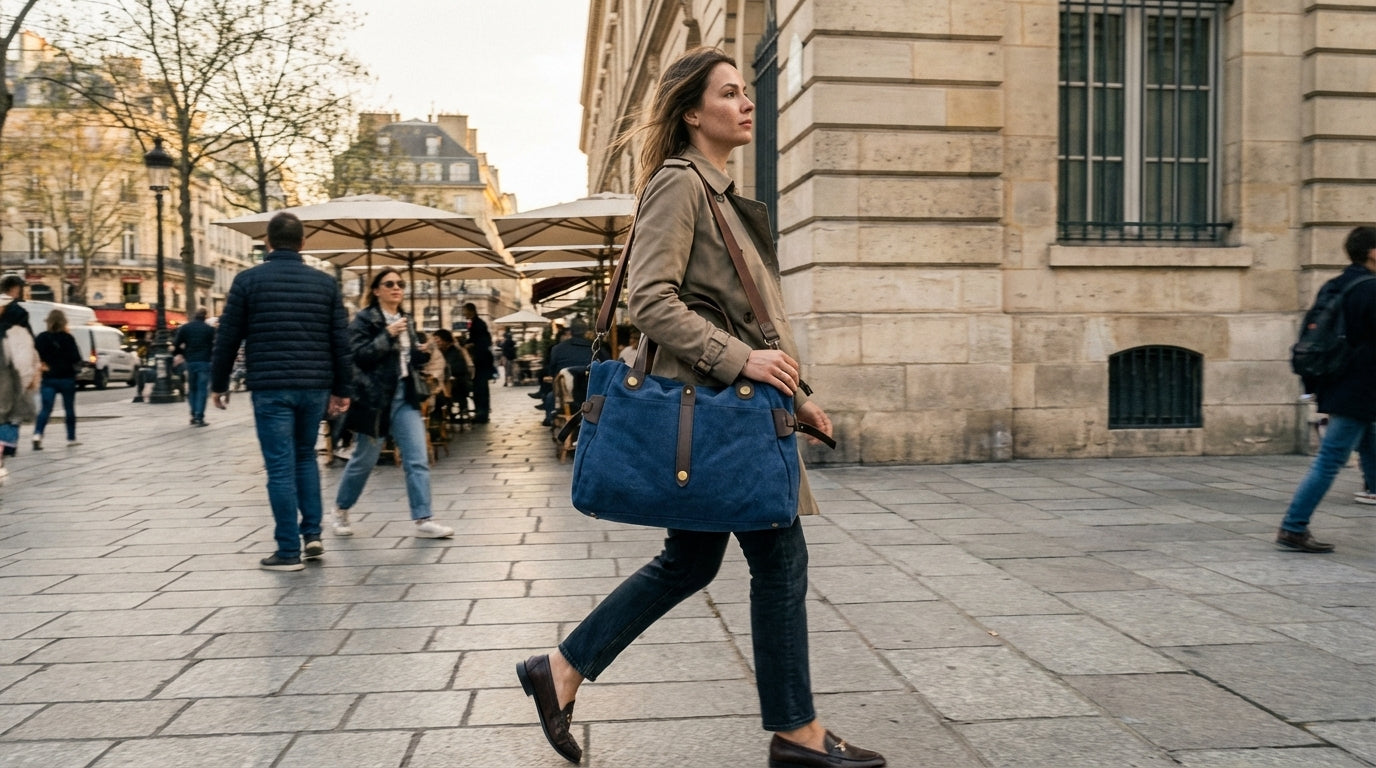
Here's the verdict upfront. If you carry cash, important documents, or live in crowded cities, zippers win. If you're constantly in and out of your bag and trust your environment, magnetic closures make life easier. The SAINT-LAZARE travel bag uses a main zippered closure specifically because it's designed for travel—when security matters most.
Shop the look: SAINT-LAZARE - Bleu Jean

What is zipper vs magnetic closure handbag exactly?
A zippered handbag seals completely shut with interlocking metal or plastic teeth. You pull a slider to open and close it. Nothing falls out, nothing gets in. A magnetic closure uses hidden magnets sewn into the bag's flap or top edge. Press the sides together and they snap shut. Pull apart and they release.
The fundamental difference is complete closure versus partial closure. Zippers create a sealed compartment. Magnetic closures create a covered opening that can still be accessed with enough pressure or the right angle.
For a broader overview, see The handbag buying guide that actually helps you choose.
Most structured bags use zippers because they maintain the bag's shape while keeping contents secure. Slouchy bags often use magnetic closures because the soft construction works better with the snap-together mechanism.
Security: where zippers dominate
Zippers provide real security. A closed zipper requires deliberate action to open—someone would need to physically grab and pull the slider. Magnetic closures can pop open from pressure, movement, or even a strong enough external magnet.
In crowded spaces like subway cars or busy markets, zippers protect against accidental opening and opportunistic theft. I've watched magnetic closure bags pop open when pressed against turnstiles or squeezed in packed elevators. The contents stay visible and accessible.
For travel specifically, zippers are non-negotiable. Airport security, hotel rooms, tourist areas—you want your passport, cash, and electronics locked away. The SAINT-LAZARE travel bag uses a main zippered closure for exactly this reason. When you're navigating unfamiliar places with valuable items, that extra layer of security matters.
Pickpockets also find zippers more challenging. Opening a zipper makes noise and takes time. Magnetic closures can be silently accessed from certain angles.
Speed and convenience: where magnetic closures shine
Magnetic closures win on pure convenience. One-handed operation, silent opening, instant access. You can grab your phone, keys, or wallet without looking. Zippers require two hands and attention—you need to find the slider, pull it the right direction, and reverse the process to close.
For daily errands, magnetic closures reduce friction. Coffee shop transactions, quick grocery runs, answering calls—you're in and out of your bag constantly. The snap-shut mechanism becomes automatic.
Magnetic closures also work better with gloves. Winter weather makes zipper pulls difficult to grip, but magnets still snap together through fabric.
The tradeoff is that convenience comes with exposure. Every time you reach into a magnetic closure bag, the contents are briefly visible to anyone nearby.

Durability and maintenance differences
Quality zippers last decades with minimal maintenance. The metal teeth wear slowly, and even if the slider breaks, it's usually replaceable. Cheap zippers fail quickly—the teeth separate, the slider jams, or the fabric around the zipper tears.
Magnetic closures depend entirely on the magnet strength and placement. Strong magnets maintain their hold for years. Weak magnets lose effectiveness quickly, especially if the bag gets dropped or the magnets shift position inside their fabric pockets.
Water affects both differently. Zippers can stick when wet but still function. Magnetic closures work fine when damp, but if water gets inside the magnet housing, rust can weaken the magnetic field over time.
Repairs matter too. Zipper replacement is straightforward for any tailor or cobbler. Magnetic closure repair often means replacing the entire closure system, which may not be available for older bags.
How to choose the right closure for your lifestyle
Consider your daily routine first. If you're constantly reaching into your bag—checking your phone, grabbing cards, pulling out keys—magnetic closures reduce daily friction. If you open your bag a few times per day but carry valuable items, zippers provide better protection.
Think about your environment. Urban areas with crowds, public transportation, and higher crime rates favor zippers. Suburban or rural settings where you know your surroundings work fine with magnetic closures.
Travel frequency matters. Regular travelers should prioritize zippered bags for security and peace of mind. Occasional travelers can choose based on other preferences.
Consider what you carry. Cash, important documents, expensive electronics, or prescription medications call for zippered security. If your bag mainly holds items you wouldn't mind losing—tissues, mints, non-essential cards—magnetic closures work fine.
Weather patterns in your area also influence the choice. Frequent rain or snow can make zippers sticky, while magnetic closures continue working normally in wet conditions.
Common mistakes when choosing closure types
The biggest mistake is choosing closure type based on aesthetics alone. A beautiful magnetic closure bag won't help if you're constantly worried about security, and a perfectly secure zippered bag becomes frustrating if you need frequent access.
Many people underestimate how often they actually open their bags. Track your usage for a week—you might be surprised how many times you reach inside. High-frequency users benefit more from magnetic closures than they initially think.
Another common error is assuming all zippers provide equal security. Cheap zippers with flimsy sliders offer little more protection than magnetic closures. Quality matters more than closure type in these cases.
People also forget about secondary closures. Many bags combine both—a main zippered compartment with magnetic closure front pockets. This gives you secure storage for valuables and quick access for frequently used items.
Don't overlook the learning curve. Magnetic closures feel awkward initially if you're used to zippers, and vice versa. Give yourself time to adapt before deciding a closure type doesn't work for you.

Real-world performance: what actually happens daily
After months of testing both closure types, the differences become clear in specific situations. Zippers excel during travel, shopping with full hands, and any time you need to trust that your bag stays closed without attention.
Magnetic closures shine during phone-heavy days, quick errands, and situations where you're frequently accessing the same items. They're particularly good for parents who need to grab snacks, wipes, or toys quickly.
Weather creates unexpected challenges. Summer heat can make zippers uncomfortable to touch after sitting in cars. Winter cold makes magnetic closures less responsive—the magnets don't snap together as firmly.
Bag weight affects both closures differently. Heavy bags put stress on zippers, especially at the corners. Magnetic closures can fail to stay shut when the bag is overpacked and pulling the closure apart.
The most successful approach combines both. Use zippered bags for travel, important errands, and carrying valuables. Choose magnetic closures for casual daily use, quick trips, and situations where convenience outweighs security concerns.
Final thoughts
The zipper vs magnetic closure handbag decision reflects your priorities and lifestyle. Security-conscious users, frequent travelers, and those carrying valuable items should choose zippers. Convenience-focused users who prioritize quick access in familiar environments will prefer magnetic closures.
The best solution often involves owning both types. A zippered travel bag like the SAINT-LAZARE for important trips and valuable items, plus a magnetic closure bag for daily errands and casual use.
Don't overthink the choice. Consider your actual usage patterns, security needs, and daily routine. The right closure type becomes invisible—you stop thinking about it because it works naturally with how you move through your day.