
Structured handbag vs slouchy bag: the real difference that changes how you carry
Here's the core tradeoff: structured bags hold their shape and protect your belongings, but they're heavier and less flexible. Slouchy bags adapt to what you put inside and feel lighter, but they offer zero protection and can look messy when half-empty. The winner depends on what you actually carry daily.
After looking at dozens of bags across both categories, the choice comes down to this — do you prioritize protection and polish, or flexibility and comfort? Most people think it's about style preference. It's actually about function.
Shop the look: SAINT-LAZARE - Camel
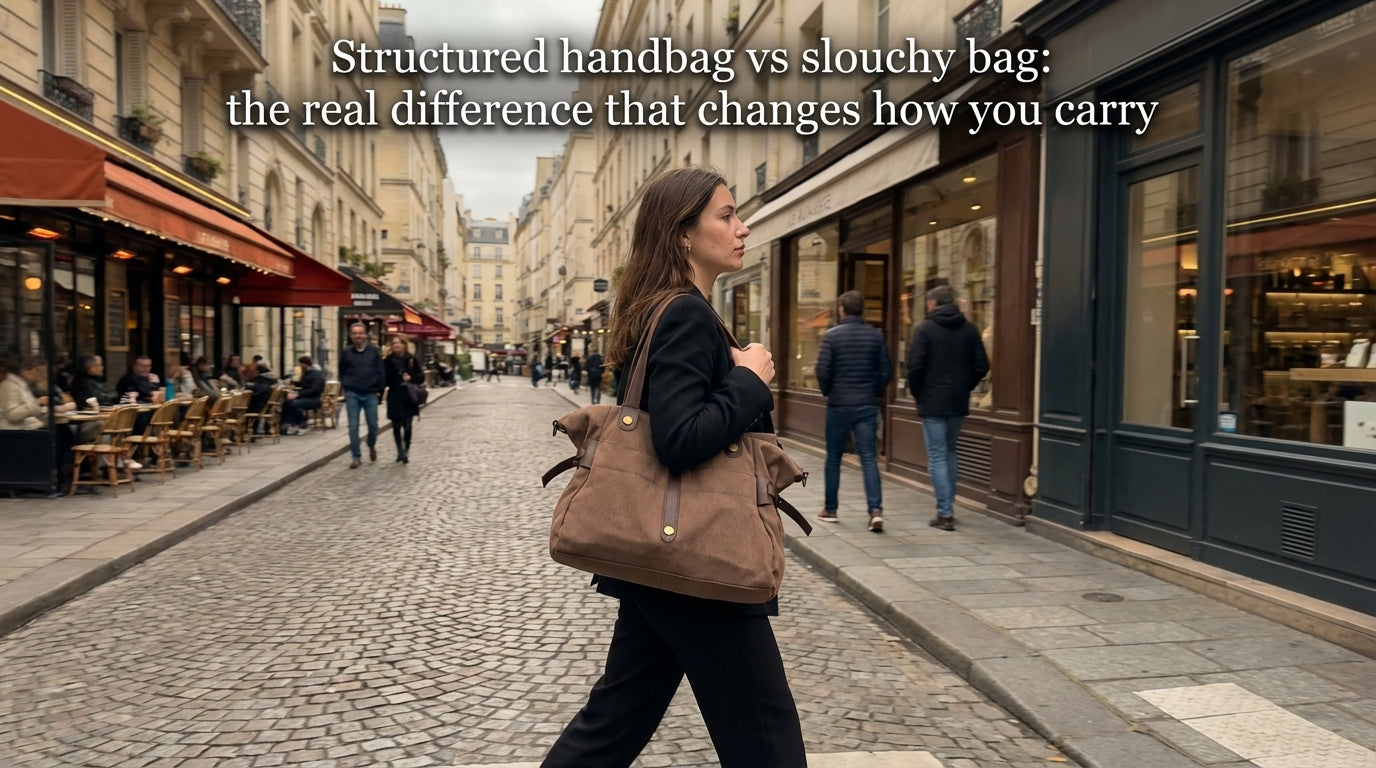
The structured camp includes satchels, top-handle bags, and anything with a defined silhouette that maintains its shape whether full or empty. The slouchy side covers soft totes, hobo bags, and unstructured crossbodies that collapse and expand based on contents.

What actually defines structured handbag vs slouchy bag
The difference isn't just visual — it's architectural. Structured bags use interfacing, rigid bases, and reinforced panels to maintain their form. Think of them as having a skeleton that keeps everything in place. Slouchy bags rely on the natural drape of soft materials without internal framework.
For a broader overview, see The handbag buying guide that actually helps you choose.
Structured bags typically feature:
- Reinforced base that sits flat when empty
- Defined edges and corners that don't collapse
- Heavier construction due to interfacing materials
- Consistent silhouette regardless of contents
Slouchy bags work differently:
- Soft materials that fold and drape naturally
- Shape changes based on what's inside
- Lighter weight from minimal reinforcement
- More casual, relaxed appearance
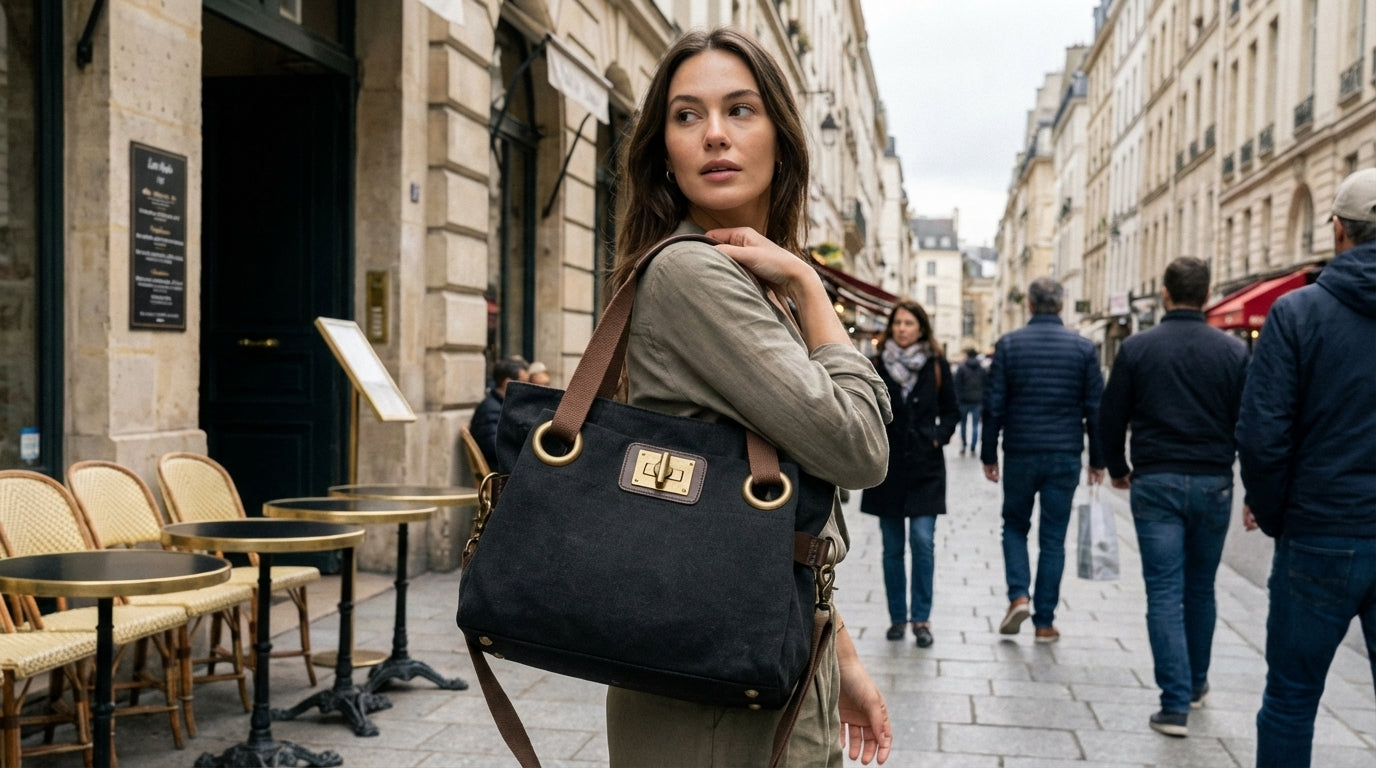
The SAINT-LAZARE sits somewhere in the middle — it has enough structure to protect a laptop but enough softness to compress when traveling. That balance is harder to find than you'd think.
The benefits that actually matter in daily use
Structured bags excel at protection. Your laptop won't get crushed, your sunglasses stay safe, and everything maintains its position when you set the bag down. They photograph well and look intentional even when you're rushing.
The downside? Weight. A structured bag feels heavier even when empty because of all that reinforcement. They also take up more space when stored and can feel rigid against your body during long carries.
Slouchy bags win on comfort. They mold to your body, compress when you don't need the space, and generally feel lighter throughout the day. They're forgiving — you can stuff them full without worrying about maintaining the silhouette.
But slouchy bags offer zero protection for fragile items. Your phone screen is on its own. They also look deflated when half-empty, which can read as messy rather than relaxed.

In our experience, structured bags work better for professional settings and occasions where appearance matters. Slouchy bags excel for casual days and travel when comfort trumps polish.
How to choose between structured and slouchy
Start with what you actually carry. If you regularly transport a laptop, camera, or other fragile items, structure becomes essential. If you mostly carry soft items like clothes, books, or gym gear, slouchy works fine.
Consider your typical day. Commuting by public transport? Slouchy bags compress better in crowded spaces. Lots of client meetings? Structured maintains a professional appearance longer.
Think about storage. Structured bags need more closet space and don't pack well for travel. Slouchy bags fold down but may need reshaping after storage.
The most common mistake we see is choosing based on photos alone. A structured bag that looks perfect on Instagram might feel like carrying a briefcase all day. A slouchy bag that looks effortless might appear sloppy in your actual wardrobe.
Try this test: imagine carrying the bag for eight hours straight. Structured bags maintain their look but add weight. Slouchy bags feel lighter but may lose their shape by evening.
Common mistakes when choosing between styles
The biggest error is assuming you need to pick one style forever. Your bag needs change with seasons, jobs, and life phases. The structured bag that works for office life might feel wrong on weekends.
Another mistake: choosing based on trends rather than function. Slouchy bags have moments where they're everywhere, then structured takes over. Buy for your lifestyle, not the current fashion cycle.
People also underestimate maintenance differences. Structured bags show wear on corners and edges first. Slouchy bags develop permanent creases from how you stuff them. Neither is wrong, but know what you're signing up for.
The weight miscalculation is huge. A structured bag that feels fine in the store can become exhausting after a full day. Always test with realistic contents, not an empty bag.

Finally, don't ignore your body type and carrying style. Structured bags can look boxy on some frames, while slouchy bags might overwhelm petite builds. The bag should complement your proportions, not fight them.
Why the middle ground might be your answer
The structured handbag vs slouchy bag debate assumes you have to choose sides. But the best bags often combine elements from both approaches.
Look for bags with structured bases but soft sides. They protect your belongings while maintaining comfort. The SAINT-LAZARE uses this hybrid approach — washed cotton canvas provides flexibility while split leather reinforcement maintains structure where it matters.
Semi-structured bags adapt to your needs. Empty, they maintain a clean silhouette. Full, they expand without looking overstuffed. This versatility works better for most people than committing to one extreme.
The key is finding structure where you need protection — usually the base and corners — while keeping everything else flexible. This gives you the benefits of both styles without the major drawbacks of either.
After testing both approaches extensively, the hybrid solution wins for daily use. Pure structure feels too rigid for casual moments. Pure slouch looks too informal for professional settings. The middle ground handles both.