
Quiet luxury handbags: the €500 logo markup nobody talks about
The luxury bag industry has a dirty secret: when you buy a €500 bag from a big French house, maybe €40-50 went into making it. The rest is marketing, retail rent, celebrity deals, and margin. This reality has sparked the quiet luxury handbag trend explained by a simple question — what if you could get the actual quality without paying for someone else's marketing budget?
Quiet luxury isn't about being understated for the sake of it. It's about rejecting the logo markup that defines traditional luxury. Instead of paying €2,000 for a bag with visible branding, you invest in construction, materials, and craftsmanship that actually justify the price.
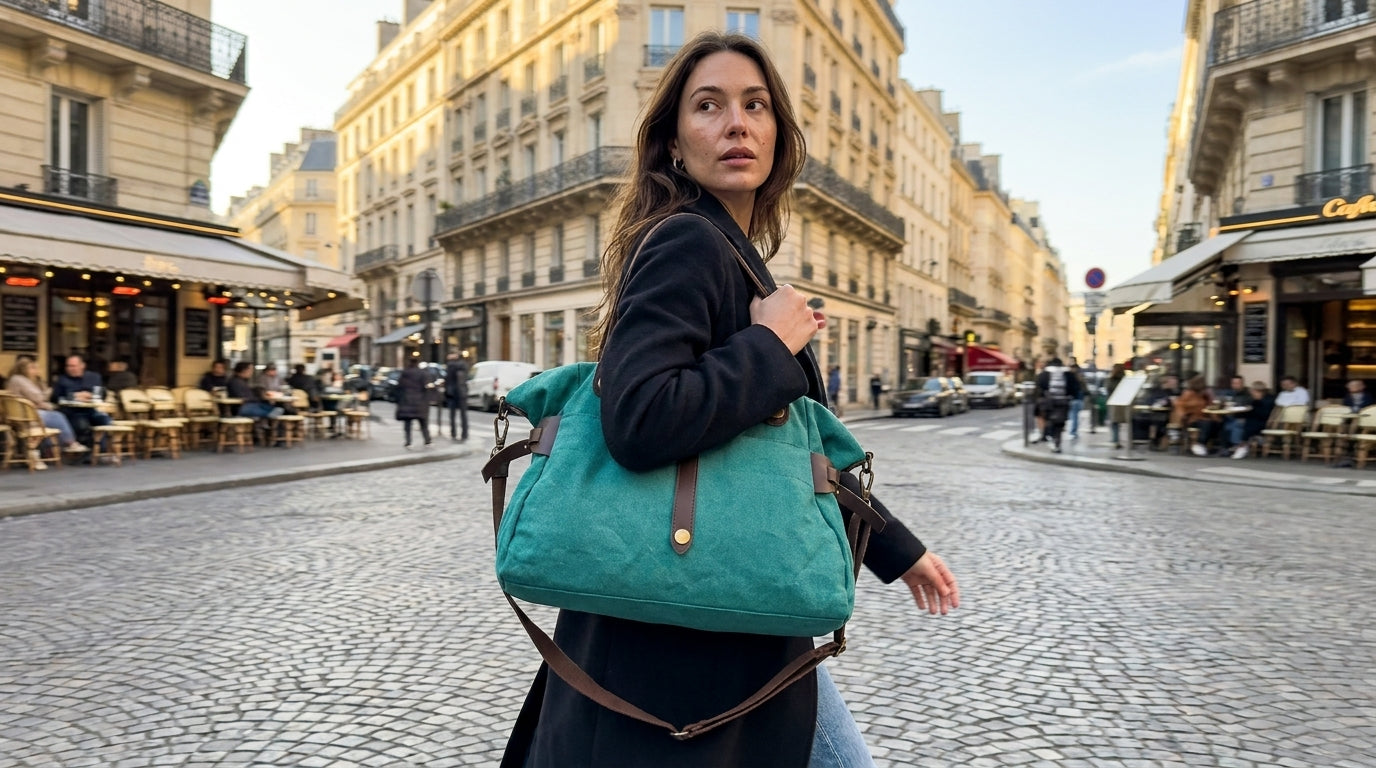
Shop the look: SAINT-LAZARE - Vert

What the quiet luxury handbag trend actually means
Quiet luxury in handbags means three things: exceptional materials without the brand tax, construction that lasts decades, and design that doesn't scream for attention. The movement started when consumers realized they were paying more for logos than leather.
The quiet luxury handbag trend explained simply: brands like Bottega Veneta charge €3,000+ for bags that cost maybe €200 to produce. The markup funds flagship stores, celebrity endorsements, and shareholder profits. Quiet luxury brands skip these expenses and reinvest in the product itself.
For a broader overview, see Senreve alternative: why I switched to this Parisian brand instead.
Take ZEDE's approach with the Saint-Lazare travel bag. The washed cotton canvas and split leather construction costs more to source than synthetic alternatives, but the price stays reasonable because there's no marketing budget inflating it. You pay for materials and craftsmanship, not brand prestige.
This isn't about being anti-luxury. It's about being pro-value. When a bag costs €169 and lasts fifteen years, that's €11 per year of ownership. When a €2,000 bag needs replacement in five years due to poor construction hidden behind branding, the math doesn't work.
Why quiet luxury handbags make financial sense
The direct-to-consumer model changed everything for bag buyers. Traditional luxury brands need physical stores on expensive streets, wholesale margins, and massive advertising budgets. Quiet luxury brands sell directly, cutting out middlemen and passing savings to customers.
After looking at dozens of luxury bag price breakdowns, the pattern is consistent: 60-70% of traditional luxury pricing goes to non-product costs. Quiet luxury flips this ratio. The majority of your payment funds better materials, more careful construction, and fair wages for makers.
The Saint-Lazare exemplifies this approach. Its 5 interior pockets (including 2 zippered compartments) and leather compression straps represent thoughtful design, not corner-cutting. The 50 × 35 × 16 cm dimensions accommodate laptops, toiletries, and daily essentials without the bulk of cheaper alternatives.
Traditional luxury would price a bag with these features at €800-1,200. The quiet luxury approach delivers the same functionality at €169 because there's no logo premium.
How to identify genuine quiet luxury handbags
Real quiet luxury handbags share specific characteristics that separate them from fast fashion disguised as minimalism. Look for these markers when evaluating options:
Material transparency: Brands should specify exactly what they use. "split leather" is marketing speak. "Split leather with cotton canvas" tells you what you're buying. The Saint-Lazare uses washed cotton canvas and split leather — specific materials you can research and understand.
Construction details: Quiet luxury bags feature functional elements like adjustable straps, interior organization, and reinforced stress points. The Saint-Lazare's leather side compression straps and detachable canvas strap show attention to real-world use, not just aesthetics.
Honest pricing: If a bag costs €50, question the materials. If it costs €2,000, question the markup. Quiet luxury typically falls between €150-400 for quality that matches much more expensive alternatives.
Brand story focus: Quiet luxury brands talk about materials, construction, and design process. Traditional luxury brands talk about heritage, exclusivity, and celebrity associations. The focus reveals priorities.

Common mistakes when shopping quiet luxury handbags
The most common mistake is assuming all minimalist bags represent quiet luxury. Many fast fashion brands copy the aesthetic without the construction quality. A €40 "minimalist" bag from a fast fashion retailer isn't quiet luxury — it's cheap fashion with restrained styling.
Another mistake is conflating price with quality. Some customers assume higher prices guarantee better construction, but traditional luxury often inflates prices through marketing costs, not material improvements. In our experience, customers who return to ZEDE after trying expensive alternatives almost always mention the price-to-quality ratio as the deciding factor.
Don't ignore functionality for aesthetics. The quiet luxury handbag trend explained includes practicality as a core value. A beautiful bag that doesn't work for your daily life isn't good design. The Saint-Lazare works as a crossbody or handheld bag specifically because quiet luxury prioritizes versatility over pure visual appeal.
Avoid brands that can't explain their construction. If a company won't detail their materials, manufacturing process, or design decisions, they're probably hiding corner-cutting behind marketing language.
The future of handbag buying beyond logos
People are tired of paying for logos. They want to know who made their bag, what it's made of, and whether it will last. These questions matter more than brand prestige to informed buyers.
The quiet luxury movement represents a broader shift toward conscious consumption. Instead of buying bags as status symbols, customers invest in tools that improve their daily lives. The Saint-Lazare's appearance in French films wasn't planned marketing — it happened because filmmakers chose a bag that looked right for characters who value substance over flash.
This trend will likely expand as direct-to-consumer brands prove they can deliver luxury-level quality without luxury-level pricing. The traditional model of expensive retail stores and celebrity endorsements becomes harder to justify when customers can access the same construction quality for less money.
Smart buyers are learning to evaluate bags like any other tool: Does it work well? Will it last? Is the price fair for the materials and construction? These practical questions produce better purchasing decisions than brand recognition.

The quiet luxury handbag trend isn't about rejecting all luxury — it's about demanding that luxury mean something beyond marketing. When you buy a bag that costs €169 and lasts decades, you're investing in actual value, not subsidizing someone else's advertising budget.
Frequently asked questions
What makes a handbag "quiet luxury" versus regular luxury?
Quiet luxury handbags focus spending on materials and construction rather than marketing and branding. You pay for washed cotton canvas, split leather, and thoughtful design features instead of logo recognition and celebrity endorsements.
Are quiet luxury handbags actually better quality than designer brands?
Many quiet luxury bags match or exceed designer quality because they allocate budget to production rather than marketing. A €200 quiet luxury bag often uses better materials than a €800 designer bag where 70% of the price funds non-product costs.
How can I tell if a "minimalist" bag is genuine quiet luxury?
Look for material transparency (specific leather and fabric types), functional design details (interior organization, adjustable straps), and honest pricing that reflects construction costs rather than brand markup.
Do quiet luxury handbags hold their value like designer bags?
Quiet luxury bags hold functional value better than resale value. They're designed to last decades of daily use, making cost-per-wear extremely low. Designer bags may retain higher resale prices but often need replacement sooner due to trend cycles.
What price range should I expect for genuine quiet luxury handbags?
True quiet luxury handbags typically range from €150-400, depending on size and construction complexity. Prices below €100 usually indicate compromised materials, while prices above €500 often include brand markup rather than proportional quality increases.