
The mini bag trend worth it debate: what nobody tells you about the real cost
A €500 bag that holds three items. That's the mini bag reality check most fashion articles skip. While everyone debates team mini versus team maxi, the real question isn't about size preference — it's about whether you're paying luxury prices for what amounts to a glorified phone case.

After looking at dozens of mini bags across every price point, the math is uncomfortable. Most luxury mini bags cost more per cubic inch than any other accessory category. But here's what the fashion press won't tell you: not all mini bags are created equal, and the difference between smart and wasteful spending comes down to three specific factors.
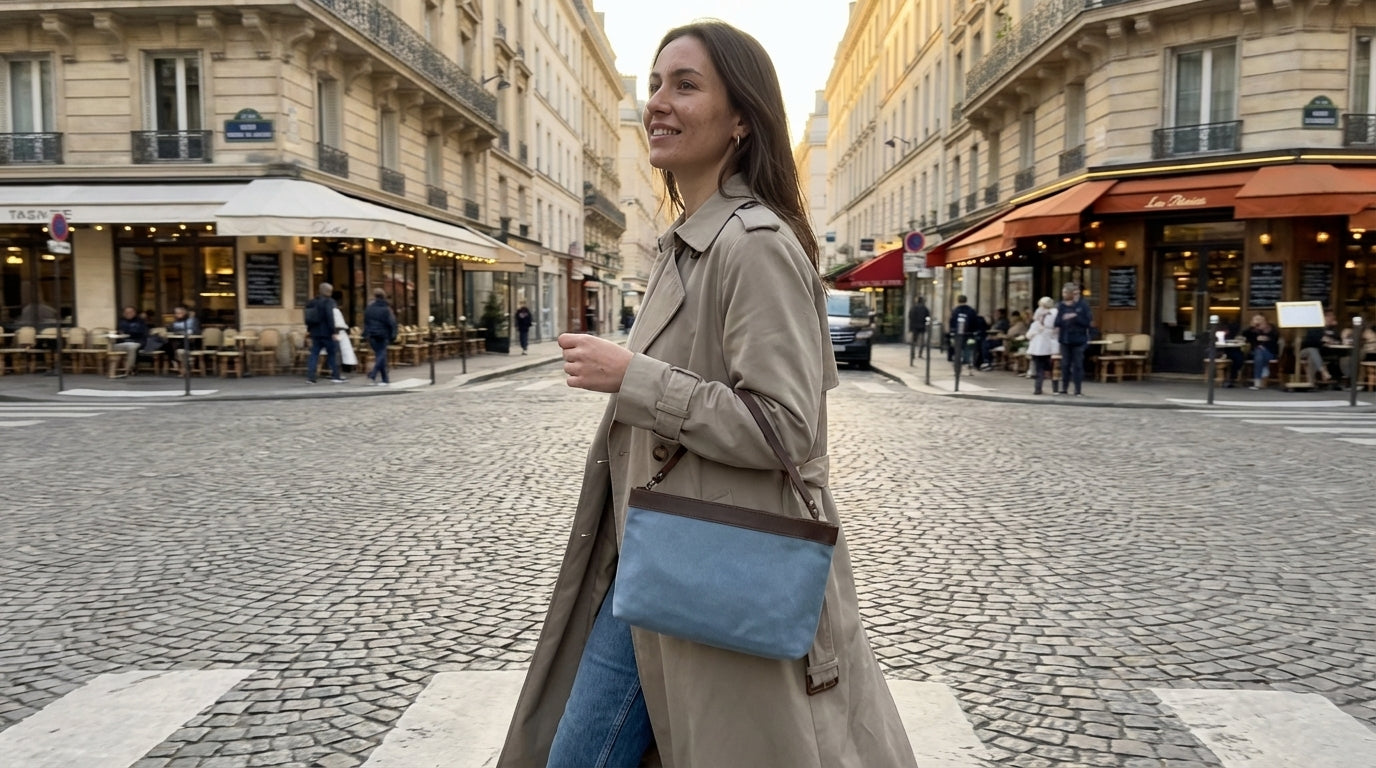
Shop the look: TROCADERO - Bleu Gris
Mini versus micro: the size distinction that changes everything
The fashion world throws around "mini" and "micro" like they're interchangeable. They're not. A true mini bag measures roughly 6-8 inches wide and can hold your phone, keys, cards, and maybe lipstick. A micro bag is pure theater — it exists for Instagram, not Tuesday morning errands.
Micro bags are the Jacquemus Le Chiquito territory. Beautiful? Yes. Functional? Only if your daily essentials consist of a single credit card and the will to live. Mini bags occupy the sweet spot where form meets just enough function to justify the purchase.
For a broader overview, see The handbag buying guide that actually helps you choose.
The TROCADERO pouch illustrates this perfectly. At 11 x 7 x 2.75 inches, it's technically a pouch but demonstrates what actual mini functionality looks like. It holds mascara, smartphone earbuds, and other essentials — proving that small doesn't have to mean useless.
The psychological freedom of carrying less
There's something genuinely liberating about leaving the house with only what you absolutely need. The mini bag forces you to edit your life down to essentials. No more digging through a black hole of receipts, old gum, and three different lip balms to find your keys.
This minimalist approach works particularly well for specific lifestyles. If you work from home and only venture out for coffee runs and dinner dates, a mini bag makes perfect sense. If you commute on public transport with a laptop, water bottle, and emergency snacks, it becomes an expensive accessory to your actual bag.
The freedom comes with a price — literal and figurative. You're paying premium prices for the luxury of carrying nothing. Whether that trade-off feels worth it depends entirely on your relationship with stuff.
The price-to-practicality problem
Here's where the mini bag trend worth it question gets uncomfortable. Most luxury mini bags cost between €300-800. For that price, you could buy a full-size bag with organization, structure, and versatility. Instead, you're getting something that holds less than your coat pocket.
The markup on luxury bags is already astronomical — most brands charge 12 times what the bag costs to make. With mini bags, you're paying full luxury prices for a fraction of the materials and construction. The cost per wear calculation only works if you genuinely reach for it daily.
Smart alternatives exist. French brands like ZEDE offer mini accessories that prioritize function over fashion theater. The TROCADERO, made from washed cotton canvas and suede leather, costs €29.50 and delivers actual utility. It's designed to work as a standalone mini bag or organize essentials within a larger bag.
The 'what actually fits' reality check
Before buying any mini bag, do the contents test. Gather everything you carry daily and see if it fits. Not just physically — comfortably, with room to actually find things.
Standard mini bag capacity: - iPhone (any size) - Keys on a slim keychain - Card holder or thin wallet - One lipstick or lip balm - Maybe earbuds if they're wireless
What doesn't fit: - Full wallet with coins - Hand sanitizer - Sunglasses - Tissues - Breath mints - Emergency snacks
If you're someone who needs backup everything — charger, medications, business cards, actual cash — a mini bag will frustrate you daily. The Instagram appeal fades quickly when you're asking friends to carry your overflow.
Cost per wear: the honest calculation
The only way to justify a luxury mini bag is through religious daily use. A €500 mini bag needs 100+ wears to hit a reasonable cost per wear ratio. That's three times a week for eight months, minimum.
Most people buy mini bags for special occasions — dinner dates, gallery openings, situations where you want to look put-together without bulk. But occasional-use luxury items are terrible investments unless you're genuinely wealthy enough not to care about the math.
The sweet spot exists in the €30-100 range. At that price point, even moderate use justifies the purchase. You can experiment with the mini bag lifestyle without the pressure of constant use to rationalize the cost.
The return of the '90s mini backpack
Jennifer Lawrence sparked the mini backpack revival, and it's actually the most sensible entry point into mini bag territory. Mini backpacks offer hands-free convenience while maintaining some storage capacity. They work for travel, commuting, and active lifestyles where traditional mini bags fail.
The key is choosing one with actual organization. Multiple compartments, secure zippers, adjustable straps. Many luxury versions prioritize aesthetics over function, but practical options exist at every price point.
Mini backpacks also photograph well, satisfying the Instagram appeal of mini bags while delivering real-world utility. They're the compromise between fashion and function that most mini bags can't achieve.
When the mini bag trend worth it makes sense
The mini bag works for specific people in specific situations. You're a good candidate if you: - Genuinely prefer carrying minimal items - Have a lifestyle that doesn't require daily essentials beyond phone, keys, and cards - Want to break the habit of overpacking - Appreciate the aesthetic of streamlined accessories
You're not a good candidate if you: - Carry medications, glasses, or other necessities - Have kids (even grown ones who might need you to hold things) - Work in environments where you need backup supplies - Travel frequently and need adaptability
The honest answer is that most people fall into the second category. We want to be mini bag people, but our actual lives require more stuff than fits in a tiny bag.

Smart shoppers start small. Try a well-made mini accessory like the TROCADERO first. Use it for a month and see if the minimalist approach actually works for your lifestyle. If you find yourself constantly wishing for more space, you've saved hundreds on a luxury mini bag that would gather dust.
The final verdict on investment value
The mini bag trend worth it question has a nuanced answer. As a fashion statement, mini bags deliver. As a practical accessory, they work for a narrow slice of lifestyles. As an investment, they're only smart if you'll genuinely use them constantly.
The trend itself has staying power — minimalism isn't going anywhere, and there's always appeal in carrying less. But individual mini bags often end up as expensive mistakes because people underestimate how much they actually need to carry daily.
If you're drawn to the mini bag aesthetic, start with something affordable and functional. Test the lifestyle before investing in luxury. And remember that the best bag — mini or otherwise — is one you reach for every single day, not one that looks perfect in photos but fails in real life.