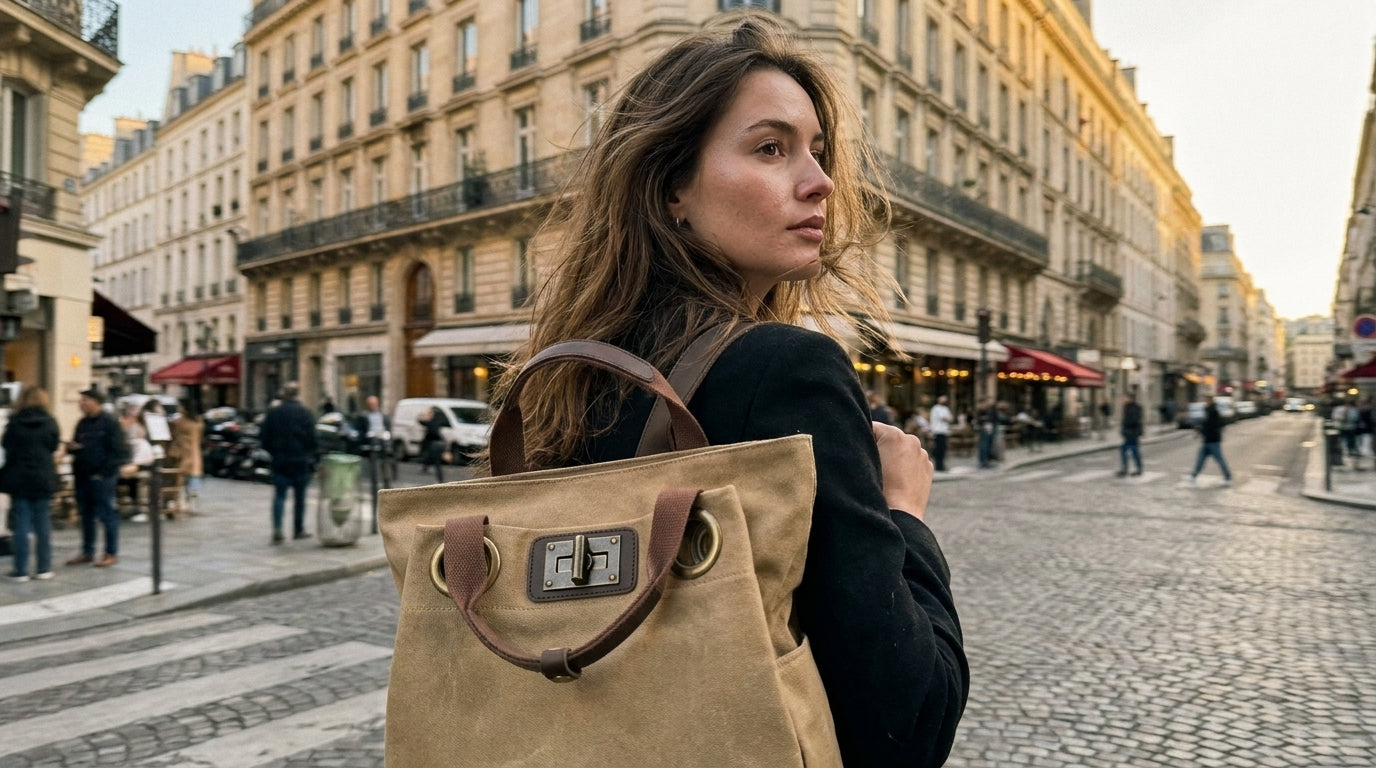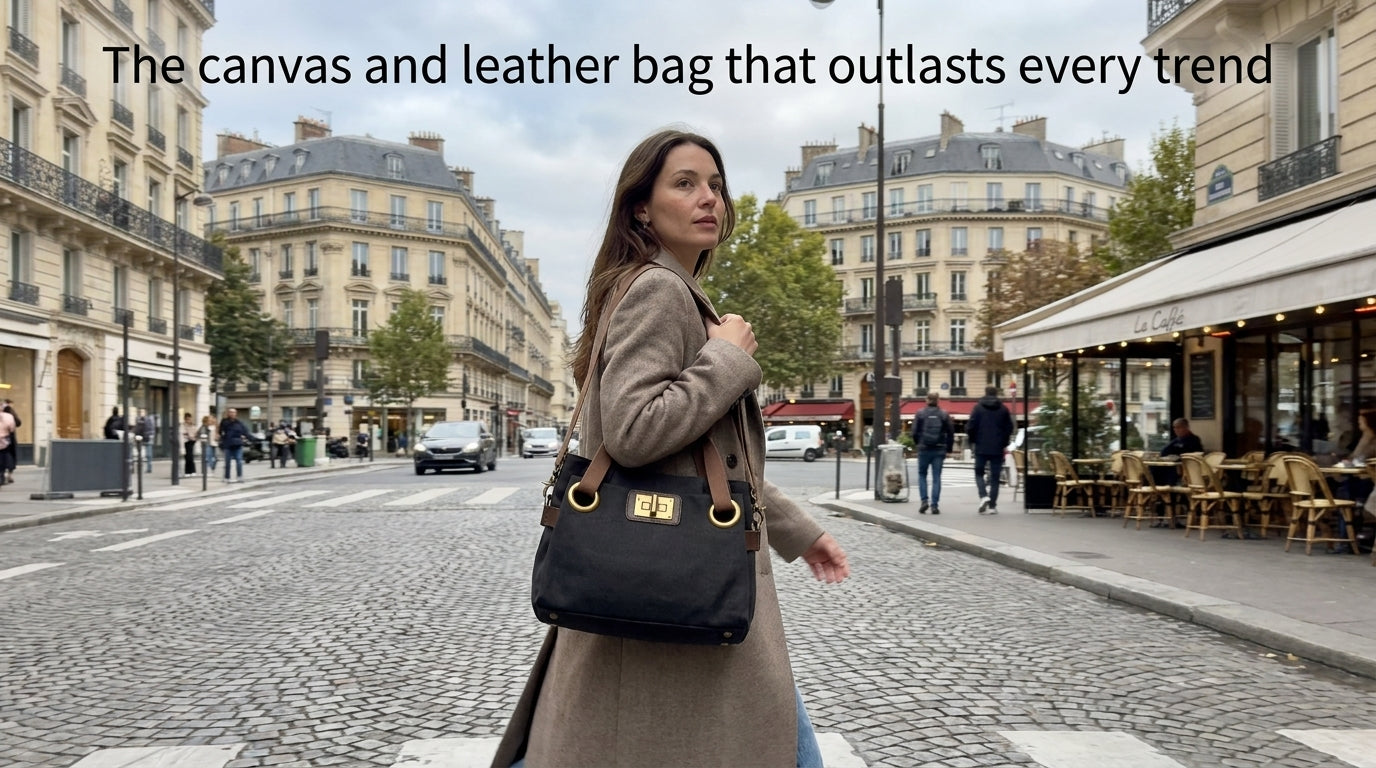

The handbag philosophy that changed how French women think about accessories
Walk through the Marais on any Tuesday morning and you'll notice something: the women carrying the most elegant bags are also carrying the fewest. While tourists juggle three different pouches and a tote, Parisians move through their day with one carefully chosen piece. This is the less is more handbag philosophy in action — and it's more strategic than you think.

The shift happened gradually. Where handbag collections once sprawled across closet floors, smart women started asking different questions. Not "what bag matches this outfit?" but "what bag works for my actual life?" The answer changed everything.
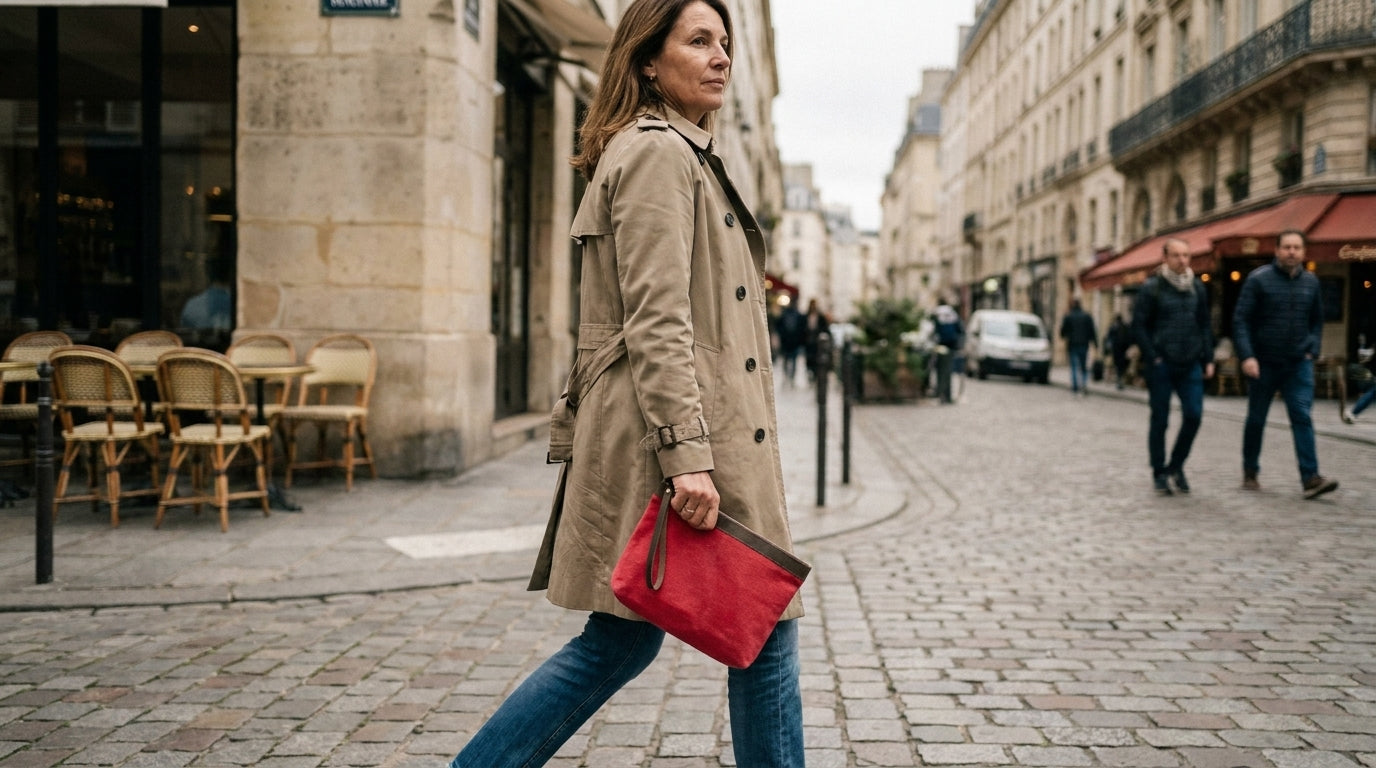
Shop the look: TROCADERO - Framboise
What is less is more handbag philosophy?
The less is more handbag philosophy centers on owning fewer, better bags that work harder. Instead of collecting seasonal trends, you invest in pieces that adapt to multiple contexts. A bag that transitions from work meetings to weekend errands. Materials that improve with age rather than showing wear.
This approach flips traditional handbag shopping. You stop buying for specific occasions and start buying for your lifestyle. The result? A streamlined collection where every piece earns its place.
For a broader overview, see Senreve alternative: why I switched to this Parisian brand instead.
After looking at dozens of handbag collections over the years, the pattern becomes clear. Women who embrace this philosophy typically own 3-5 bags total. One everyday workhorse, one evening option, maybe a travel piece. Each serves a distinct purpose without overlap.
The TROCADERO exemplifies this thinking. At 28 x 18 x 7 cm, it handles essentials without bulk. Made from washed cotton canvas and suede leather, it works inside larger bags or standalone. One piece, multiple functions.
Key benefits that actually matter in daily life
The practical advantages reveal themselves quickly. Decision fatigue disappears when you own fewer options. Morning routines streamline. You grab the bag that works and move on.
Quality improves dramatically. The budget that once spread across six mediocre bags now focuses on two exceptional ones. Materials matter more when you're using them daily. Washed cotton canvas develops character over time. Split leather gains patina. Cheap synthetic materials just look tired.
Storage becomes manageable. No more handbag towers or stuffed closet shelves. Each piece has space to maintain its shape. You actually remember what you own.
The financial math works better than expected. One well-made bag lasting five years costs less per wear than three trendy bags replaced annually. The upfront investment feels significant until you calculate actual usage.
Maintenance simplifies too. Caring for two bags thoroughly beats half-caring for ten. You learn each piece's needs. The canvas responds to this treatment, the leather to that one. Your bags last longer because you know them better.

How to choose pieces that actually work
Start with your real schedule, not your aspirational one. Track what you actually carry for a week. Phone, wallet, keys — the basics everyone needs. Then add your specifics. Laptop? Water bottle? Makeup touch-up kit?
Size matters more than style initially. A bag that holds your essentials comfortably beats a beautiful bag that leaves half your items homeless. But don't oversize either. Bigger bags collect clutter. They encourage carrying "just in case" items that rarely prove necessary.
Materials determine longevity. Canvas and leather combinations offer the best versatility. Pure leather feels too formal for casual settings. Canvas alone lacks structure for professional contexts. The mix works everywhere.
Consider your climate and commute. Rain-resistant materials make sense in wet cities. Lightweight construction helps for walking commutes. Structured bases protect contents during subway jostling.
The most common mistake we see with this approach is buying the "perfect" bag before understanding your patterns. Start with one good everyday piece. Use it for three months. Then identify what's missing. Maybe you need something smaller for evenings. Maybe something larger for travel days. But understand your baseline first.
Color strategy simplifies choices. Neutrals work with more outfits, extending each bag's utility. Black, camel, Bleu Jean — colors that fade into your wardrobe rather than demanding attention. Save statement colors for accessories you'll replace more frequently.
Common mistakes that undermine the philosophy
The biggest error is treating less is more handbag philosophy as a shopping restriction rather than a decision framework. It's not about deprivation. It's about intention. Buying one expensive bag you'll use constantly beats buying three cheaper bags that sit unused.
Another trap: buying for imaginary occasions. The "someday I'll need a formal clutch" purchase that never sees daylight. Buy for your current life, not your fantasy life. If you attend formal events monthly, invest in evening wear. If you attend them yearly, borrow or rent.
Rushing the curation process causes problems too. Building a less is more collection takes time. You need to understand how each piece performs before adding the next. Buying everything at once defeats the philosophy's core insight: that careful selection beats volume.
Ignoring maintenance requirements undermines quality investments. A leather bag needs conditioning. Canvas benefits from proper storage. Neglecting care turns premium materials into expensive mistakes. Factor upkeep into your decision process.
Size miscalculation happens frequently. Women often choose bags too small for daily needs, then supplement with additional carrying solutions. This recreates the clutter problem you're trying to solve. Be honest about your carrying requirements.

Building your curated collection
Start with one everyday bag that handles 80% of your situations. This becomes your testing ground for understanding what works. Pay attention to what you wish it did differently. Too small for gym clothes? Note that. Awkward for formal dinners? Remember it.
After three months, assess gaps honestly. Most women need just one additional piece initially. Either something smaller for minimal-carry days or something larger for travel/gym situations.
The less is more handbag philosophy rewards patience. Each addition should solve a specific problem your current collection can't handle. Not "this would be nice to have" but "I specifically need this for X situation."
Quality indicators become more important when buying fewer pieces. Construction details matter. Reinforced stress points, quality hardware, thoughtful interior organization. The TROCADERO's main zipper closure and leather finish exemplify this attention to functional details.
Consider your collection's lifespan. A well-curated selection should serve you for years, not seasons. Choose pieces that improve with age rather than showing wear. Washed cotton canvas develops character. Cheap synthetic materials just degrade.
Why the philosophy works long-term
The less is more handbag philosophy succeeds because it aligns purchasing with actual behavior. Instead of collecting for theoretical needs, you buy for proven patterns. This reduces waste, improves satisfaction, and simplifies daily decisions.
The approach also scales with life changes. When your routine shifts, you can adjust thoughtfully rather than reactively. New job requires laptop carrying? Replace or supplement strategically. Moving to a walking city? Prioritize comfort and durability.
Financial benefits compound over time. Quality pieces retain value better than trend-driven purchases. You're more likely to resell a well-made bag you've outgrown than a fast-fashion piece that's already showing wear.
The philosophy extends beyond handbags too. The same principles apply to shoes, coats, jewelry. Buy less, choose better, use more. It's a framework for thoughtful consumption that improves decision-making across categories.
In our experience working with women who've embraced this approach, satisfaction levels increase significantly. Not because they own fewer things, but because everything they own serves a clear purpose. The anxiety of choice disappears when every option is a good option.
The less is more handbag philosophy isn't about restriction — it's about clarity. When you know what works for your life, shopping becomes simpler, mornings become easier, and your accessories actually enhance rather than complicate your routine. Start with one piece that truly fits your needs, and build from there with intention.