
Why Quora users swear by these leather handbag buying secrets
When someone searches "leather handbags quora," they're doing something smart. They're bypassing polished marketing copy and hunting for raw, unfiltered opinions from people who actually carry these bags daily. After analyzing hundreds of Quora threads on leather handbags, a clear pattern emerges: the most upvoted answers aren't praising expensive designer names. They're warning about "split leather" scams and pointing toward specific construction details that separate bags that last from bags that crack.
The truth is, Quora users have figured out what most handbag shoppers haven't: price doesn't predict durability, and "split leather" is actually the lowest grade of leather you can buy.
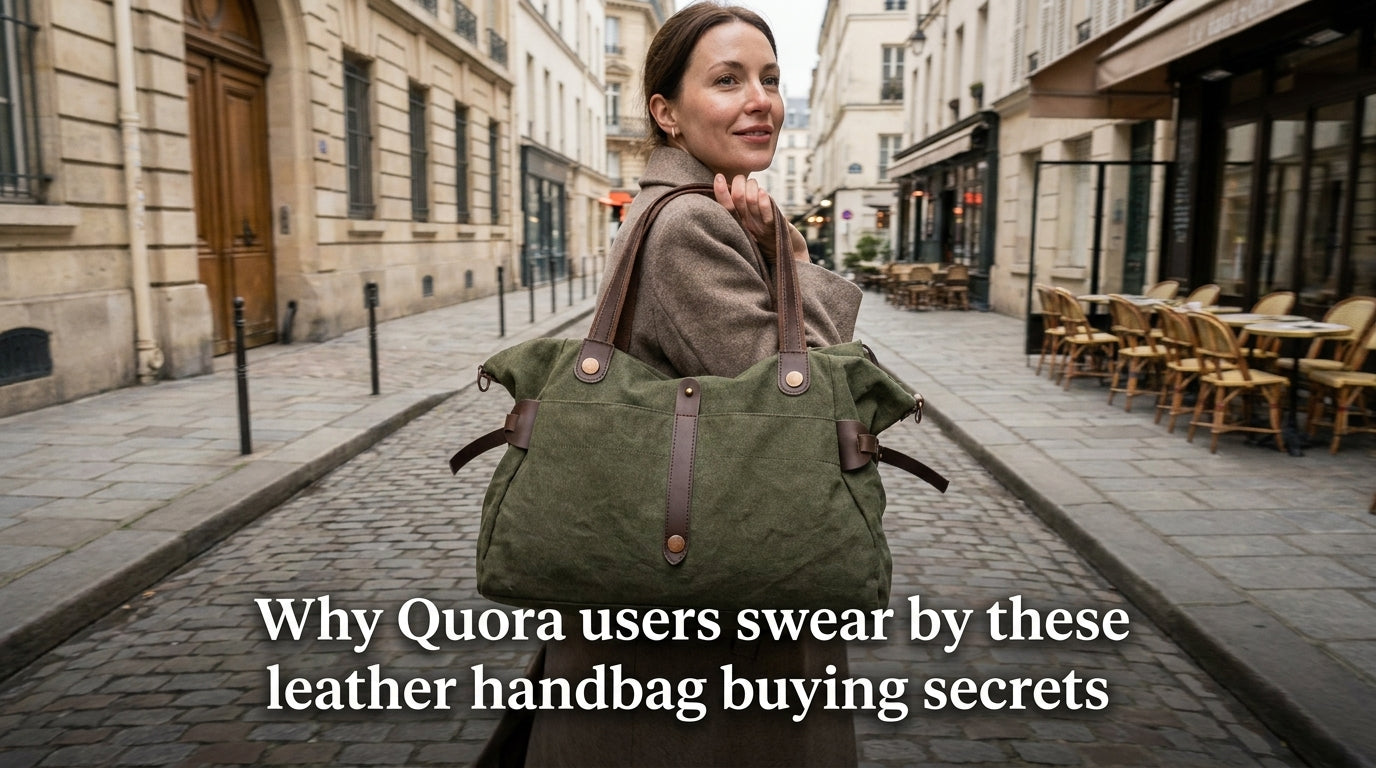
Shop the look: SAINT-LAZARE - Olive
Why buyers turn to forums for leather bag advice
Forum users searching for leather handbags quora threads aren't just comparison shopping. They're trying to avoid a specific type of buyer's remorse: spending $200-800 on a bag that looks elegant for six months, then starts peeling, cracking, or falling apart at the seams.
The most common complaint in these threads? "I bought a 'split leather' bag from [brand name] and the coating started flaking off after three months." Users quickly learn that "split leather" is marketing speak for processed, low-grade leather scraps glued together with a plastic coating.
For a broader overview, see Senreve alternative: why I switched to this Parisian brand instead.
What forum veterans recommend instead: bags that combine materials intelligently. Pure leather can feel too formal for daily use, but canvas-leather combinations offer versatility. You can carry the same bag to a casual coffee meeting and a client dinner without looking out of place.

Understanding leather grades: what Quora users wish they knew earlier
The leather hierarchy that emerges from Quora discussions is clear, and it's the opposite of what most brands advertise:
Split leather + canvas combinations often outlast pure leather bags. Split leather provides structure where you need it (handles, base, trim) while canvas handles daily wear better than coated leather. The canvas actually improves with age, developing a lived-in patina that looks intentional.
"split leather" ranks lowest in user satisfaction. It's technically leather, but it's made from leather scraps bonded with polyurethane. Users report cracking, peeling, and an artificial feel that never softens naturally.
Top-grain and split leather get mixed reviews. Yes, they're higher quality, but they require more maintenance and can look too formal for everyday use. Several threads mention bags that "look beautiful but I never actually carry them."
The insight that appears repeatedly: material combination matters more than leather grade. A well-constructed canvas-leather bag from a thoughtful brand often gets more daily use than an expensive pure leather piece.
How to tell if a leather handbag is actually good quality
Quora users have developed a surprisingly sophisticated quality checklist. The most upvoted answers focus on details you can check in person or from product photos:
Stitching tells the real story. Look for even, tight stitching with thick thread. Double-stitched stress points (where straps attach, corner seams) indicate a bag built to last. Crooked or loose stitching means the bag was rushed through production.
Hardware weight matters. Solid brass or stainless steel hardware feels substantial in your hand. Lightweight, hollow-feeling hardware will tarnish or break within months. The zipper should glide smoothly — YKK or Riri zippers get mentioned frequently as reliability markers.
Lining quality reflects overall construction. Cotton or canvas lining lasts longer than synthetic materials that can tear or separate from the bag's interior. Cheap lining often means corners were cut elsewhere.
Edge finishing reveals craftsmanship. Well-finished edges (where leather pieces meet) should be smooth and even. Raw or poorly finished edges will fray and look shabby quickly.
After looking at dozens of leather handbags quora threads, the pattern is clear: users who focus on construction details rather than brand names report higher satisfaction with their purchases.
Hardware, lining, and stitching: the unsung heroes of durability
The most experienced Quora users skip straight to these details when evaluating bags. They've learned that a $300 bag with quality hardware and stitching outlasts a $800 bag with poor construction.
Zipper placement and quality determine daily usability. Users consistently mention that interior zippered compartments need to be positioned where you can actually reach them while carrying the bag. Two zippered interior pockets seem to be the sweet spot for organization without bulk.
Strap attachment points are where most bags fail. Look for reinforced stitching or leather patches where straps connect to the bag body. Adjustable, detachable straps get high marks because they let you adapt the bag to different carrying situations.
Interior pocket configuration separates thoughtful design from afterthought construction. Five interior pockets, including two with zippers, addresses what users actually carry: phone, keys, wallet, sunglasses, and miscellaneous items that need secure storage.
The Saint-Lazare travel bag demonstrates this attention to functional details. Its five interior pockets, including two zippered compartments, reflect the kind of practical design that forum users consistently praise.
Designer vs. direct-to-consumer: are luxury leather bags worth the price?
This question dominates leather handbags quora discussions, and the answers might surprise you. Users who own both designer and lesser-known brands often conclude that you're paying for brand recognition, not proportionally better construction.
The most honest assessment comes from users who've owned luxury bags for 5+ years: "The leather is beautiful, but I baby it too much to actually use it daily. My everyday bag is from a smaller brand and gets carried everywhere."
Price increases without quality improvements frustrate long-term users. Several threads mention specific luxury brands raising prices 20-30% while using the same materials and construction methods.
Direct-to-consumer brands get surprisingly positive reviews when they focus on materials and construction rather than marketing. Users appreciate transparent information about leather sources, construction methods, and honest pricing.
The combination of canvas and leather emerges as a smart compromise in these discussions. It offers durability and versatility at a more reasonable price point than pure luxury leather, while looking more sophisticated than purely synthetic alternatives.
Checklist: what to look for when buying your next leather handbag
Based on the most upvoted Quora advice, here's your quality inspection checklist:
Before buying:
- Check stitching quality — even, tight, double-stitched at stress points
- Test hardware weight and zipper smoothness
- Examine edge finishing on leather pieces
- Count interior pockets and test their accessibility
- Verify strap attachment reinforcement
- Ask about materials specifically — avoid "split leather"
Red flags that forum users mention repeatedly:
- "split leather" marketing (lowest grade)
- Lightweight, hollow-feeling hardware
- Uneven or loose stitching
- Synthetic lining that feels cheap
- No specific information about leather type or source
- Price that seems too good for claimed quality level
The most satisfied users in these threads bought bags they could actually see and touch before purchasing, or from brands transparent about materials and construction methods.

In our experience reviewing hundreds of leather handbags quora threads, the users who report the highest satisfaction focus on construction quality and material honesty rather than brand prestige. They've learned that a well-made canvas-leather combination often delivers better daily performance than expensive pure leather that requires constant care.
The Saint-Lazare's combination of washed cotton canvas and split leather represents exactly what these experienced users recommend: materials chosen for function, construction details that matter for daily use, and honest pricing that reflects actual quality rather than marketing budget.