

How to clean a leather handbag at home (the canvas-leather combo method)
Most leather handbag cleaning guides assume you're working with pure leather. But many modern bags combine materials — canvas bodies with leather trim, split leather details on cotton canvas bases. The cleaning approach changes completely.
After looking at dozens of damaged bags brought to repair shops, the biggest mistake is treating mixed-material bags like they're pure leather. You need a different strategy for each surface.
Shop the look: PONT-DES-ARTS - Mini / Beige Kaki

Before you begin: identify your leather type and spot test
Not all leather responds the same way to cleaning. Split leather (used on most contemporary bags) handles moisture differently than split leather. Canvas-leather combinations need separate treatment for each material.
Find an inconspicuous spot — inside a pocket or under a flap. Dab a tiny amount of mild soap solution with a cotton swab. Wait 10 minutes. If the color bleeds, the surface darkens permanently, or the texture changes, stop. Professional cleaning is your only safe option.
For a broader overview, see The handbag buying guide that actually helps you choose.
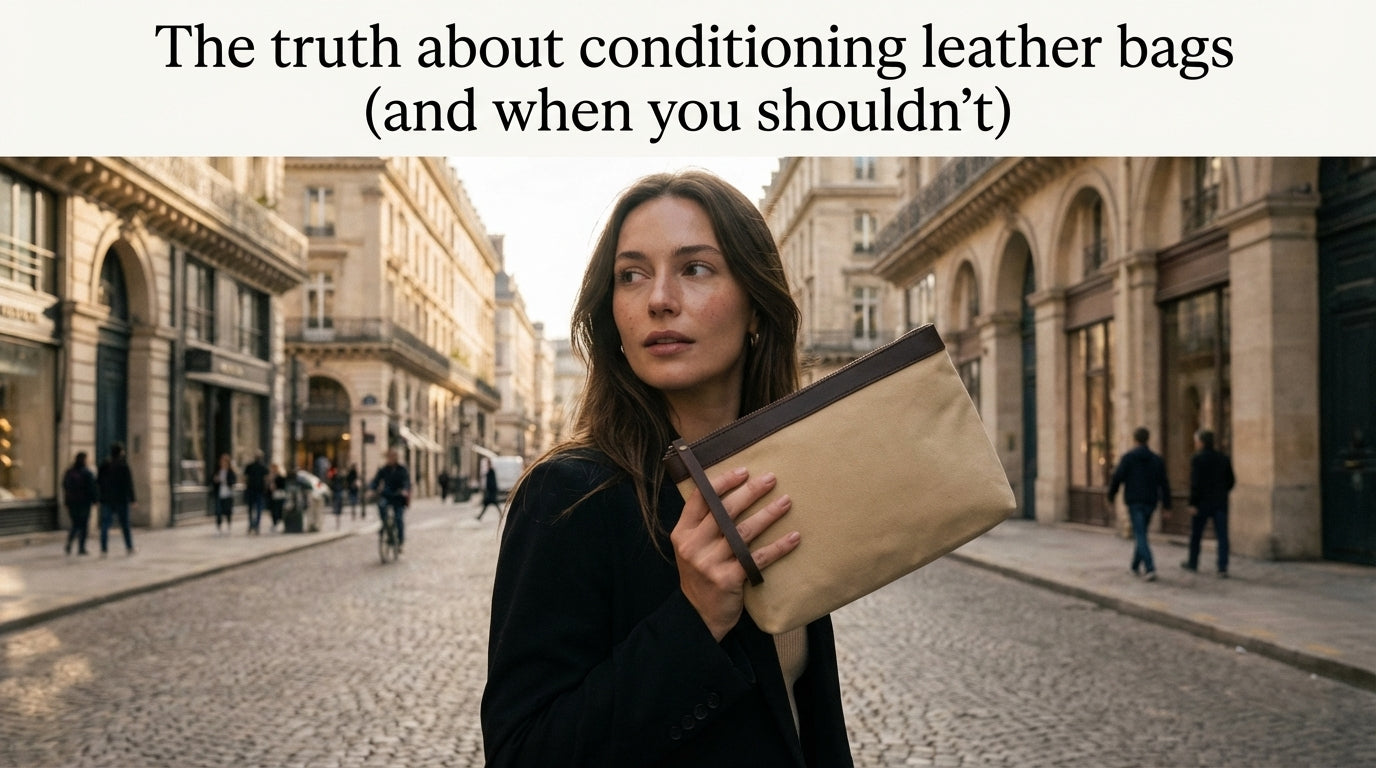
For bags like the PONT-DES-ARTS, which combines washed cotton canvas with split leather trim, you're testing two different materials. The canvas typically handles cleaning well, but the leather details need gentler care.
What you need: safe household items for leather care
Skip the specialty leather cleaners. Most household items work better and cost less:
- Mild dish soap (Dawn or similar, no moisturizers)
- Distilled water
- Microfiber cloths (at least three)
- Cotton swabs
- Micellar water (for fabric linings)
- Leather conditioner (this is worth buying)
- Soft-bristled toothbrush
Avoid baby wipes, vinegar solutions, and anything with alcohol. These strip protective coatings and can cause permanent discoloration.
Step 1: prep, empty, and dust your bag
Empty everything. Check every pocket, including the tiny ones you forgot existed. Turn the bag upside down and shake out debris.
Use a dry microfiber cloth to remove surface dust from both canvas and leather areas. Work in small circles, applying minimal pressure. Dust particles act like sandpaper when wet — remove them first.
If your bag has detachable straps, remove them for separate cleaning.
Step 2: how to safely clean the leather exterior
Mix one drop of mild dish soap with two cups of distilled water. The solution should barely foam when stirred.
Dip a microfiber cloth in the solution and wring until nearly dry. Wipe leather sections using straight lines, not circles. Circles can create visible streaks on finished leather.
For canvas areas, you can use slightly more moisture and gentle circular motions. Canvas is more forgiving than leather and handles water better.
Work in sections. Clean, then immediately dry with a separate microfiber cloth. Never let soap solution sit on leather surfaces.
Step 3: tackling the interior lining (the micellar water trick)
The fabric lining collects makeup, pen marks, and mystery stains. Regular soap often spreads these stains rather than lifting them.
Soak a cotton pad with micellar water. Press it against stains and hold for 30 seconds. Use a tamping motion — straight up and down pressure — rather than scrubbing sideways.
For stubborn makeup stains, the tamping motion pushes color out of fabric fibers instead of grinding it deeper. This technique works better than any specialty fabric cleaner we've tested.
If micellar water doesn't work, try the soap solution on a cotton swab. Dab, don't rub.
Step 4: polishing the zippers and hardware
Metal hardware tarnishes from skin oils and environmental exposure. A soft-bristled toothbrush with mild soap solution removes buildup without scratching.
Brush in the direction of any grain or texture on the metal. Dry immediately with a cotton swab.
For zippers that stick, run a bar of unscented soap along the teeth after cleaning. This lubricates without attracting dirt.
Step 5: the most crucial step — conditioning the leather
Cleaning strips natural oils from leather. Without conditioning, the material becomes brittle and cracks.
Apply leather conditioner only to leather sections, not canvas. Use a clean microfiber cloth and work in thin, even coats. Let each coat absorb for 15 minutes before applying more.
Quality split leather needs conditioning every 3-4 months with regular use. Canvas sections don't require conditioning — they actually improve with age and wear.

How to remove common stains (ink, oil, and water spots)
Ink stains: Dab immediately with a cotton swab dipped in rubbing alcohol. Work from outside the stain toward the center. Don't rub — this spreads ink deeper into fibers.
Oil spots: Sprinkle cornstarch on fresh oil stains. Let sit overnight to absorb oil, then brush away gently. For set-in oil stains on canvas, mild dish soap works better than specialty cleaners.
Water spots: These appear as dark rings on leather. Lightly dampen the entire leather panel with distilled water, then let it dry naturally. This evens out the moisture and eliminates ring marks.
Myth-busting: what not to use on your leather handbag
The internet is full of terrible leather cleaning advice. Here's what actually damages bags:
Baby wipes: Contain moisturizers and alcohol that strip leather's protective coating. They might clean surface dirt, but they cause long-term damage.
Vinegar and olive oil mixtures: Vinegar is too acidic for most leather finishes. Olive oil goes rancid and darkens leather permanently. This combination ruins more bags than it saves.
Hair dryers or direct heat: Rapid drying cracks leather and shrinks canvas. Always air dry at room temperature.
Bleach or ammonia-based cleaners: These strip color and destroy leather fibers. Even heavily diluted versions cause damage.
How to store your leather bag properly
Proper storage prevents more damage than any cleaning routine. Stuff bags with acid-free tissue paper to maintain shape. Never use newspaper — the ink transfers to light-colored interiors.
Store in breathable dust bags, not plastic. Leather needs air circulation to prevent mold and cracking.
Keep bags away from direct sunlight and heat sources. UV rays fade colors and dry out both leather and canvas over time.
For canvas-leather combinations like the PONT-DES-ARTS, the mixed materials actually help with storage. Canvas maintains structure better than pure leather, so these bags hold their shape longer between uses.
Clean bags every 2-3 months with regular use, or immediately after exposure to rain, spills, or heavy dirt. The combination of proper cleaning and storage keeps quality bags looking new for years.