
The 7 mistakes that age your leather handbag by 10 years
Your leather handbag should last decades, not seasons. Yet most women unknowingly damage their bags within the first year of ownership. After analyzing hundreds of returned and repaired bags, the patterns are clear: seven specific mistakes account for 90% of premature leather aging.
These aren't the obvious ones like spilling wine. They're subtle daily habits that slowly degrade the leather until one day you notice your once-pristine bag looks tired and worn. The good news? Every single one is preventable.
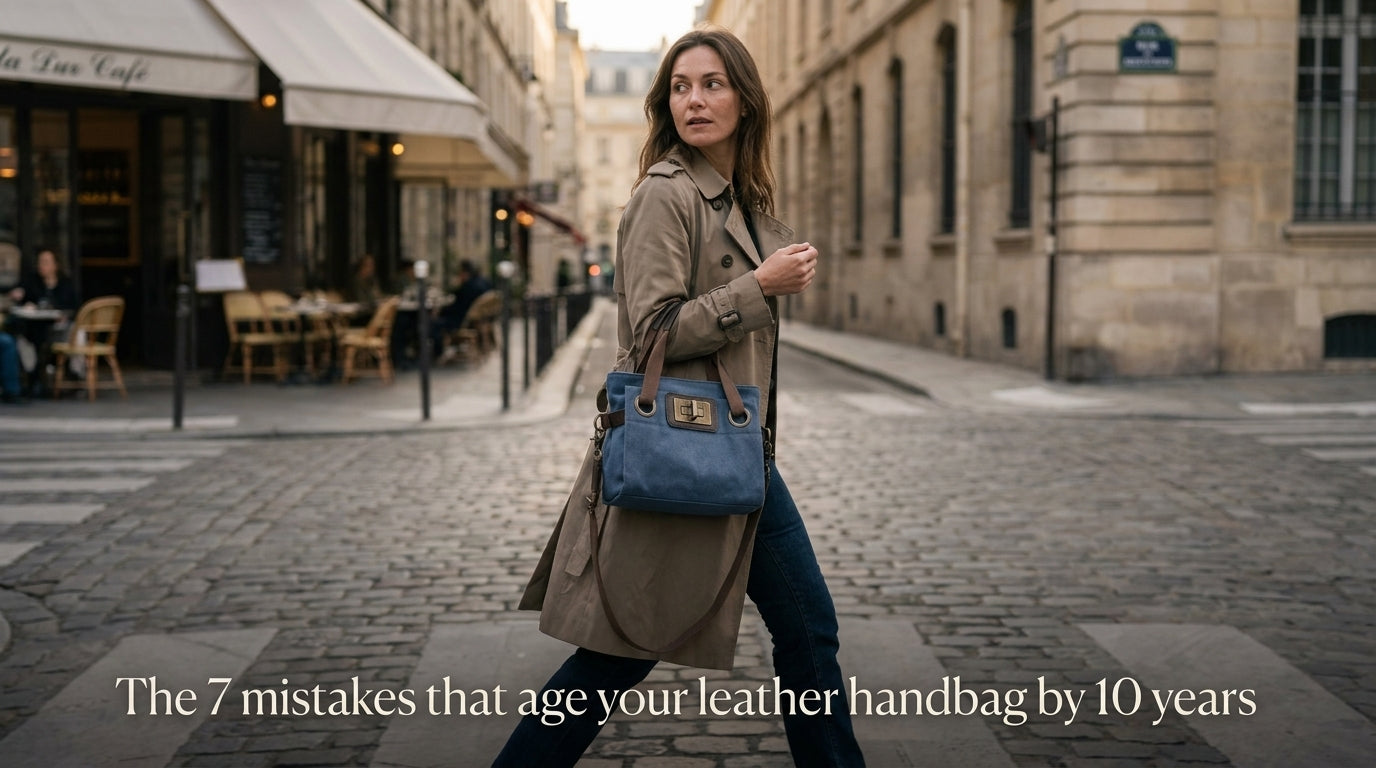
Shop the look: PONT-DES-ARTS - XS / Bleu Jean
The baby wipe trap: why convenience cleaners destroy leather
Baby wipes seem perfect for quick cleanups. They're gentle enough for skin, so they must be safe for leather, right? Wrong. Baby wipes contain alcohol and surfactants that strip leather's natural oils, leaving it dry and prone to cracking.
The damage isn't immediate. Your bag might look clean after wiping, but over months, the leather becomes brittle. What started as a small scuff mark becomes a permanent crack.
For a broader overview, see Senreve alternative: why I switched to this Parisian brand instead.
Instead, use a slightly damp microfiber cloth for surface dirt. For deeper cleaning, invest in a leather-specific cleaner or take it to a professional. Your bag will thank you with years of extra life.

Why hanging your bag is slowly destroying it
Hanging bags by their straps seems logical — it keeps them visible and prevents crushing. But gravity is working against you. The constant downward pull stretches the handles, weakens the stitching, and can crack the leather where the straps attach to the bag body.
This is especially damaging for structured bags with firm bases. The weight of the bag pulling down on relatively narrow straps creates stress points that eventually fail.
Store bags upright on shelves or in their dust bags. If you must hang them, use padded hangers that distribute weight across the entire bag, not just the straps.
The denim disaster most women ignore
Light-colored leather and dark denim are natural enemies. The indigo dye in jeans transfers to leather through friction and body heat. One afternoon carrying a cream bag while wearing new jeans can leave permanent blue stains.
This is one of the most common mistakes with leather handbags that we see, especially with crossbody styles that rest against your hip. The staining happens gradually — you might not notice until the damage is already done.
Wear your darkest jeans a few times before pairing them with light leather. Or choose darker bag colors when you know you'll be wearing denim. The PONT-DES-ARTS in Brique or Noir sidesteps this issue entirely while maintaining the versatility you need.
The plastic bag storage mistake
Storing leather bags in plastic seems protective, but it's actually suffocating them. Leather needs to breathe. Plastic traps moisture, creating the perfect environment for mold and mildew. It also prevents natural oils from circulating, leading to dry, cracked leather.
Use breathable cotton dust bags instead. They protect from dust and light while allowing air circulation. If you don't have dust bags, even an old cotton pillowcase works better than plastic.
Stuff the bag with tissue paper or bubble wrap to maintain its shape during storage. This prevents creasing and helps the leather retain its structure.

Heat and sunlight: the silent killers
Leaving your bag in a hot car or direct sunlight might seem harmless for short periods. But leather is essentially skin — it dries out and cracks under intense heat just like yours would.
Car interiors can reach 140°F on summer days. At these temperatures, leather oils evaporate, leaving the material brittle. Sunlight fades colors and breaks down the leather fibers over time.
Keep bags away from heating vents, radiators, and sunny windowsills. When traveling, bring your bag inside with you rather than leaving it in the car.
The overstuffing epidemic
Your bag has limits. Overstuffing stretches the leather beyond its natural elasticity, causing permanent deformation. The corners sag, the shape becomes distorted, and stress points develop where the leather can eventually tear.
This is particularly problematic with soft leather bags that lack internal structure. They rely on their natural shape to look good — stretch them too far and they never fully recover.
Follow the 80% rule: never fill your bag more than 80% of its capacity. This leaves room for the leather to move naturally and maintains the bag's intended silhouette.
Skipping leather conditioning: the slow fade
Leather conditioning isn't optional maintenance — it's essential. Without regular conditioning, leather dries out, loses its suppleness, and becomes vulnerable to cracking. Think of it like moisturizing your skin.
Most women condition their bags too infrequently or not at all. By the time they notice the leather looking dry, significant damage has already occurred.
Condition leather bags every 3-6 months, depending on use. Apply a thin layer of quality leather conditioner with a soft cloth, let it absorb, then buff away any excess. Your bag will stay supple and develop a beautiful patina over time.

Why canvas and leather combinations last longer
Pure leather bags face all these challenges head-on. But there's a smarter approach: canvas and leather combinations like the PONT-DES-ARTS. The washed cotton canvas handles daily wear while the split leather provides structure and elegance.
This combination is naturally more forgiving. The canvas is water-repellent and doesn't show wear the same way leather does. The leather components are used strategically — for handles, trim, and structure — reducing the surface area vulnerable to the common mistakes with leather handbags.
The result is a bag that ages gracefully rather than showing every mistake. The canvas actually improves with age, developing character while the leather maintains its quality with minimal care.
The golden rules that keep bags beautiful
Protecting your leather investment comes down to five simple habits: clean gently with appropriate products, store properly in breathable materials, avoid extreme temperatures, don't overstuff, and condition regularly.
Most importantly, choose bags designed to last. Quality materials and thoughtful construction — like you'll find in ZEDE's Paris-designed collection — make all the difference. A well-made bag forgives minor mistakes and rewards proper care with decades of use.
Your handbag is an investment in your daily life. Treat it with the care it deserves, and it will serve you beautifully for years to come.