
The bag quality checklist most people skip (and why it matters)
Most bags look identical in photos, but touch them and you'll know the difference immediately. The stitching feels loose. The leather smells like chemicals. The hardware already shows scratches. After testing dozens of bags over the years, I've learned that quality isn't about the brand name on the front — it's about the details most people never think to check.
Here's the practical checklist for evaluating bag quality before you spend your money.
Shop the look: SAINT-LAZARE - Noir

Step 1: Check the leather grade
Not all leather is created equal, and the grade determines how long your bag will last. Most brands use vague terms like "split leather" to hide what they're actually selling you.
Look for specific leather types. Split leather offers durability without the premium price of top-grain. It's what we use at ZEDE because it ages well and holds its structure. Avoid anything labeled "split leather" — that's industry code for the lowest grade they can legally call leather.
For a broader overview, see The handbag buying guide that actually helps you choose.
The worst option is bonded leather, which is basically leather scraps glued together with polyurethane. It looks fine initially but cracks and peels within months. You'll see this in bags under $50, but sometimes higher-priced brands use it too and hope you don't notice.
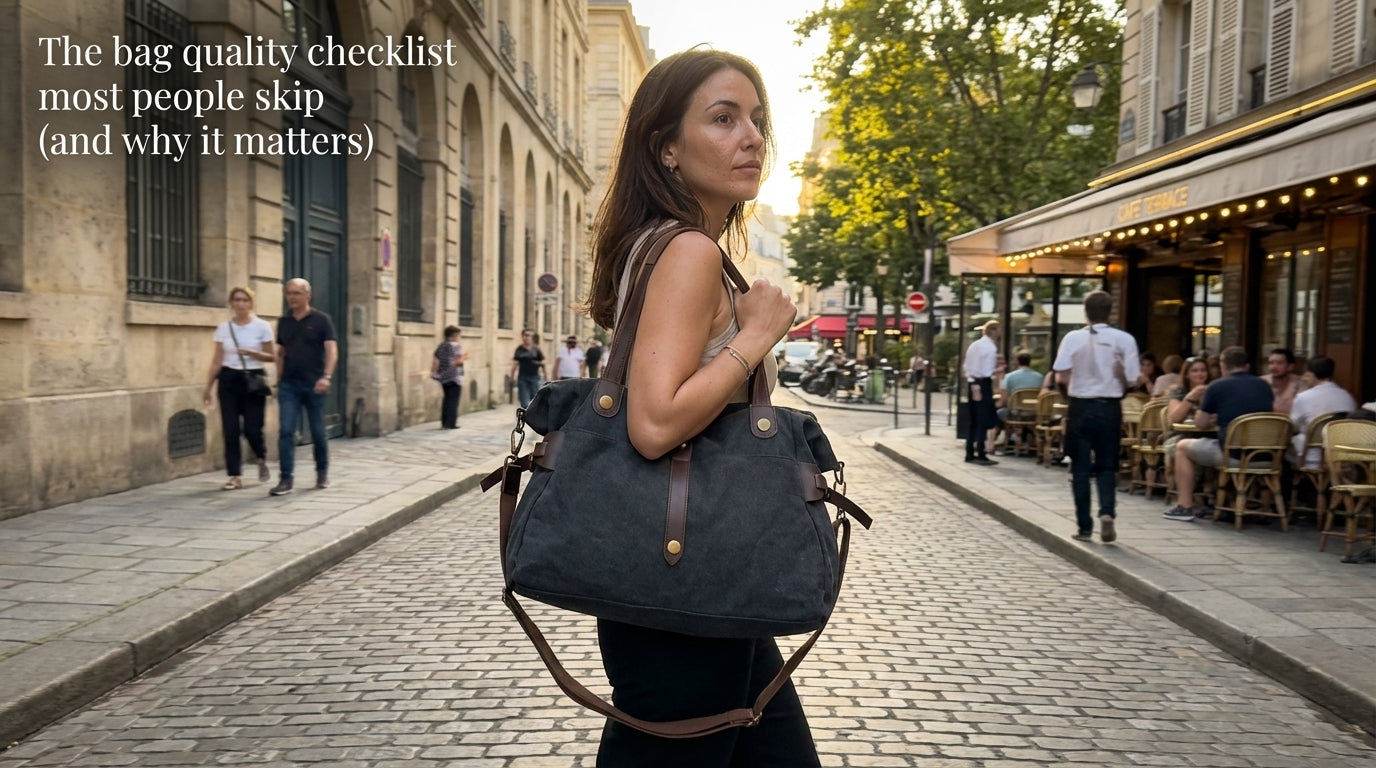
Canvas and leather combinations, like those used in the SAINT-LAZARE travel bag, offer the best of both worlds. The washed cotton canvas provides structure and durability, while split leather handles and trim add sophistication and strength where you need it most.
Step 2: Ask about the leather's origin
European leather typically means better environmental standards and quality control. Italian and French tanneries have centuries of experience and strict regulations about chemicals used in the tanning process.
Leather from other regions can be excellent too, but you need to dig deeper. Ask about the tanning method. Vegetable tanning takes longer and costs more, but it creates leather that ages beautifully. Chrome tanning is faster and cheaper, but the leather doesn't develop the same character over time.
The most important question: where was the bag designed? A bag designed in Paris, like ZEDE's collection, reflects French craftsmanship standards even if the manufacturing happens elsewhere. The design process — pattern-making, material selection, quality specifications — determines the final product quality more than the factory location.
Step 3: Smell the product
split leather has a rich, earthy smell. Fake leather smells like plastic or fish. If the bag has a strong chemical odor, that's a red flag about the tanning process or finishing treatments used.
High-quality leather should smell pleasant, not overpowering. The scent should be natural and subtle. If you need to hold the bag away from your face because the smell is too strong, that indicates heavy chemical processing or poor-quality materials.
Canvas bags have their own smell profile. Washed cotton canvas should smell clean and natural, maybe with a slight fabric softener scent. Any plastic or chemical smell from canvas indicates synthetic blends or chemical treatments that could affect durability.
Step 4: Feel the product
Quality leather feels supple but substantial. It shouldn't be stiff like cardboard or flimsy like paper. Press gently into the surface — it should give slightly and bounce back.
Check the texture. Natural leather has slight variations and imperfections that make each piece unique. If the surface looks perfectly uniform, it's likely been heavily processed or coated, which reduces durability.
For canvas and leather combinations, feel both materials. The canvas should feel sturdy but not rough. The leather trim should complement the canvas texture, not fight against it. The SAINT-LAZARE demonstrates this balance perfectly — the washed cotton canvas feels substantial while the split leather handles provide smooth, comfortable grip.

Step 5: Check the product's stitching
Stitching quality separates bags that last from bags that fall apart. Look for straight, even lines with consistent spacing. The thread should be thick enough to handle daily use — thin thread is a cost-cutting measure that leads to failures.
Pay attention to stress points: where handles attach, where zippers meet the fabric, where different materials join. These areas should have reinforcement stitching or double rows of stitching. A single line of stitching at a handle attachment point means the bag will fail when you need it most.
Check the thread color. It should either match the material perfectly or create an intentional contrast. Mismatched thread colors often indicate rushed production or quality control issues.
The most common mistake we see? People focus on exterior stitching but ignore interior construction. Flip the bag inside out if possible. The interior stitching should be just as clean and secure as what you see outside.
Step 6: Check the product's edges
Edge finishing reveals manufacturing quality. Leather edges should be smooth and sealed, not rough or fraying. If the edges look painted, make sure the paint isn't thick or uneven — that's usually hiding poor edge preparation.
Canvas edges should be properly hemmed or bound. Raw edges that could fray indicate corners cut in production. Look for consistent edge treatment throughout the bag, not just on the visible areas.
Run your thumbnail gently across leather edges. They should feel smooth and solid. If you can catch your nail on rough spots or if pieces of leather flake off, the edge treatment isn't durable.
What to know about best practices for leather bag quality guide
The biggest quality indicator isn't the leather grade or the stitching — it's the interior organization. Most luxury bags give you one big empty space and charge premium prices for it. That's not functional design, it's lazy design.
Look for thoughtful pocket placement. Can you organize your essentials without everything falling to the bottom? Are there zippered compartments for items you need secure? The SAINT-LAZARE includes 5 interior pockets with 2 zippered compartments because organization matters as much as aesthetics.
Hardware quality matters more than most people realize. Cheap zippers fail first, followed by strap attachments. Test zippers by opening and closing them several times. They should move smoothly without catching or requiring force.
Consider versatility in your quality assessment. A bag that only works for one occasion isn't good value, regardless of construction quality. The best bags adapt to different situations — office to weekend, travel to daily use.
Size matters for quality evaluation too. A poorly constructed small bag might hold together, but the same construction methods will fail in a larger bag that carries more weight. Always consider how you'll actually use the bag when evaluating quality.
Recommended product pairings
The SAINT-LAZARE travel bag exemplifies these quality principles in practice. The washed cotton canvas and split leather construction provides durability without the split leather markup. The 5-pocket interior organization means you can actually find your belongings. The adjustable strap works for crossbody or hand carry, making it versatile enough for daily use.
At 50 × 35 × 16 cm, it's sized for real use — laptop, toiletry bag, and daily essentials fit comfortably. The canvas and leather handles provide comfortable carrying options for longer trips. Available in eight colors, you can choose one that works with your existing wardrobe rather than requiring specific outfits.

The key is finding bags that combine quality materials with functional design. Most brands excel at one or the other, but rarely both. When you find a bag that gets both right, that's when you've found something worth keeping.