

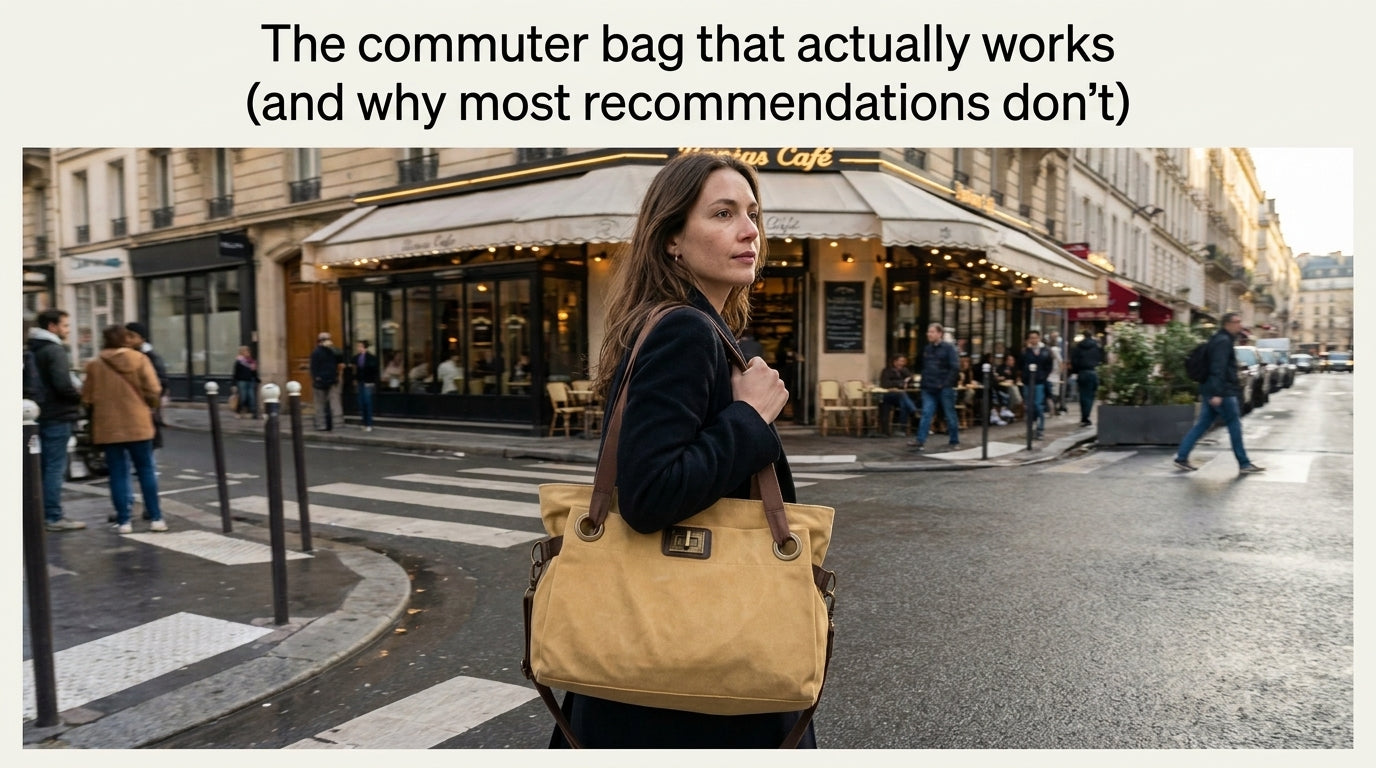
The commuter bag that actually works (and why most recommendations don't)
Most commuter bag guides miss the point entirely. They focus on what looks good in photos instead of what works when you're rushing to catch the 8:15 train with a laptop, water bottle, and yesterday's lunch container still rattling around inside.
After looking at dozens of bags marketed as "perfect for commuting," the real issue becomes clear: most are either too heavy when empty, lack proper organization, or fall apart after six months of daily subway abuse. The best handbag for daily commute needs to solve three specific problems — weight distribution, weather resistance, and internal organization — without looking like camping gear.
Shop the look: PONT-DES-ARTS - Normal / Jaune

The anatomy of a commuter bag that actually works
The biggest mistake people make when buying bags? They buy something that looks pretty but isn't functional inside. Most high-end bags give you a beautiful exterior with a massive markup, but when you open them up, there's nothing useful — no pockets, no organization, just one big empty space where everything becomes a jumbled mess.
A proper commuter bag needs five non-negotiable features:
- Empty weight under 1.5 pounds (once you add a laptop, every ounce counts)
- Water-resistant exterior that can handle unexpected weather
- At least three interior pockets with secure closures
- Adjustable strap that works over winter coats and summer dresses
- Top zip closure — open totes are disasters on crowded public transport
The material combination matters more than most people realize. Pure leather looks luxurious but becomes heavy and stiff when wet. Canvas-leather hybrid construction gives you the best of both worlds: lightweight canvas for the body, leather reinforcement where you need structure.
For a broader overview, see Senreve alternative: why I switched to this Parisian brand instead.
Best overall: the crossbody that handles everything
The PONT-DES-ARTS solves the commuter bag problem by combining washed cotton canvas with split leather in exactly the right proportions. At just over a pound empty, it won't strain your shoulders before you even add your laptop. The water-repellent canvas shrugs off rain and coffee spills, while the leather handles and base provide structure without bulk.
What makes it work for daily commuting: five interior pockets including two with zippers, a large rear pocket with magnetic closure, and a spacious front pocket with toggle closure. Your keys get their own secure spot, your phone isn't swimming loose at the bottom, and documents stay flat in the dedicated compartment.
The adjustable canvas shoulder strap is the real genius — it extends long enough for crossbody wear over winter coats but adjusts short for shoulder carry in summer. Available in Bleu Jean, Camel, Noir, and twelve other colors, with four size options from XS to full size.

Tote vs crossbody vs backpack: which wins for commuting?
Totes look professional but become shoulder killers on long commutes. The weight sits entirely on one side, and open tops invite spills and theft on public transport. Backpacks distribute weight perfectly but require complete removal to access anything inside — terrible when you need to grab your transit card quickly.
Crossbody bags hit the sweet spot. Weight distributes across your torso instead of pulling one shoulder down. You can swing the bag forward to access pockets without removing it. The body stays close and secure in crowds. The PONT-DES-ARTS works as both — crossbody for commuting, shoulder bag for meetings.
Why canvas-leather beats pure leather for daily use
Pure leather commuter bags have three fatal flaws: they're heavy when empty (often 2-3 pounds), they soak up water and stain easily, and they cost significantly more for minimal practical benefit. Most luxury leather bags charge 12 times manufacturing cost — you're paying for marketing, not materials.
Canvas-leather construction gives you durability where it matters (base, straps, stress points) while keeping the overall weight manageable. The washed cotton canvas actually improves with use, developing character without looking worn out. It's also easier to clean — crucial when you're carrying it through subway systems and coffee-splashed sidewalks daily.
Size guide: what actually fits your commute essentials
Most people overestimate the bag size they need, then regret carrying extra bulk every day. Here's what actually fits in each PONT-DES-ARTS size:
Mini: 13-inch laptop, phone, wallet, keys, small water bottle. Perfect for minimal commuters who keep lunch at the office.
Medium: 15-inch laptop, full-size water bottle, lunch container, makeup pouch, documents. The sweet spot for most daily commuters.
Normal: Everything above plus gym clothes, extra shoes, umbrella. Best for commuters who go straight to evening plans.
Start smaller than you think. The most common mistake is buying the largest size "just in case" then carrying unnecessary weight every single day.

Weather resistance: what works and what's marketing
"Waterproof" bag claims are mostly marketing. True waterproofing requires sealed seams and plastic coatings that make bags stiff and sweaty. What you actually need is water-resistance — fabric that repels light rain and spills without soaking through immediately.
The PONT-DES-ARTS uses water-repellent cotton canvas that handles typical weather without looking like rain gear. Coffee spills bead up and wipe off. Light rain doesn't penetrate. For heavy downpours, you'd need an umbrella anyway — no handbag handles that level of water exposure.
Organization features that matter vs. marketing gimmicks
Bag companies love advertising "20 pockets!" but most are useless pen holders and tiny compartments that fit nothing practical. The pockets that actually matter:
Interior zip pocket for valuables (phone, wallet, keys). Magnetic pockets are convenient but not secure enough for expensive items. Toggle closures work for items you access frequently but don't mind losing if the bag tips over.
Rear exterior pocket for transit cards and frequently accessed items. Front exterior pocket for items you might need while wearing the bag crossbody. Skip bags with tiny side pockets — they're too small for water bottles but perfect for losing lip balm forever.
Strap comfort: the detail that makes or breaks daily use
Thin straps look elegant but dig into shoulders under weight. The PONT-DES-ARTS uses canvas-leather combination straps that distribute weight without looking bulky. The canvas portion sits against your body for comfort, while leather reinforcement prevents stretching and tearing.
Strap drop length matters more than most people realize. Too short and the bag hits awkwardly at your waist. Too long and it swings wildly when walking. The adjustable strap solves this — 24 inches for crossbody wear, 12 inches for shoulder carry, with multiple positions between.
Care and maintenance for daily commuter bags
Canvas-leather bags are remarkably low-maintenance compared to pure leather options. The cotton canvas can be spot-cleaned with mild soap and water. Leather trim needs occasional conditioning but won't crack or stiffen like heavily-processed luxury leather.
For daily commuters, the biggest maintenance issue is actually organization, not cleaning. Empty your bag completely once a week. Receipts multiply, pens leak, and forgotten snacks create mysteries. A monthly deep clean prevents the "black hole" effect where everything disappears into the depths.
The water-repellent canvas actually helps with maintenance — spills wipe off instead of soaking in and staining. This is why canvas-leather construction makes more sense for daily use than pure leather alternatives.

Budget reality: what commuter bags actually cost
Quality commuter bags range from $100-250 for practical options up to $500+ for luxury brands. The markup on high-end bags is enormous — often 12 times manufacturing cost. You're paying for brand recognition and retail overhead, not proportionally better materials or construction.
The PONT-DES-ARTS at $109-129 represents the sweet spot: quality materials and construction without luxury markup. Direct-to-consumer brands can offer the same quality as department store bags at significantly lower prices by eliminating middlemen and retail overhead.
When evaluating price, calculate cost per use. A $125 bag used daily for two years costs about 17 cents per day. A $400 bag that falls apart after six months costs $2.20 per day. Durability matters more than initial price.
Common commuter bag mistakes to avoid
Buying based on weekend needs instead of daily reality. That slouchy hobo bag looks great for Saturday shopping but becomes a nightmare when you need to find your keys quickly during rush hour.
Choosing bags without trying the weight. A 3-pound empty bag becomes unbearable once you add laptop, water bottle, and daily essentials. Always consider empty weight as a primary factor.
Ignoring your actual commute method. Car commuters can handle open totes and delicate materials. Subway commuters need secure closures and weather-resistant exteriors. Walking commuters need comfortable straps and lightweight construction.
The best handbag for daily commute isn't the most expensive or the most fashionable — it's the one you reach for every morning without thinking twice. The PONT-DES-ARTS succeeds because it solves real commuter problems without sacrificing style or breaking your budget.